
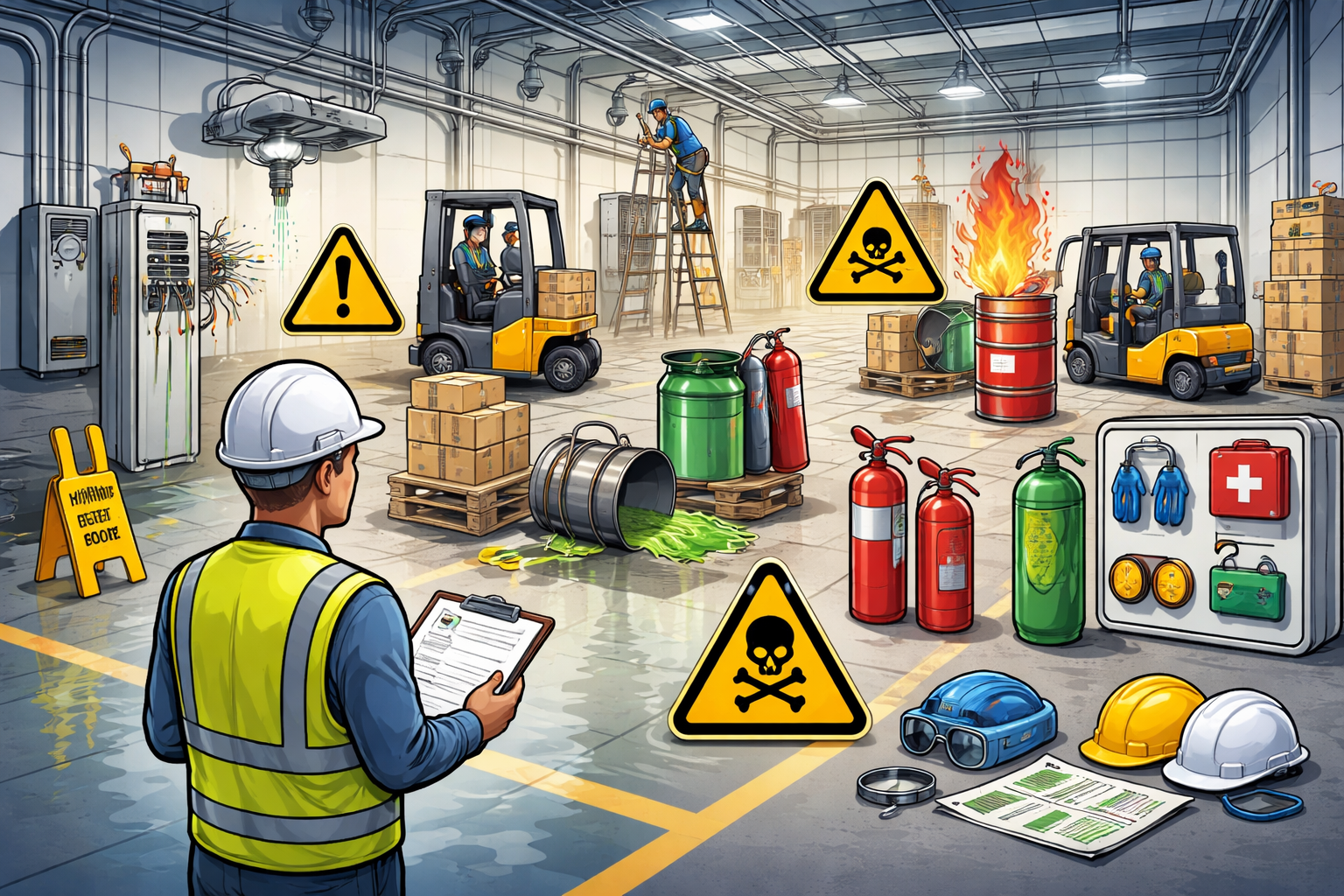
Hazard identification in facilities is a core element of effective safety management. Every workplace, regardless of industry or size, contains potential hazards that can cause injuries, property damage, or operational disruptions if not properly controlled. Identifying these hazards early is the first and most critical step toward creating a safe, compliant, and productive work environment.
This article provides an expert, professional, and practical guide to hazard identification in facilities. It is designed for facilities managers, safety officers, operations leaders, and business owners who want to strengthen their facilities safety programs.
Understanding Hazard Identification in Facilities
Hazard identification should be ongoing and structured to catch risks before they cause harm, following OSHA’s hazard identification guidance to systematically assess physical, chemical, biological, and ergonomic hazards across the facility.
Facilities safety depends on proactive rather than reacting after incidents occur. When hazards are identified early, organizations can implement controls that reduce risk, prevent injuries, and support safe daily operations.
Hazard identification should be ongoing, structured, and integrated into normal facility management processes.
Why Hazard Identification Is Critical to Facilities Safety
Facilities safety programs fail when hazards go unnoticed or are ignored. Many workplace incidents occur not because safety rules are absent, but because risks were never properly identified.
Effective hazard identification in facilities helps organizations:
- Prevent workplace injuries and illnesses
- Reduce downtime and operational disruptions
- Lower insurance and compensation costs
- Improve regulatory compliance
- Strengthen employee confidence and morale
By focusing on hazard identification, facilities safety becomes proactive rather than reactive.
Common Types of Hazards in Facilities
A strong facilities safety program recognizes that hazards come in many forms. Identifying all categories of hazards is essential for comprehensive risk management.
Physical Hazards
Physical hazards are among the most visible in facilities.
Examples include:
- Slips, trips, and falls
- Unguarded machinery
- Falling objects
- Poor lighting
- Excessive noise
Chemical Hazards
Chemical hazards are common in maintenance, manufacturing, healthcare, and cleaning operations.
Examples include:
- Cleaning agents
- Fuels and solvents
- Gases and fumes
- Improper chemical storage
Biological Hazards
Facilities such as healthcare centers, laboratories, and waste-handling sites face biological risks.
Examples include:
- Bacteria and viruses
- Mold and fungi
- Bloodborne pathogens
Ergonomic Hazards
Ergonomic hazards are often overlooked but can cause long-term injuries.
Examples include:
- Repetitive motion
- Poor workstation design
- Manual lifting
- Awkward postures
Environmental and Operational Hazards
These hazards arise from facility conditions or work processes.
Examples include:
- Inadequate ventilation
- Extreme temperatures
- Congested layouts
- Emergency exit obstructions
Identifying all hazard types ensures facilities safety measures address both immediate and long-term risks.
The Hazard Identification Process in Facilities
Hazard identification in facilities should follow a structured and repeatable process. This approach ensures consistency and accountability.
Facility Inspections
Routine inspections are one of the most effective ways to identify hazards. Inspections should cover:
- Work areas
- Equipment and machinery
- Storage areas
- Electrical systems
- Emergency exits and signage
Using standardized checklists helps ensure no critical areas are missed.
Job and Task Analysis
Some hazards are linked to specific tasks rather than physical spaces. Job safety analysis breaks tasks into steps and identifies hazards associated with each step.
This method is especially effective for:
- Maintenance activities
- Equipment operation
- Cleaning procedures
- Material handling
Employee Feedback and Reporting
Employees often identify hazards before management does. Encouraging hazard reporting is a key part of facilities safety.
Effective systems include:
- Simple reporting procedures
- Anonymous reporting options
- Clear follow-up and feedback
Listening to employees strengthens hazard identification efforts.
Timing of Hazard Identification Activities
Hazard identification in facilities should not be limited to scheduled inspections. Timing is critical to maintaining facilities safety.
Hazards should be identified:
- During routine inspections
- Before introducing new equipment
- After facility layout changes
- Following incidents or near-misses
- When work processes change
Continuous hazard identification ensures facilities safety programs remain effective as conditions evolve.
Risk Assessment After Hazard Identification
Identifying hazards alone is not enough. Facilities safety requires evaluating the level of risk each hazard presents.
Risk assessment considers:
- The likelihood of the hazard causing harm
- The severity of potential injury or damage
This process helps facilities prioritize corrective actions and allocate resources effectively. High-risk hazards should be addressed immediately, while lower-risk issues can be scheduled for improvement.
Controlling Hazards in Facilities
Once hazards are identified and assessed, facilities must implement controls. Facilities safety best practices follow a structured hierarchy of controls.
Hazard control methods include:
- Eliminating hazards where possible
- Substituting safer materials or processes
- Installing engineering controls such as guards or ventilation
- Implementing administrative controls like procedures and training
- Providing personal protective equipment
Effective hazard identification supports better decision-making when selecting controls.
Documentation and Recordkeeping
Documentation plays a critical role in hazard identification in facilities. Accurate records support compliance, audits, and continuous improvement.
Facilities safety documentation should include:
- Inspection reports
- Hazard registers
- Corrective action records
- Incident and near-miss reports
Well-maintained records demonstrate due diligence and help track progress over time.
Training and Awareness for Hazard Identification
Training strengthens hazard identification by ensuring employees understand what to look for and how to report risks.
Facilities safety training should:
- Explain common facility hazards
- Teach employees how to recognize unsafe conditions
- Clarify reporting procedures
- Reinforce accountability
When employees are trained to identify hazards, facilities safety becomes a shared responsibility.
Leadership’s Role in Hazard Identification
Leadership commitment is essential to effective hazard identification in facilities. When leaders prioritize safety, hazard identification becomes part of everyday operations.
Leadership responsibilities include:
- Providing resources for inspections and training
- Acting promptly on reported hazards
- Communicating safety expectations clearly
- Leading by example
Strong leadership reinforces the importance of facilities safety at all levels.
Continuous Improvement in Facilities Safety
Hazard identification in facilities is not a one-time task. Continuous improvement ensures safety systems remain effective and relevant.
Facilities safety programs should:
- Review hazard data regularly
- Analyze trends and recurring issues
- Update procedures and controls
- Adjust training as needed
Learning from inspections and incidents helps prevent future risks.
The Business Value of Effective Hazard Identification
Strong hazard identification in facilities delivers measurable business benefits. Safe facilities operate more efficiently and experience fewer disruptions.
Benefits include:
- Reduced injury-related costs
- Improved employee retention
- Better regulatory performance
- Enhanced organizational reputation
Facilities safety supports both operational excellence and long-term sustainability.
Conclusion: Making Hazard Identification a Facilities Safety Priority
Hazard identification in facilities is the foundation of effective facilities safety. By recognizing hazards early, assessing risks accurately, and implementing appropriate controls, organizations can protect people, assets, and operations.
Facilities safety improves when hazard identification is systematic, continuous, and supported by leadership and employee engagement. When organizations treat hazard identification as a core operational process, safety becomes embedded in daily work rather than treated as a separate requirement.
A proactive approach to hazard identification in facilities not only prevents accidents but also creates safer, more resilient workplaces built for long-term success.