
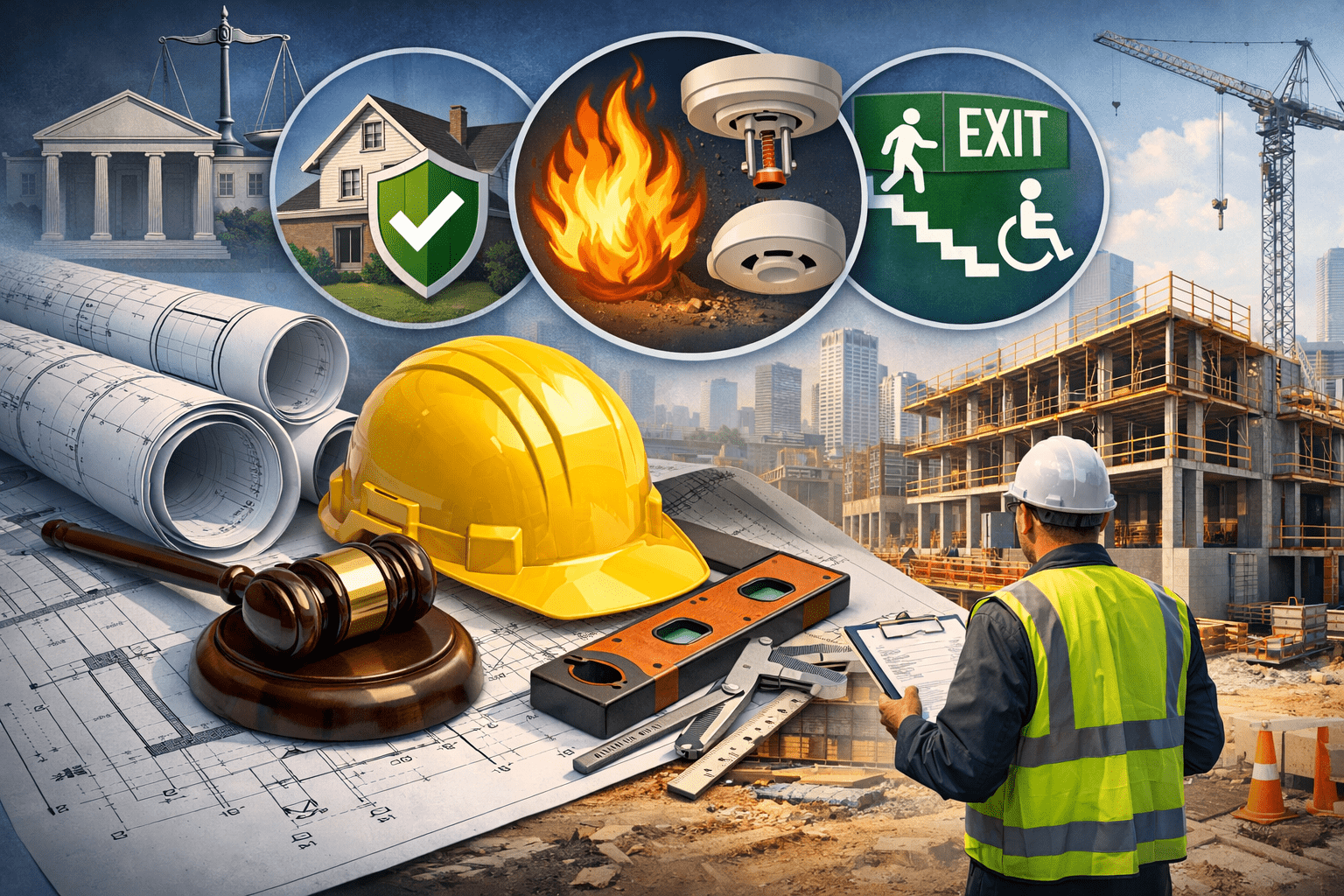
Building codes and standards are the backbone of safe, functional, and legally compliant structures. Whether constructing residential homes, commercial buildings, industrial facilities, or mixed-use developments, adherence to recognized codes ensures safety, structural integrity, accessibility, and environmental responsibility.
Compliance with building codes and standards is not just a regulatory obligation—it is a professional responsibility that protects lives, property, and investments. This article explores their purpose, categories, enforcement, and practical role in modern construction and facilities management.
What Are Building Codes and Standards?
Building codes provide a systematic set of regulations that ensure the safety, health, and welfare of building occupants by specifying minimum construction standards and enforceable requirements. They set minimum requirements to ensure that structures meet acceptable levels of:
- Safety
- Health
- Structural stability
- Fire resistance
- Energy efficiency
- Accessibility
- Environmental protection
Codes are typically enforceable by law, while standards serve as technical references that help professionals meet code requirements.
Together, they create a framework that ensures consistency and accountability across the construction industry.
Why Building Codes and Standards Matter?
Failure to comply can result in severe consequences, including structural failures, fire hazards, legal penalties, project delays, and safety risks. Compliance provides critical benefits:
- Protects occupants from harm
- Reduces liability and legal exposure
- Ensures insurance eligibility
- Improves long-term durability
- Enhances property value
- Supports sustainable construction
Codes exist because history has shown what happens when safety is ignored. From collapsed structures to deadly fires, many tragedies have led to stricter regulations worldwide.
Key Categories Covered by Building Codes
Modern building codes and standards regulate nearly every aspect of a structure. Major categories include:
Structural Integrity
Ensures buildings can withstand loads, wind, earthquakes, and environmental stresses.
Fire Protection
Covers exits, fire-rated materials, suppression systems, alarms, and evacuation design.
Electrical Systems
Defines safe wiring practices, grounding, load capacity, and protection against electrical hazards.
Plumbing and Sanitation
Regulates water supply, drainage, waste systems, and public health safeguards.
Mechanical and HVAC
Sets requirements for ventilation, air quality, and safe mechanical operations.
Accessibility
Mandates compliance with inclusive design for persons with disabilities.
Energy Efficiency
Encourages sustainable practices through insulation, lighting standards, and efficient building systems.
Each category plays a role in minimizing risk and ensuring building performance.
Codes vs. Standards: Understanding the Difference
Although often used interchangeably, building codes and standards serve different functions:
| Building Codes | Standards |
|---|---|
| Legally enforceable | Technical guidelines |
| Adopted by governments | Created by industry bodies |
| Mandatory compliance | Referenced to meet codes |
| Focus on minimum safety | Focus on best practices |
For example, a code may require fire-resistant materials, while a standard specifies how those materials must be tested and rated.
Who Develops Building Codes and Standards?
Building regulations are created and updated by recognized authorities and professional organizations. These typically include:
- Government regulatory bodies
- International code councils
- Engineering associations
- Fire protection authorities
- Environmental agencies
Codes evolve continuously to address new materials, technologies, and safety lessons learned from past failures.
Enforcement and Regulatory Compliance
Building codes and standards are enforced by local authorities through:
- Permits and approvals
- Plan reviews
- Site inspections
- Occupancy certifications
- Compliance audits
Non-compliance may result in penalties, project shutdowns, or required rework. Regulatory enforcement ensures that safety is not compromised for speed or cost.
Professionals must understand local requirements, as codes vary by region and jurisdiction.
Role in Facilities Management
Building codes and standards continue to apply even after construction. Facilities managers must maintain compliance through:
- Regular safety inspections
- Fire system maintenance
- Structural integrity monitoring
- Accessibility upgrades
- Renovation approvals
Compliance is an ongoing obligation that ensures buildings remain safe throughout their lifecycle.
Building Codes and Risk Reduction
Codes are fundamentally designed to reduce risk. They prevent:
- Structural collapse
- Fire spread
- Electrical accidents
- Water contamination
- Occupant injuries
- Environmental damage
When followed correctly, they serve as a protective shield for both occupants and owners.
Common Compliance Challenges
Despite their importance, many projects struggle with building codes and standards due to:
- Lack of awareness
- Outdated design practices
- Budget constraints
- Poor documentation
- Inadequate inspections
- Misinterpretation of requirements
Early planning and expert consultation help prevent costly compliance failures.
Best Practices for Meeting Building Codes and Standards
To ensure compliance, construction and facilities teams should:
- Study local regulatory requirements
- Use certified materials and systems
- Engage licensed professionals
- Conduct pre-construction reviews
- Schedule routine inspections
- Maintain accurate documentation
- Train teams on compliance protocols
Proactive compliance reduces project risk and enhances safety outcomes.
The Future of Building Codes and Standards
Building regulations continue to evolve alongside emerging technologies and sustainability goals. Future trends include:
- Smart building integration
- Green construction mandates
- Climate-resilient design
- Advanced fire suppression systems
- Digital compliance tracking
As buildings become more complex, codes will play an even greater role in ensuring safety and performance.
Final Thoughts
Building codes and standards are essential pillars of compliance, safety, and professional construction practice. They provide a structured framework that protects lives, safeguards investments, and ensures consistent quality across all types of facilities.
Compliance is not optional—it is the foundation of responsible building design, construction, and long-term operation. Organizations that prioritize adherence to building codes and standards create safer environments, stronger structures, and sustainable communities.
Understanding and applying these regulations correctly is a critical responsibility for engineers, architects, contractors, and facilities managers alike.