
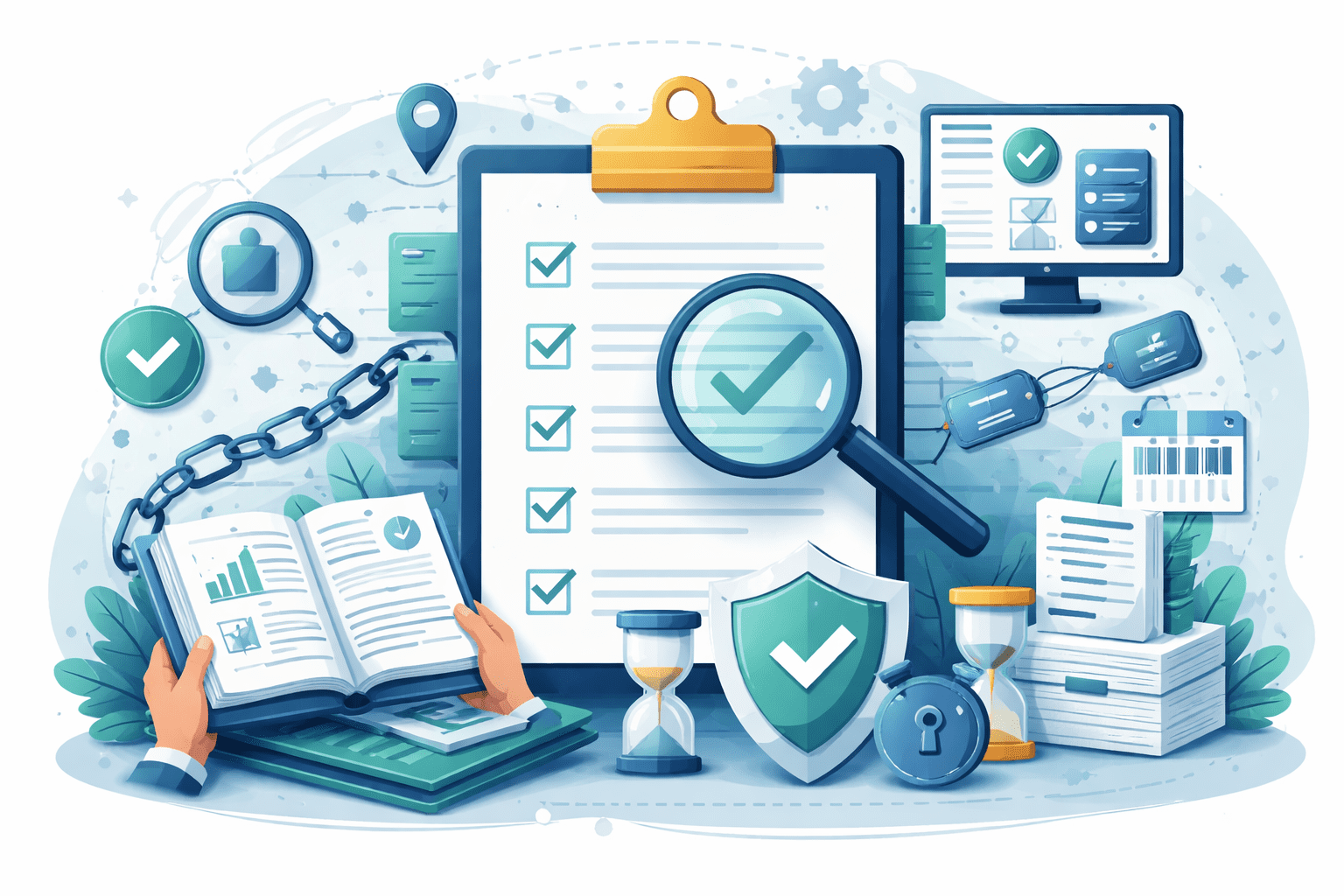
Fundamental pillars of compliance and standards across regulated industries. Whether operating in manufacturing, healthcare, engineering, construction, logistics, or facilities management, organizations must maintain accurate records and clear tracking systems to demonstrate accountability, transparency, and regulatory compliance.
Strong systems ensure that every process, action, material, and decision can be verified, reviewed, and validated when required. These practices not only protect organizations during audits and inspections but also improve operational control and risk management.
This article explores the role in compliance, their core components, challenges, and best practices for effective implementation.
What Is Documentation and Traceability?
It refer to the structured recording and tracking of processes, materials, activities, and decisions throughout an organization’s operations. Together, they create a verifiable trail that links actions to outcomes and ensures accountability at every stage.
Documentation involves maintaining formal records such as:
- Policies and procedures
- Operational logs
- Training records
- Maintenance reports
- Incident reports
- Compliance certifications
Traceability ensures that materials, actions, or processes can be tracked backward and forward across the lifecycle—from origin to final outcome.
These two elements work together to support compliance and standards in highly regulated environments.
Why Documentation and Traceability Matter in Compliance?
Effective documentation and traceability systems are essential for compliance because they enable organizations to record and verify every stage of a process or product lifecycle while providing transparency and accountability for audits and regulatory reviews.
Organizations must be able to prove that their operations align with regulatory requirements. It provide evidence that procedures were followed, standards were met, and risks were controlled.
Their importance includes:
- Supporting regulatory audits
- Demonstrating compliance with laws and standards
- Reducing operational risks
- Improving accountability
- Enabling incident investigations
- Strengthening quality assurance
- Protecting against legal disputes
Without reliable documentation and traceability, organizations cannot verify compliance or defend operational decisions.
The Role in Regulated Industries
Documentation and traceability are critical across multiple sectors:
Manufacturing
Tracking raw materials, production processes, inspections, and quality control.
Healthcare
Maintaining patient records, treatment logs, equipment maintenance, and sanitation compliance.
Construction and Engineering
Recording safety procedures, materials used, approvals, inspections, and project modifications.
Facilities Management
Monitoring maintenance schedules, safety checks, compliance records, and operational logs.
In each environment, traceability ensures transparency while documentation proves compliance.
Key Components of Documentation and Traceability Systems
Effective systems rely on structured processes that ensure accuracy and accessibility.
1. Record Management
Centralized storage of compliance and operational documents.
2. Version Control
Ensures the latest procedures and policies are consistently used.
3. Process Tracking
Monitoring workflows, approvals, and operational changes.
4. Material Traceability
Tracking product origins, handling, and movement.
5. Audit Trails
Providing verifiable records for regulatory inspections.
6. Data Accuracy
Ensuring all entries are complete, timely, and reliable.
Together, these components strengthen across organizations.
Compliance Benefits of Strong Documentation and Traceability
Organizations that prioritize documentation and traceability gain:
- Faster audit approvals
- Reduced regulatory penalties
- Improved operational transparency
- Better quality control
- Easier incident analysis
- Enhanced accountability
- Increased stakeholder confidence
Traceability helps identify where issues occur, while documentation proves corrective actions were taken.
Common Challenges Organizations Face
Despite their importance, many organizations struggle with documentation and traceability due to:
- Manual recordkeeping errors
- Missing or incomplete logs
- Disorganized filing systems
- Lack of standardized procedures
- Inconsistent employee participation
- Poor digital integration
These weaknesses often lead to compliance failures during inspections.
Best Practices for Effective Documentation and Traceability
To maintain strong compliance, organizations should adopt expert-level strategies:
Establish Standardized Procedures
Create clear documentation protocols for every process.
Digitize Records
Use digital systems to store and retrieve documents efficiently.
Maintain Real-Time Updates
Ensure records are updated immediately after activities occur.
Train Employees on Compliance Recording
Staff must understand their responsibility in documentation and traceability.
Implement Internal Reviews
Regular audits ensure records remain accurate and complete.
Secure Data Storage
Protect sensitive compliance information from loss or tampering.
Ensure Cross-Department Coordination
Traceability requires collaboration across operational teams.
These practices help organizations stay compliant and audit-ready.
Technology and Modern Traceability Systems
Digital transformation is improving documentation and traceability through:
- Cloud-based compliance systems
- Automated audit trails
- Barcode and RFID tracking
- Smart monitoring tools
- Digital maintenance logs
- Centralized compliance dashboards
Technology reduces human error and enhances operational visibility.
Traceability in Risk and Incident Management
Traceability allows organizations to investigate problems quickly by identifying:
- Source of materials
- Responsible processes
- Timeline of actions
- Compliance gaps
Documentation provides the evidence needed to resolve incidents and demonstrate corrective measures.
Together, they play a critical role in protecting organizations from regulatory and operational risks.
Documentation and Traceability as a Compliance Culture
Beyond systems and tools, organizations must build a culture where recordkeeping and traceability are treated as everyday responsibilities. Leadership must:
- Enforce compliance consistently
- Encourage accountability
- Invest in training
- Monitor documentation practices
When compliance becomes routine, documentation and traceability naturally improve.
Final Thoughts
Documentation and traceability are essential components of compliance and standards in any regulated environment. They provide transparency, accountability, and verifiable evidence that organizations are operating responsibly and within legal frameworks.
Companies that implement structured documentation and traceability systems protect themselves from regulatory risk, improve operational integrity, and strengthen long-term sustainability.
In modern compliance management, if an action cannot be documented and traced, it cannot be verified.