
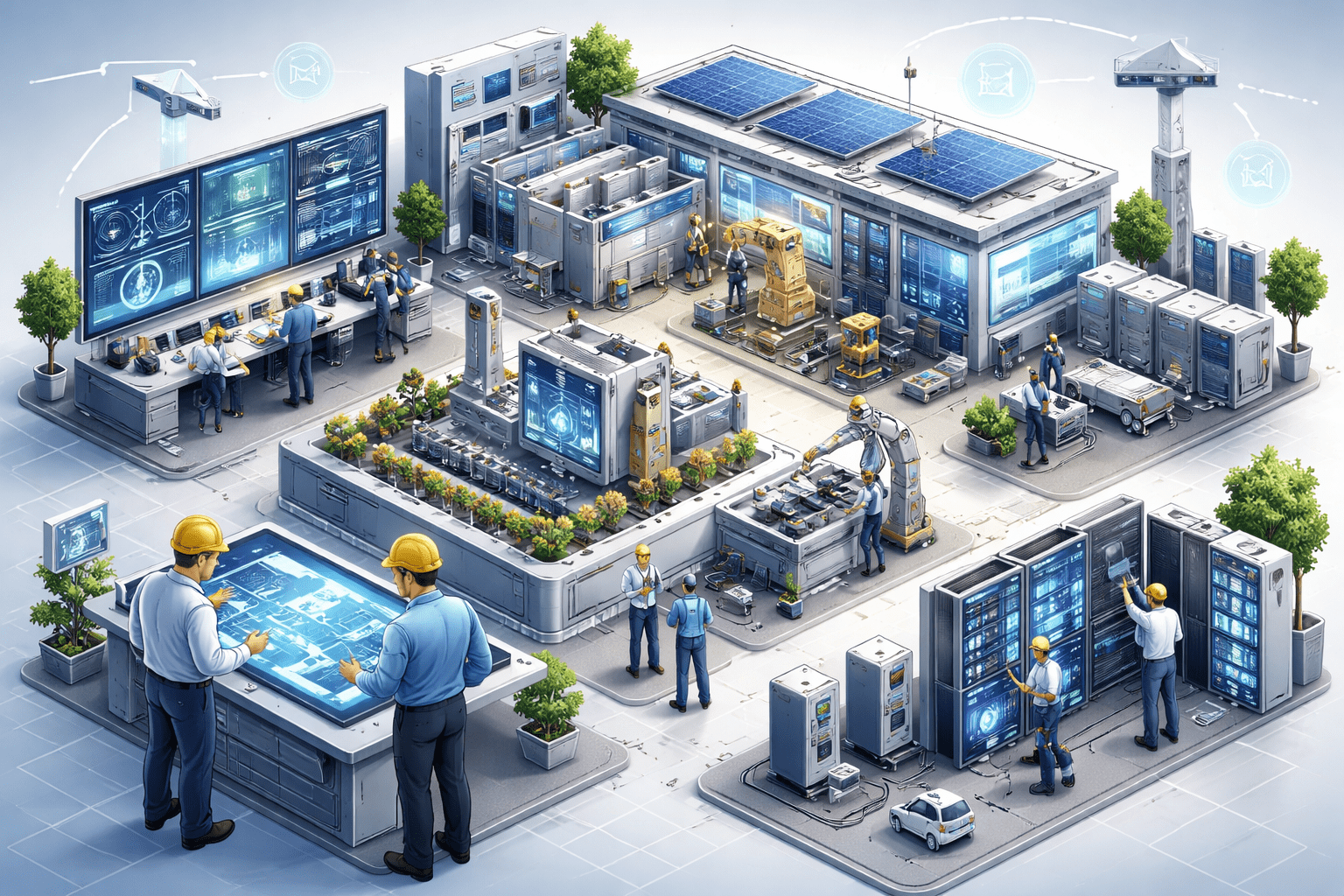
Infrastructure modernization is a core pillar of effective planning. As organizations face rapid technological change, aging assets, and increasing performance expectations, long-term facilities planning must focus not only on expansion, but also on the strategic modernization of existing infrastructure.
Without a structured modernization strategy, facilities quickly become inefficient, costly to maintain, and misaligned with operational needs. Therefore, planning must evolve from reactive maintenance to proactive modernization that supports long-term growth, resilience, and sustainability.
This article explores how infrastructure modernization fits into long-term facilities planning and outlines best practices for building future-ready infrastructure.
Understanding Infrastructure Modernization
Infrastructure modernization refers to the systematic upgrade, replacement, or transformation of physical assets, systems, and technologies to improve performance, reliability, and efficiency. It includes more than cosmetic improvements. Instead, it focuses on core systems such as power, data networks, mechanical systems, building controls, and structural components.
In long-term facilities planning, modernization serves three primary objectives:
- Extending asset lifespan
- Improving operational efficiency
- Enabling new technologies and business models
As facilities age, performance declines while maintenance costs increase. Consequently, infrastructure planning must identify when modernization delivers greater value than continued maintenance.
Why Infrastructure Modernization Matters in Long-Term Facilities Planning?
Infrastructure modernization plays a strategic role in long-term facilities planning because it directly affects cost, performance, and organizational competitiveness.
1. Cost Efficiency and Asset Value
First, aging infrastructure becomes increasingly expensive to operate. Energy consumption rises, failure rates increase, and repair costs escalate. In contrast, modern systems reduce operating expenses and extend asset value.
Therefore, infrastructure planning must evaluate total lifecycle costs rather than focusing only on short-term repair budgets.
2. Operational Performance
Second, outdated infrastructure limits productivity and service quality. For example, legacy IT networks restrict digital transformation, while inefficient HVAC systems affect comfort and energy performance.
By modernizing infrastructure, organizations improve reliability, throughput, and user experience.
3. Risk Reduction
Third, aging systems create operational and compliance risks. Equipment failures, safety hazards, and regulatory violations become more likely over time.
Infrastructure modernization reduces these risks by improving system resilience and regulatory compliance.
Key Drivers of Infrastructure Modernization
Several forces are accelerating the need for modernization in infrastructure planning.
Technological Change
Digital systems, automation, and smart building technologies require modern infrastructure platforms. Without compatible systems, organizations cannot adopt advanced tools or analytics.
Sustainability Requirements
Environmental regulations and sustainability goals push organizations to reduce emissions, energy consumption, and resource waste. Consequently, modernization becomes essential for achieving compliance and environmental performance targets.
Workforce and User Expectations
Modern users expect reliable connectivity, safe environments, and efficient systems. Therefore, long-term facilities planning must address human experience alongside technical performance.
Asset Aging
Many organizations operate facilities that are 20 to 50 years old. Over time, components reach end-of-life and no longer meet current standards.
Infrastructure Modernization Framework
Effective long-term facilities planning follows a structured modernization framework.
1. Asset Assessment
The first step involves evaluating current infrastructure performance, condition, and risk. This includes inspecting systems, analyzing maintenance records, and identifying critical failure points.
2. Gap Analysis
Next, planners compare current performance with future requirements. This highlights gaps in capacity, efficiency, compliance, and technology readiness.
3. Prioritization
Not all assets can be modernized at once. Therefore, infrastructure planning must prioritize investments based on risk, impact, and return on investment.
4. Financial Modeling
Modernization requires significant capital. Financial models evaluate costs, savings, funding options, and long-term value.
5. Implementation Roadmap
Finally, organizations develop phased modernization plans that minimize disruption and align with strategic timelines.
Best Practices for Infrastructure Modernization
Organizations that succeed in modernization apply proven best practices.
1. Align Modernization with Strategy
Modernization should directly support business or institutional goals. Every upgrade must deliver measurable operational or financial value.
2. Focus on Lifecycle Performance
Short-term fixes often create long-term problems. Instead, infrastructure planning should optimize systems for long-term reliability and efficiency.
3. Design for Flexibility
Modern infrastructure must adapt to future needs. Modular systems, scalable platforms, and open standards improve long-term resilience.
4. Integrate Sustainability
Energy-efficient systems, renewable integration, and smart controls reduce costs and environmental impact.
Role of Digital Technology in Modernization
Digital transformation has become central to infrastructure modernization.
Key technologies include:
- Building Information Modeling (BIM)
- Internet of Things (IoT) sensors
- Digital twins
- Predictive maintenance platforms
These tools enable real-time monitoring, performance optimization, and data-driven decision-making.
As a result, infrastructure planning becomes proactive rather than reactive.
Sector Applications of Infrastructure Modernization
Infrastructure modernization applies across industries.
Healthcare
Hospitals modernize systems to support digital health, patient safety, and energy efficiency.
Manufacturing
Factories upgrade automation systems to improve productivity and quality.
Education
Campuses modernize facilities to support hybrid learning and research technologies.
Public Sector
Governments modernize infrastructure to improve service delivery and community resilience.
Despite sector differences, the goal remains consistent: future-proof physical assets.
Common Challenges in Infrastructure Modernization
Infrastructure modernization faces several obstacles.
Budget Constraints
Capital limitations often delay modernization. However, delaying upgrades usually increases long-term costs.
Operational Disruption
Modernization projects may disrupt daily operations. Therefore, phased implementation reduces risk.
Legacy Systems
Older systems may lack documentation or compatibility. Careful integration planning becomes essential.
Change Management
Employees may resist new systems. Training and communication support successful adoption.
Measuring the Success of Modernization
Organizations should define clear performance indicators.
Common metrics include:
- Energy consumption reduction
- Maintenance cost savings
- System reliability improvements
- User satisfaction levels
These metrics demonstrate the return on modernization investments.
Conclusion: Infrastructure Modernization as a Strategic Imperative
Infrastructure modernization is no longer optional. It is a strategic necessity within long-term facilities planning.
By adopting structured assessment frameworks, leveraging digital technologies, and aligning modernization with strategic goals, organizations can transform aging infrastructure into high-performing, resilient, and sustainable systems.
Ultimately, effective infrastructure planning does not focus solely on building new assets. Instead, it focuses on modernizing existing ones to deliver long-term value, operational excellence, and future readiness.