
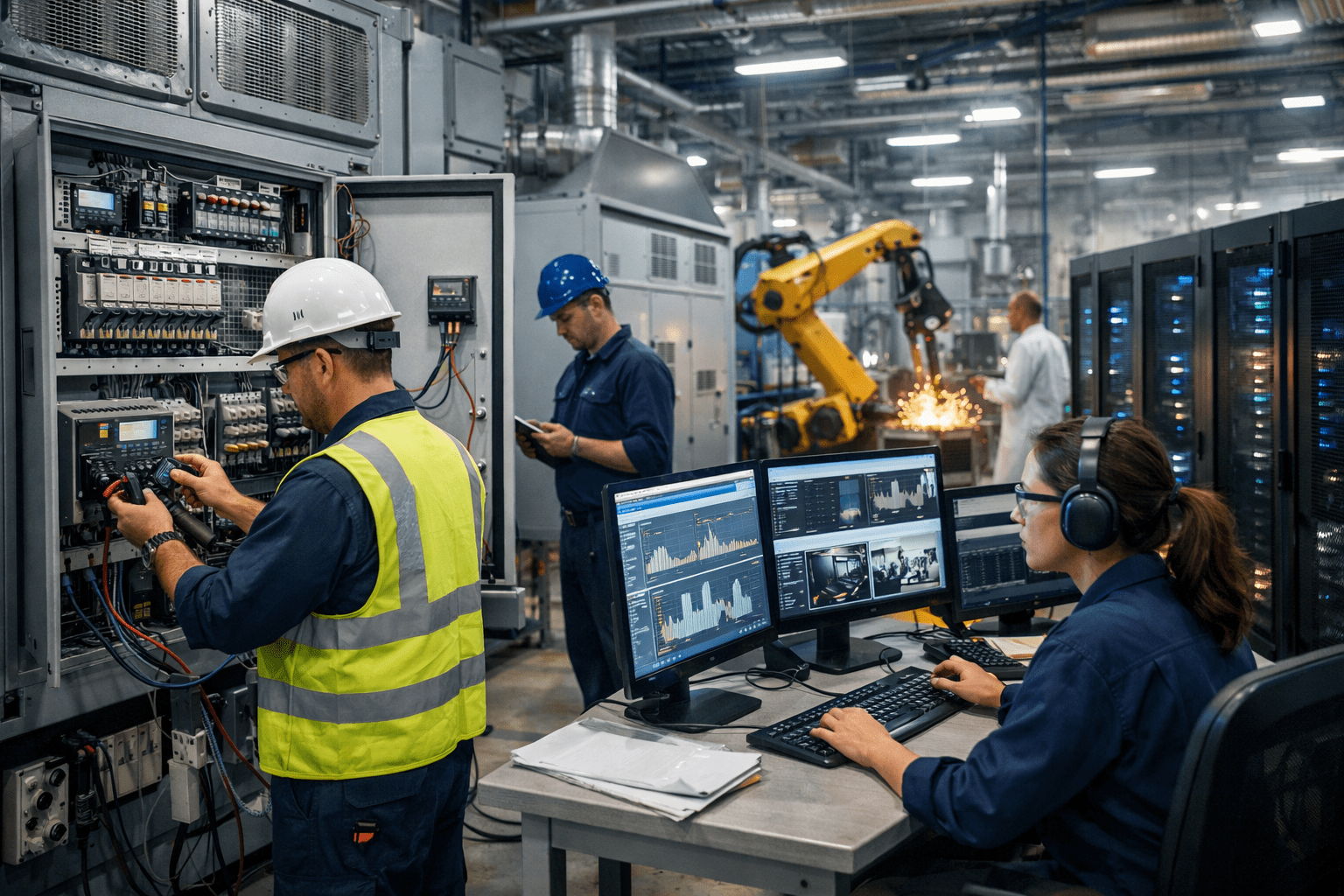
In the modern industrial and service-driven economy, facilities are no longer defined only by their physical structure or industry classification. Instead, they are increasingly categorized by service need—the level of operational support required to deliver their core functions. One of the most critical categories within this framework is electrically intensive operations, where uninterrupted and high-capacity electrical systems are fundamental to daily performance.
From data centers and hospitals to manufacturing plants and research laboratories, electrically intensive facilities depend on robust power infrastructure to maintain productivity, protect sensitive equipment, and ensure safety. Any disruption in electrical supply can result in financial losses, safety risks, or regulatory violations. Understanding how to design, manage, and optimize such facilities is essential for facility managers, engineers, and organizational leaders.
Understanding Facilities by Service Need
The concept of facilities by service need focuses on operational requirements rather than just building type. This approach evaluates what systems are essential for a facility to function effectively, such as HVAC, water supply, security, or electrical power.
Facilities categorized by service need typically include:
- Healthcare institutions
- Data centers and IT infrastructure
- Manufacturing and industrial plants
- Research and development laboratories
- Transportation hubs
- Financial and telecommunications centers
In these environments, electricity is not simply a utility—it is a core operational resource that enables all other systems to function.
What Are Electrically Intensive Operations?
Electrically intensive operations refer to facility environments where electrical demand is exceptionally high, continuous, and mission-critical. These operations require constant power availability, advanced distribution systems, and multiple layers of redundancy to prevent downtime.
Key characteristics include:
- High electrical load requirements
- Continuous or near-continuous operation
- Sensitive equipment reliant on stable power
- Advanced power monitoring systems
- Backup and failover capabilities
In such facilities, electrical systems are treated as critical infrastructure, similar to emergency response systems or safety controls.
Key Industries That Depend on Electrically Intensive Facilities
1. Data Centers and IT Facilities
Data centers represent one of the most electrically intensive environments in the world. Thousands of servers, networking devices, and storage systems operate 24/7, consuming massive amounts of electricity.
According to government research, data center energy consumption is expected to increase significantly over the next decade.
Key electrical requirements include:
- High-capacity power feeds
- Redundant electrical circuits
- Uninterruptible power supplies (UPS)
- Backup generators
- Power distribution units (PDUs)
In data centers, even a few seconds of power loss can result in data corruption, service outages, and financial penalties.
2. Healthcare and Medical Facilities
Hospitals and medical centers rely heavily on electricity to support life-saving equipment, diagnostic systems, and patient care operations.
Critical electrically intensive systems include:
- Medical imaging equipment
- Surgical systems
- Life-support machines
- Electronic health records (EHR) systems
- HVAC and ventilation systems
Healthcare facilities must maintain continuous power availability to ensure patient safety and comply with regulatory standards.
3. Manufacturing and Industrial Plants
Industrial facilities use electrically intensive operations to drive production lines, robotics, and automated systems.
Key electrical applications include:
- Heavy machinery and motor-driven systems
- Robotics and automation platforms
- Quality control equipment
- Industrial control systems (ICS)
- Safety and monitoring systems
In manufacturing, power instability can cause production delays, equipment damage, and quality issues.
4. Research and Development Laboratories
Scientific laboratories depend on precise and stable electrical supply to operate sensitive instruments and maintain controlled experimental conditions.
Electrically intensive equipment includes:
- Spectrometers and microscopes
- Testing and simulation systems
- Climate-controlled chambers
- High-performance computing clusters
Power interruptions can invalidate experiments, damage equipment, or compromise data integrity.
Why Electricity Is Critical in Facilities by Service Need?
1. Operational Continuity
In electrically intensive operations, power disruptions can halt all activities instantly. Redundant systems and continuous monitoring ensure uninterrupted service delivery.
2. Safety and Risk Management
Many electrically dependent systems directly affect human safety, such as medical devices, security systems, and emergency lighting.
3. Equipment Protection
Stable electrical supply protects sensitive equipment from voltage fluctuations, surges, and outages that could cause long-term damage.
4. Regulatory Compliance
Industries such as healthcare, finance, and manufacturing must comply with strict standards for electrical reliability and safety.
Designing Electrical Systems for Service-Critical Facilities
Needs-Based Electrical Design
Facilities by service need require electrical systems tailored to operational demands, including:
- Load analysis and capacity planning
- Redundant power paths
- Zoning for critical and non-critical systems
- Integration with building management systems
This ensures that power distribution aligns with real-world usage.
Redundancy and Resilience
For electrically intensive facilities, redundancy is essential. Common strategies include:
- Dual power feeds
- Backup generators
- UPS systems for short-term protection
- Automatic transfer switches (ATS)
These systems provide layered protection against power failures.
Maintenance Strategies for Electrically Intensive Operations
Preventive Maintenance
Routine inspections and testing prevent system failures and extend equipment lifespan.
Predictive Maintenance
Advanced sensors and analytics allow facility managers to detect performance issues before they escalate.
Compliance Audits
Many service-critical facilities must undergo regular electrical audits to ensure safety and reliability.
Technology Trends in Electrically Intensive Facilities
Smart Power Management
Digital platforms enable real-time monitoring of electrical systems, helping optimize energy usage and reduce downtime.
Energy Efficiency and Sustainability
Energy-efficient electrical systems reduce operational costs while supporting sustainability goals.
Challenges in Managing Electrically Intensive Operations
- High infrastructure costs
- Skilled workforce requirements
- Increasing energy demand
- Aging electrical systems
Addressing these challenges requires long-term investment and strategic planning.
Best Practices for Facility Managers
- Conduct regular power audits
- Implement redundancy strategies
- Invest in smart monitoring tools
- Train staff on emergency procedures
- Align power systems with service needs
Conclusion
In the framework of facilities by service need, electrically intensive operations represent some of the most demanding environments. These facilities depend on reliable, high-capacity electrical systems to function safely and effectively.
As organizations continue to rely on automation, digital platforms, and advanced technologies, electrical infrastructure will become even more central to operational success. Facilities that invest in resilient and intelligent power systems will be better positioned to achieve long-term efficiency, safety, and sustainability.