
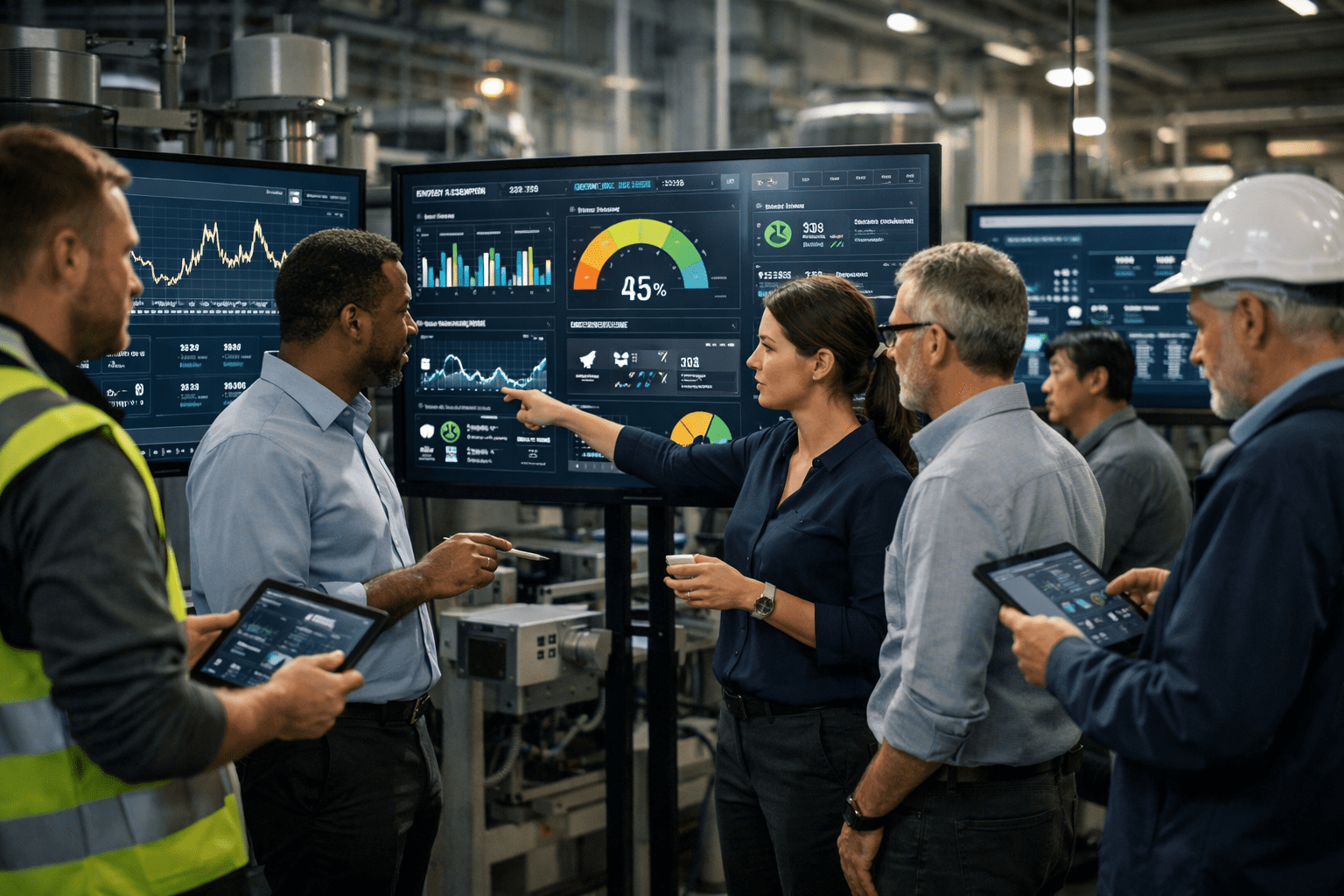
Energy efficiency measurement has become essential in an environment of rising energy costs, stricter climate regulations, and growing sustainability expectations, as organizations can no longer afford to manage energy consumption without reliable performance data.
This article provides a comprehensive and professional overview and explaining what it involves, why it matters, and how organizations can implement effective frameworks to drive continuous improvement.
What Is Energy Efficiency Measurement?
Refers to the systematic process of collecting, analyzing, and interpreting energy performance data to determine how effectively energy is being used relative to output or service levels. Rather than relying on estimates or assumptions, organizations use measurable indicators to track real performance.
In practice, helping to answer key questions such as:
- How much energy is consumed per unit of output?
- Where do the largest inefficiencies occur?
- Are efficiency initiatives producing measurable savings?
- How does current performance compare to historical baselines?
As a result, energy management becomes data-driven instead of reactive.
Why Energy Efficiency Measurement Matters?
Energy represents one of the largest controllable operating expenses for most organizations. Without proper measurement, inefficiencies remain hidden and improvement efforts lack direction. Consequently, poor energy performance often leads to higher costs, unnecessary emissions, and regulatory risk.
However, effective energy efficiency measurement enables organizations to:
- Identify energy waste and inefficiencies
- Prioritize improvement initiatives
- Validate return on investment (ROI)
- Support sustainability reporting
- Strengthen compliance and risk management
Therefore, energy efficiency measurement transforms energy from a passive cost into a strategic performance variable.
Core Metrics for Energy Efficiency Measurement
Although energy metrics vary by industry, several core categories are widely used across sectors.
1. Energy Intensity Metrics
Energy intensity metrics measure the relationship between energy consumption and operational output.
Common examples include:
- Kilowatt-hours per square meter
- Energy per unit of production
- Energy cost per employee
- Energy per operating hour
These metrics allow organizations to compare performance over time and across facilities. Furthermore, they support benchmarking against industry standards.
2. Baseline and Benchmark Metrics
Baselines establish reference points for performance evaluation. Without them, improvement cannot be accurately measured.
Typical baseline approaches include:
- Historical consumption data
- Peer comparisons
- Industry benchmarks
- Regulatory performance standards
As a result, organizations can determine whether energy performance is improving, stagnating, or deteriorating.
3. Demand and Load Metrics
Demand metrics focus on consumption patterns and peak usage.
Key indicators include:
- Peak demand levels
- Load factor
- Time-of-use consumption
- Demand response participation
These metrics are especially valuable for controlling costs, since demand charges often represent a significant portion of energy bills.
4. Carbon and Environmental Metrics
Energy efficiency measurement increasingly includes environmental performance indicators.
Common metrics include:
- Carbon emissions per unit of output
- Energy-related greenhouse gas footprint
- Renewable energy share
- Verified energy savings
In addition to supporting sustainability strategies, these metrics help organizations meet regulatory and stakeholder expectations.
Leading and Lagging Indicators in Energy Measurement
Energy efficiency measurement relies on both historical and predictive indicators.
Lagging indicators, such as total consumption or energy cost, describe past performance. Although useful, they provide limited guidance for future action.
Leading indicators, on the other hand, include equipment performance data, sensor readings, and real-time process efficiency metrics. Consequently, leading indicators allow organizations to anticipate inefficiencies before they become costly problems.
Designing an Effective Energy Measurement Framework
Globally recognized standards such as the International Performance Measurement and Verification Protocol (IPMVP) provide common methodologies for validating energy savings and ensuring measurement consistency.
A successful energy efficiency measurement framework follows several best-practice principles.
First, organizations must define clear objectives aligned with strategic priorities, such as cost reduction, carbon neutrality, or regulatory compliance.
Next, reliable baselines should be established to enable meaningful comparisons. Without consistent reference points, performance trends cannot be interpreted accurately.
Moreover, measurement efforts should focus on high-impact assets. Since not all systems contribute equally to energy consumption, prioritization improves efficiency.
Finally, data collection methods must be standardized and integrated with operational decision-making. In this way, energy metrics directly support performance improvement initiatives.
Tools and Technologies for Energy Measurement
Modern energy efficiency measurement is increasingly supported by digital technologies. These include smart meters, building management systems, IoT sensors, and advanced analytics platforms.
Through these tools, organizations gain:
- Real-time monitoring
- Automated reporting
- Predictive analytics
- Continuous optimization
As a result, energy data becomes dynamic and actionable rather than static and retrospective.
Using Energy Metrics for Strategic Decisions
Energy efficiency measurement supports informed decision-making across multiple areas.
From an investment perspective, energy data justifies capital projects such as HVAC upgrades, equipment retrofits, and renewable installations.
Operationally, performance metrics identify inefficient processes, equipment malfunctions, and behavioral waste.
From a risk management standpoint, measurement reduces exposure to volatile energy prices and regulatory penalties.
Furthermore, energy metrics underpin sustainability strategies by providing credible data for ESG reporting and stakeholder communication.
Common Mistakes in Energy Efficiency Measurement
Despite its importance, many organizations struggle with energy measurement due to avoidable errors.
One common mistake is measuring without context. Raw consumption data without normalization offers limited insight.
Another issue is poor data quality. Inaccurate meters and inconsistent records undermine credibility.
In addition, tracking too many metrics creates complexity without adding value.
Most importantly, measurement often fails when it does not lead to action. Without corrective initiatives, performance data remains informational rather than transformational.
Energy Efficiency Measurement in Smart Systems
Energy measurement is increasingly embedded within smart and automated systems. Examples include smart buildings, digital twins, and AI-driven optimization platforms.
These systems enable:
- Continuous monitoring
- Predictive demand forecasting
- Automated efficiency adjustments
- Integrated comfort management
Consequently, energy efficiency measurement evolves from manual tracking into intelligent energy orchestration.
Integrating Energy Measurement with Organizational Performance
High-performing organizations integrate energy metrics with broader performance frameworks. Energy indicators are aligned with financial KPIs, maintenance metrics, and productivity measures.
Through this integration, energy efficiency contributes directly to overall business performance rather than operating as an isolated sustainability function.
Building an Energy Efficiency Dashboard
A professional energy efficiency dashboard typically includes:
- Total consumption trends
- Energy intensity ratios
- Peak demand patterns
- Cost breakdowns
- Carbon footprint indicators
Dashboards should be role-based, visually clear, and regularly updated. Above all, they must be action-oriented. When designed correctly, dashboards convert data into strategic insight.
Future Trends in Energy Efficiency Measurement
Energy performance measurement continues to evolve in several key directions.
Artificial intelligence enables predictive analytics and automated optimization. Real-time systems allow dynamic demand control. Regulatory frameworks increase the rigor of sustainability reporting. At the same time, experience-based metrics incorporate comfort and user satisfaction into energy performance evaluation.
Therefore, energy efficiency measurement is becoming a core capability of digital enterprises.
Conclusion: Why Energy Efficiency Measurement Is Essential
Energy efficiency measurement is not simply about reducing utility bills. Instead, it is about building resilient, sustainable, and intelligent organizations.
Through effective measurement, organizations achieve:
- Cost control
- Environmental responsibility
- Operational efficiency
- Strategic planning
- Regulatory compliance
Ultimately, energy efficiency measurement transforms energy from an unmanaged expense into a measurable, controllable, and optimizable business asset. In a world where sustainability and efficiency increasingly define competitiveness, organizations that master energy performance measurement gain both financial advantage and long-term strategic resilience.