
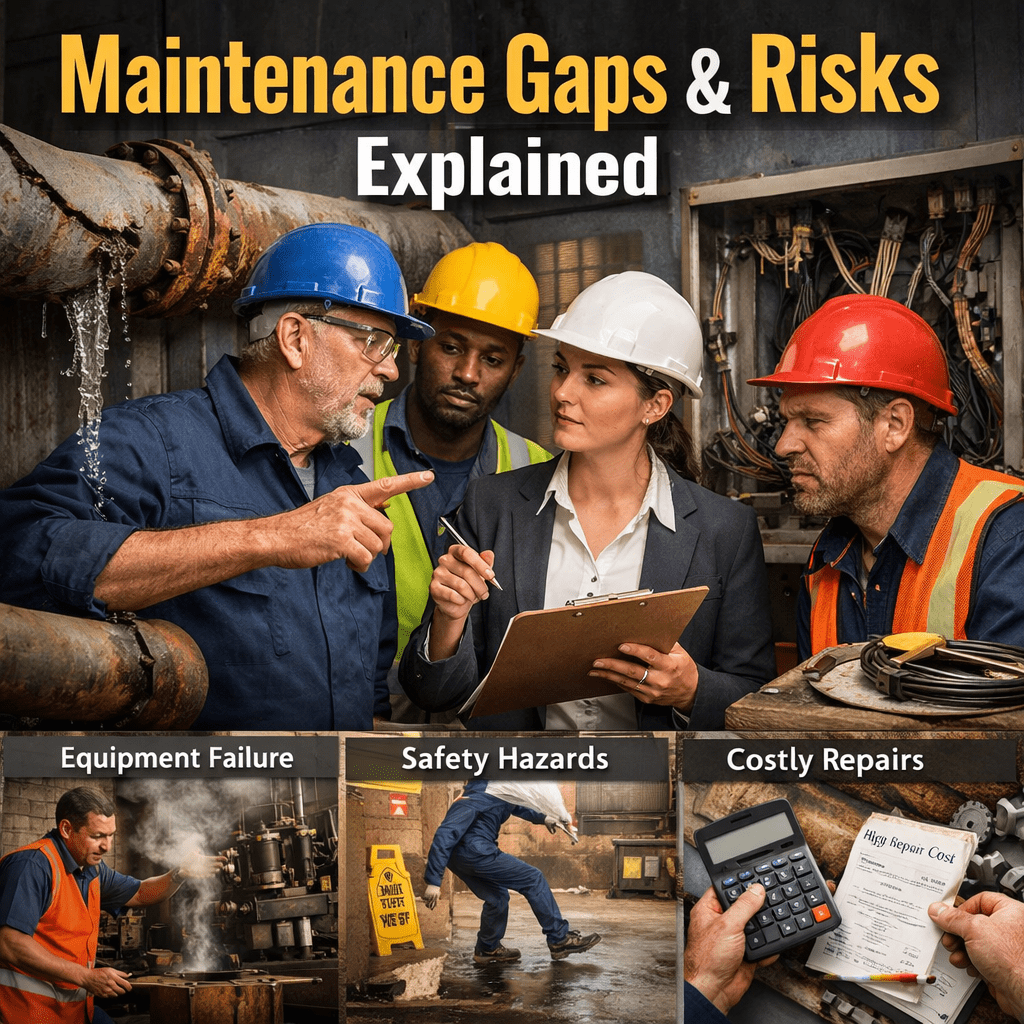
Maintenance plays a critical role in ensuring the reliability, safety, and efficiency of any system, whether in facilities management, manufacturing, IT operations, or infrastructure services. However, many organizations continue to experience operational failures due to hidden maintenance gaps and unmanaged risks. As systems become more complex, the ability to identify, analyze, and resolve maintenance weaknesses has become a core troubleshooting and problem-solving competency.
This expert-level guide explores how maintenance gaps arise, the risks they create, and how organizations can apply structured troubleshooting methods to close these gaps and protect long-term performance.
Understanding Maintenance Gaps
Maintenance gaps refer to missing, delayed, or ineffective maintenance activities that prevent systems from operating as intended. In practice, these gaps may exist in technical processes, documentation, staffing, or strategic planning. In many cases, organizations remain unaware of these gaps until a failure occurs.
Common causes of maintenance gaps include:
- Incomplete maintenance schedules
- Outdated asset records
- Lack of standardized procedures
- Insufficient staff training
- Poor communication between departments
As a result, maintenance becomes reactive rather than proactive, increasing exposure to operational risks.
Why Maintenance Gaps Are Dangerous?
Maintenance gaps create significant operational and financial risks. For example, a missed inspection may lead to equipment failure, safety incidents, or regulatory non-compliance. Therefore, even small gaps can produce disproportionately large consequences.
Industry guidance confirms that planned maintenance reduces operational risk and prevents avoidable safety and compliance failures.
Key risks associated with maintenance gaps include:
- Increased downtime
- Higher repair costs
- Reduced asset lifespan
- Safety hazards
- Compliance failures
- Loss of customer trust
Consequently, organizations must treat maintenance gaps as strategic risks rather than isolated technical issues.
Identifying Maintenance Risks
Effective troubleshooting begins with accurate risk identification. Instead of waiting for failures, organizations should actively look for vulnerabilities in their maintenance programs.
Maintenance risks typically fall into three categories:
Operational Risks
Operational risks involve disruptions to daily activities due to system failures or degraded performance.
Safety Risks
Safety risks arise when neglected systems expose employees, customers, or the public to harm.
Compliance Risks
Compliance risks occur when maintenance practices fail to meet regulatory or industry standards.
By categorizing risks, organizations can prioritize actions based on impact and likelihood.
Common Types of Maintenance Gaps
Understanding typical maintenance gaps allows teams to recognize patterns and address root causes more effectively.
Preventive Maintenance Gaps
Preventive maintenance gaps occur when scheduled tasks are skipped, delayed, or poorly executed.
Predictive Maintenance Gaps
Predictive maintenance gaps emerge when organizations lack monitoring tools or fail to use performance data.
Documentation Gaps
Documentation gaps include missing asset histories, incomplete procedures, or outdated manuals.
Skills Gaps
Skills gaps arise when staff lack training or technical expertise.
Resource Gaps
Resource gaps involve insufficient budget, tools, or personnel.
Together, these gaps form the foundation of most maintenance failures.
A Structured Approach to Troubleshooting Maintenance Gaps
Professional problem solving requires a structured approach. Rather than addressing symptoms, teams should focus on identifying systemic weaknesses.
Step 1: Define the Maintenance Problem
First, teams must clarify what is failing and why current maintenance methods are insufficient.
Key questions include:
- Which assets fail most frequently?
- Which tasks are consistently delayed?
- Where do incidents repeat?
Step 2: Collect Evidence
Next, teams should review maintenance logs, incident reports, audit findings, and user feedback.
Step 3: Analyze Root Causes
Then, root cause analysis helps identify why gaps exist. Common techniques include:
- The 5 Whys method
- Process mapping
- Failure mode analysis
Step 4: Implement Corrective Actions
Afterward, organizations must redesign processes, update schedules, improve documentation, or retrain staff.
Step 5: Monitor and Review
Finally, continuous monitoring ensures that gaps remain closed over time.
The Role of Preventive Maintenance
Preventive maintenance remains the most effective defense against maintenance gaps. By performing tasks before failures occur, organizations reduce both risk and cost.
Key preventive maintenance benefits include:
- Lower failure rates
- Improved safety
- Predictable budgets
- Higher asset reliability
Therefore, preventive strategies should form the foundation of any maintenance program.
Predictive Maintenance and Risk Reduction
Predictive maintenance uses data and analytics to identify risks before they escalate. Through sensor data and performance monitoring, organizations can anticipate failures and address them proactively.
Predictive maintenance helps reduce:
- Unexpected breakdowns
- Emergency repairs
- Production losses
- Safety incidents
As a result, predictive methods significantly enhance troubleshooting effectiveness.
The Impact of Poor Documentation
Documentation gaps represent one of the most underestimated maintenance risks. Without accurate records, teams struggle to diagnose issues and replicate solutions.
Common documentation failures include:
- Missing asset histories
- Unclear procedures
- Inconsistent terminology
- Lack of version control
Consequently, organizations should treat documentation as a critical operational asset.
Human Factors and Maintenance Gaps
Not all maintenance gaps originate from technical issues. In many cases, human and organizational factors play a larger role.
Key human-related contributors include:
- Insufficient training
- High staff turnover
- Poor communication
- Lack of accountability
- Resistance to change
Therefore, effective troubleshooting must address people and processes, not just equipment.
Technology and Maintenance Risk Management
Technology plays a crucial role in identifying and closing maintenance gaps. Digital tools provide visibility, automation, and performance insights.
Key technologies include:
- Computerized Maintenance Management Systems (CMMS)
- Condition monitoring systems
- Mobile inspection tools
- Asset tracking platforms
- Predictive analytics software
Together, these tools support proactive decision making and risk reduction.
Key Performance Indicators for Maintenance Risk
Organizations should track performance metrics to measure maintenance effectiveness.
Important KPIs include:
- Mean time between failures (MTBF)
- Mean time to repair (MTTR)
- Preventive maintenance compliance rate
- Asset availability
- Safety incident frequency
Ultimately, KPIs reveal where gaps exist and guide continuous improvement.
Best Practices for Closing Maintenance Gaps
Professional maintenance programs follow proven best practices. When applied consistently, these practices reduce risk and improve reliability.
Best practices include:
- Standardizing maintenance procedures
- Implementing preventive and predictive strategies
- Investing in staff training
- Auditing maintenance processes regularly
- Maintaining accurate documentation
- Using technology for monitoring and reporting
Over time, these actions create resilient systems and stronger organizational performance.
Integrating Risk Management into Maintenance Strategy
Maintenance risk management should align with overall business strategy. Instead of operating in isolation, maintenance teams must collaborate with operations, safety, finance, and leadership.
Integrated risk management provides:
- Better resource allocation
- Improved compliance
- Stronger safety culture
- Higher operational stability
As a result, maintenance becomes a strategic function rather than a reactive service.
Conclusion
Maintenance gaps and risks represent one of the most significant hidden threats to operational performance. Although many organizations focus on troubleshooting failures after they occur, professional problem solving requires identifying and closing gaps before incidents happen. By applying structured troubleshooting methods, investing in preventive and predictive maintenance, and addressing human and documentation issues, organizations can dramatically reduce risk exposure.
In modern environments, maintenance is no longer a support function. Instead, it is a strategic capability that directly influences safety, reliability, and long-term success.