
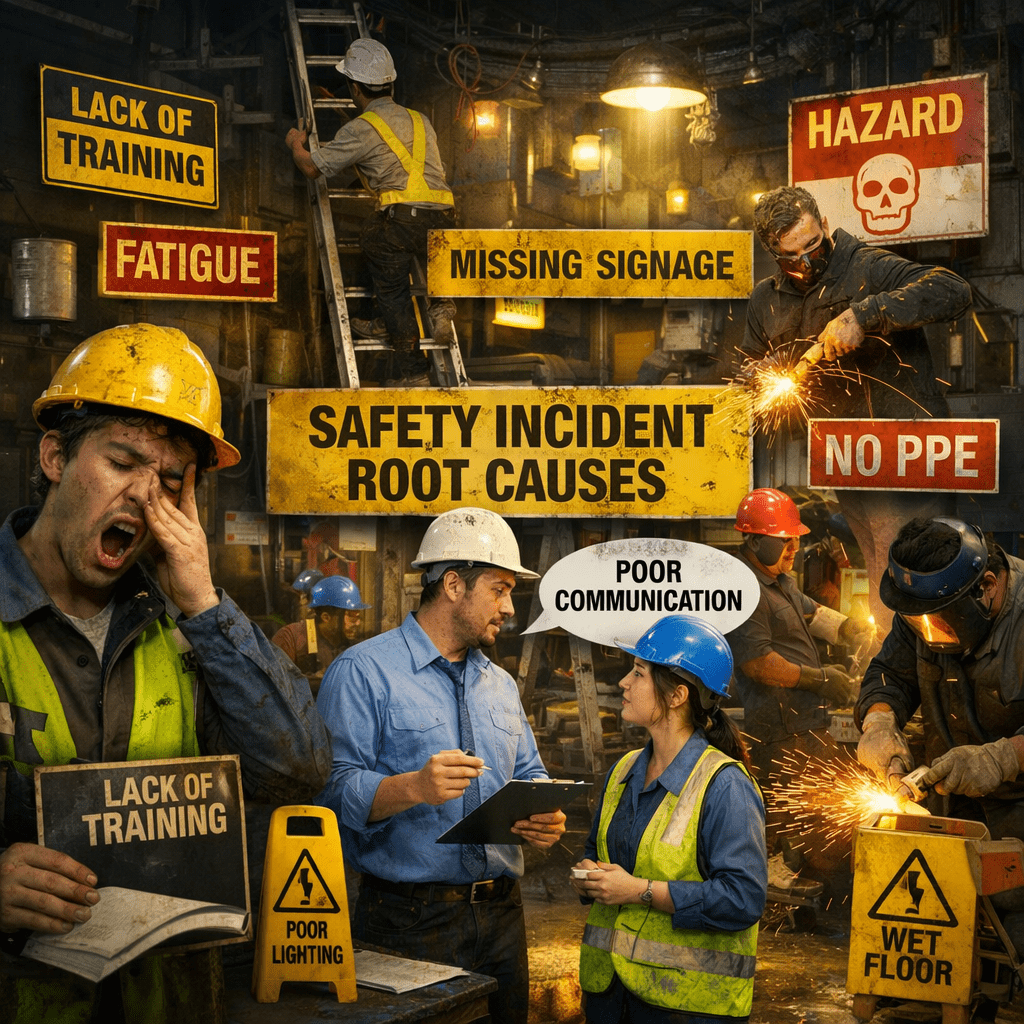
Safety incidents remain one of the most serious challenges across industries, including manufacturing, construction, healthcare, facilities management, and energy. However, many organizations continue to focus on immediate corrective actions without fully understanding why incidents occur in the first place. As a result, the same problems repeat, exposing people, assets, and operations to unnecessary risk.
This professional guide explores how to identify and analyze safety incident root causes using structured troubleshooting and problem-solving methods. It provides expert-level insight into common root causes, diagnostic frameworks, and best practices for preventing future incidents.
Understanding Safety Incidents
A safety incident refers to any unplanned event that results in injury, illness, property damage, environmental harm, or near misses. In practice, incidents range from minor first-aid cases to major accidents involving fatalities or regulatory violations. Although some incidents appear isolated, most reflect deeper systemic weaknesses.
Safety incidents typically fall into three broad categories. This includes personal, process, and environmental incidents, and underlying factors such as failure to identify hazards is a root cause of injuries, illnesses, and incidents.
- Personal safety incidents, such as slips, falls, or equipment injuries
- Process safety incidents, including chemical releases, fires, or explosions
- Environmental safety incidents, involving spills or emissions
By categorizing incidents early, organizations can apply more targeted troubleshooting strategies.
Why Root Cause Analysis Matters?
Root cause analysis (RCA) plays a critical role in safety management. Without RCA, organizations treat symptoms rather than underlying causes. Consequently, corrective actions remain superficial and ineffective over time.
Effective root cause analysis provides:
- Long-term risk reduction
- Improved regulatory compliance
- Lower incident recurrence
- Stronger safety culture
- Better resource allocation
Therefore, RCA should form the foundation of every safety investigation.
Common Root Causes of Safety Incidents
While each incident appears unique, most share similar root causes. By recognizing common patterns, organizations can proactively address risks before incidents occur.
Human Factors
Human error remains one of the most frequently cited root causes. However, errors rarely stem from negligence alone.
Typical human-related causes include:
- Inadequate training
- Fatigue and stress
- Poor communication
- Lack of supervision
- Complacency
In many cases, system design and organizational culture influence human behavior more than individual choices.
Equipment and Technology Failures
Equipment failures often contribute directly to safety incidents. For example, malfunctioning machinery can cause injuries or environmental damage.
Common equipment-related causes include:
- Poor maintenance
- Aging infrastructure
- Design flaws
- Inadequate inspections
- Improper use
As a result, technical reliability remains a critical safety control.
Process and Procedure Gaps
Process failures represent another major root cause category. When procedures lack clarity or consistency, workers improvise, increasing risk.
Typical process-related causes include:
- Missing or outdated procedures
- Inconsistent work practices
- Lack of standard operating procedures
- Poor change management
Therefore, documented processes form a key pillar of safety management.
Organizational and Cultural Issues
Organizational factors often remain hidden but powerful. In many organizations, leadership behavior and corporate culture influence safety outcomes more than technical systems.
Common organizational root causes include:
- Production pressure over safety
- Insufficient staffing
- Weak accountability
- Inadequate safety leadership
- Poor safety reporting systems
Ultimately, culture shapes how people respond to risk.
A Structured Framework for Root Cause Analysis
Professional troubleshooting requires a structured approach. Rather than assigning blame, teams should investigate how systems failed.
Step 1: Define the Incident Clearly
First, investigators must describe what happened, where it occurred, and who was involved. Accurate timelines help establish factual understanding.
Step 2: Collect Evidence
Next, teams should gather data such as:
- Incident reports
- Witness statements
- Equipment logs
- CCTV footage
- Training records
Reliable evidence prevents assumptions.
Step 3: Identify Contributing Factors
Then, investigators should examine human, technical, and organizational factors that influenced the incident.
Step 4: Perform Root Cause Analysis
Afterward, structured tools help uncover underlying causes, including:
- The 5 Whys technique
- Fishbone diagrams
- Fault tree analysis
- Event sequence analysis
These methods expose systemic failures.
Step 5: Develop Corrective Actions
Finally, organizations must implement corrective actions that address root causes rather than symptoms.
The Role of Near Misses in Root Cause Analysis
Near misses provide valuable learning opportunities. Although no injury occurs, near misses reveal system weaknesses that could lead to serious incidents.
Analyzing near misses helps organizations:
- Identify hazards early
- Improve risk awareness
- Strengthen reporting culture
- Prevent future incidents
Therefore, near miss reporting should remain a core safety practice.
Preventing Recurrence Through Corrective Actions
Corrective actions determine whether root cause analysis delivers value. Without effective actions, investigations fail to produce meaningful change.
Strong corrective actions should be:
- Specific and measurable
- Focused on system improvements
- Assigned to responsible owners
- Tracked for completion
- Reviewed for effectiveness
In addition, organizations should prioritize preventive actions that eliminate risks entirely.
The Importance of Documentation
Documentation plays a critical role in safety management. Without accurate records, organizations lose valuable institutional knowledge.
Key documentation includes:
- Incident investigation reports
- Corrective action plans
- Training records
- Risk assessments
- Audit findings
As a result, documentation supports learning and continuous improvement.
Technology and Safety Root Cause Analysis
Digital tools enhance root cause analysis. Modern systems improve data collection, analysis, and reporting.
Common safety technologies include:
- Incident management software
- Mobile reporting tools
- Analytics dashboards
- Predictive risk models
- Automated audit systems
Together, these tools increase investigation efficiency and accuracy.
Human Factors and Behavioral Safety
Behavior-based safety programs address human root causes. Instead of focusing on punishment, these programs emphasize observation, feedback, and coaching.
Behavioral safety supports:
- Safer work habits
- Stronger peer accountability
- Improved risk perception
- Better communication
Consequently, human factors become manageable rather than unpredictable.
Key Performance Indicators for Safety Root Causes
Organizations should track metrics to evaluate safety performance.
Important KPIs include:
- Incident frequency rate
- Near miss reporting rate
- Repeat incident percentage
- Corrective action closure rate
- Safety training completion
Ultimately, these metrics reveal whether root causes are being effectively addressed.
Best Practices for Safety Root Cause Analysis
Professional organizations follow proven best practices. When applied consistently, these practices prevent incident recurrence.
Best practices include:
- Using structured RCA methods
- Involving cross-functional teams
- Focusing on system design
- Avoiding blame culture
- Communicating lessons learned
- Reviewing investigations regularly
Over time, these practices build a mature safety culture.
Integrating Root Cause Analysis Into Safety Strategy
Root cause analysis should align with overall safety strategy. Instead of operating independently, investigations should support long-term risk management goals.
Strategic integration provides:
- Better hazard identification
- Stronger leadership engagement
- Improved compliance outcomes
- Sustainable safety improvements
As a result, RCA becomes a strategic tool rather than a reactive response.
Conclusion
Safety incident root causes represent the true drivers of workplace risk. Although many organizations focus on immediate fixes, professional troubleshooting demands deeper analysis. By applying structured root cause methods, addressing human and organizational factors, and implementing strong corrective actions, organizations can prevent incident recurrence and strengthen long-term safety performance.
In modern operations, effective root cause analysis is not optional. Instead, it is a fundamental capability that protects people, assets, and organizational reputation.