
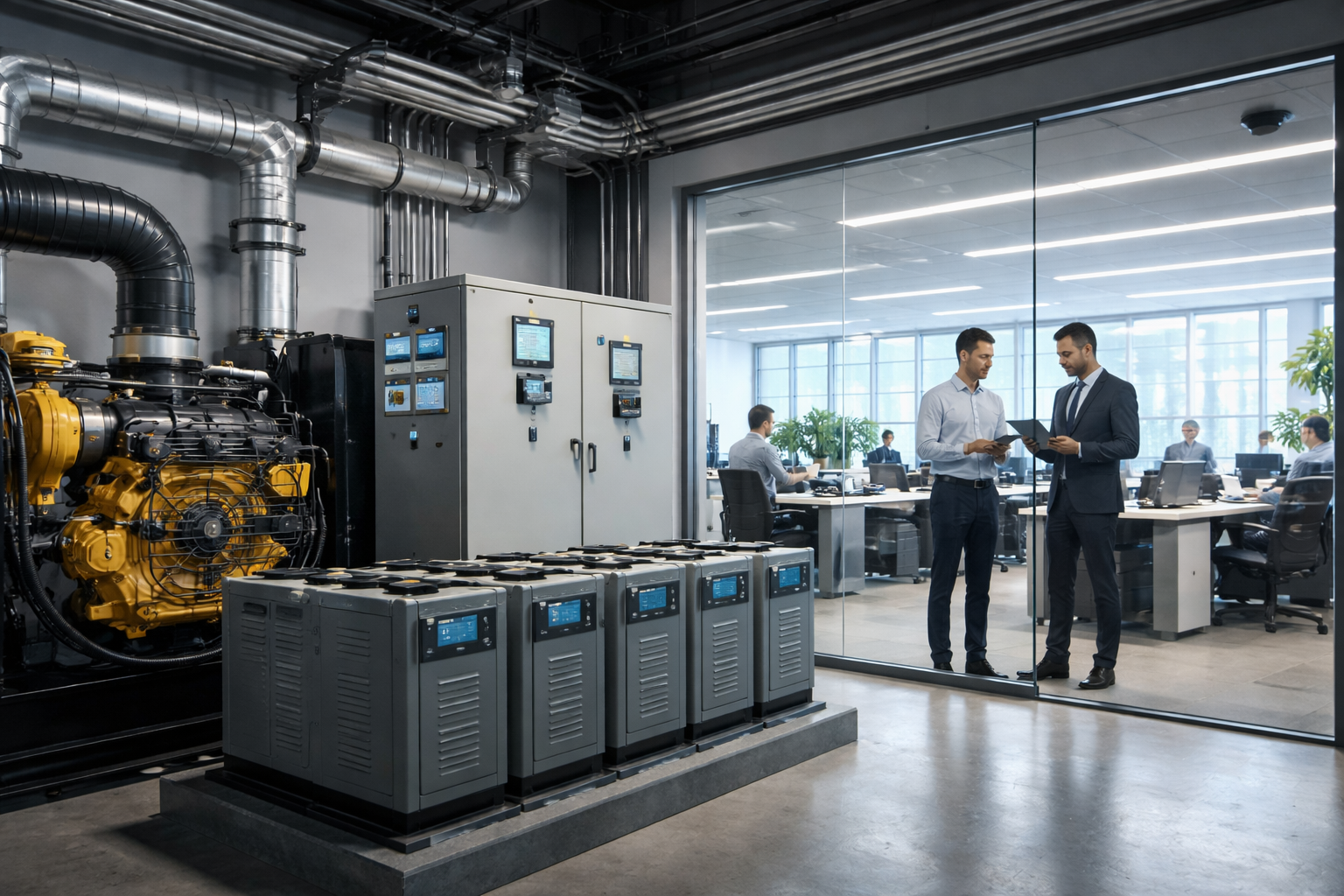
Modern buildings rely heavily on continuous electricity to operate essential infrastructure. Lighting, elevators, HVAC systems, security networks, and digital communication platforms all depend on reliable power availability. When electrical disruptions occur, building operations can quickly come to a halt. This is why backup power systems are a critical component of modern building design.
Within the broader Building Systems Deep Dive, backup power systems ensure that essential building operations continue during outages or grid failures. These systems provide emergency electricity to critical infrastructure, helping facilities maintain safety, operational continuity, and system reliability.
As buildings become more technology-driven and interconnected, the importance of reliable standby power infrastructure continues to grow across commercial, residential, and industrial environments.
What Are Backup Power Systems?
Backup power systems are secondary electrical power sources designed to supply electricity when the primary utility grid fails. These systems activate automatically during outages and provide temporary power until the main electrical supply is restored.
In modern facilities, emergency power infrastructure supports a variety of building operations, including life safety systems, communication networks, and climate control systems.
Backup power solutions are commonly installed in:
- hospitals and healthcare facilities
- commercial office buildings
- data centers
- airports and transportation hubs
- industrial manufacturing plants
- high-rise residential buildings
In many environments, uninterrupted electricity is essential for safety and operational continuity.
Why Backup Power Systems Are Essential
Reliable standby power is essential for maintaining safety systems and critical infrastructure during outages. Industry research on backup power for commercial buildings explains how emergency generators and power storage systems help facilities maintain operations when the utility grid fails.
Power outages can disrupt heating, cooling, and ventilation systems that regulate indoor conditions. Reliable backup infrastructure ensures that environmental control strategies continue operating, helping maintain safe temperature, humidity, and air quality levels inside the building.
Operational Continuity
One of the most important benefits of standby power infrastructure is maintaining building operations during power outages. Critical systems such as network infrastructure, elevators, access control systems, and fire safety equipment must remain operational.
For example, commercial buildings rely on emergency generators to keep elevators and emergency lighting functioning during electrical disruptions.
Safety and Emergency Preparedness
Emergency power systems also support life safety systems. Fire alarms, smoke control systems, emergency lighting, and evacuation communication networks must remain operational during emergencies.
Without reliable standby power solutions, buildings could face serious safety risks during power failures.
Protection of Sensitive Equipment
Many facilities operate sensitive electronic equipment that cannot tolerate sudden power interruptions.
Examples include:
- medical equipment in hospitals
- laboratory instruments
- server infrastructure in data centers
- telecommunications systems
Backup power infrastructure protects these systems from damage and ensures uninterrupted operation.
Business Continuity
Power outages can lead to operational downtime and financial losses. Businesses rely on emergency power solutions to maintain productivity and avoid disruptions.
Organizations that depend heavily on digital infrastructure often require uninterrupted power to prevent data corruption, system downtime, and service interruptions.
Types of Backup Power Systems
Modern buildings use several different types of backup power technologies depending on their operational requirements and resilience goals.
Uninterruptible Power Supply (UPS)
A Uninterruptible Power Supply (UPS) provides immediate electrical power when the primary supply fails. UPS systems use batteries to deliver short-term electricity to critical devices.
UPS solutions are commonly used to protect:
- computer servers
- data center equipment
- telecommunications infrastructure
- medical systems
Because UPS systems provide instantaneous power, they prevent equipment shutdown while longer-term standby generators start operating.
Backup Generators
Generators are one of the most widely used emergency power solutions in modern buildings. These systems typically operate using diesel, natural gas, or propane fuel.
When a power outage occurs, generators automatically start and supply electricity to critical building systems.
Backup generators are commonly used in:
- hospitals
- large office buildings
- manufacturing plants
- emergency response facilities
An automatic transfer switch allows the generator to begin supplying power within seconds after an outage is detected.
Battery Energy Storage Systems
Battery energy storage systems (BESS) are becoming increasingly popular as part of modern standby power infrastructure.
These systems store electricity in rechargeable batteries and provide power when the primary grid becomes unavailable.
Benefits of battery storage include:
- fast response time
- quiet operation
- reduced fuel dependence
- integration with renewable energy systems
Battery-based solutions are often integrated into smart building energy systems.
Renewable Backup Power Solutions
Renewable technologies are also playing a role in modern emergency power infrastructure. Solar energy systems combined with battery storage can provide sustainable backup electricity.
Renewable backup solutions help buildings:
- reduce carbon emissions
- improve energy independence
- support sustainability goals
Although renewable power may not fully replace traditional generators in all cases, it provides valuable supplemental energy during outages.
Key Components of Backup Power Infrastructure
Backup power systems consist of several interconnected components that work together to ensure reliable emergency electricity.
Automatic Transfer Switch (ATS)
The automatic transfer switch (ATS) is responsible for detecting when utility power is lost and switching the building’s electrical load to the backup power source.
Once utility power is restored, the ATS safely transfers the building back to normal electrical operation.
Power Distribution Panels
Emergency electricity must be delivered to critical equipment through specialized distribution systems.
These panels prioritize essential electrical loads, such as:
- emergency lighting
- fire safety equipment
- communication systems
- security infrastructure
Non-critical equipment may remain offline during backup operation to conserve energy.
Fuel Storage Systems
Generator-based backup power solutions require reliable fuel storage systems. Facilities often maintain on-site fuel tanks to ensure generators can operate during extended outages.
Fuel monitoring and management systems help maintain reliable generator performance.
Monitoring and Control Systems
Modern emergency power infrastructure often includes digital monitoring platforms that track system performance.
These monitoring tools provide real-time data on:
- generator status
- battery capacity
- fuel levels
- electrical load demand
Advanced monitoring platforms can also integrate with building automation platforms for centralized control.
Integration with Smart Building Systems
Backup power systems are increasingly integrated with smart building technology platforms.
Smart building infrastructure can monitor electrical demand and optimize how backup power is distributed throughout the building.
For example, automation platforms may temporarily disable non-essential systems during outages to preserve available power capacity.
Integration with building management platforms also allows facility managers to monitor backup power performance remotely.
Backup Power Planning and Load Management
Designing reliable standby power infrastructure requires careful planning and engineering analysis.
Engineers must evaluate several key factors:
- critical electrical load requirements
- outage duration expectations
- building safety regulations
- system redundancy requirements
- energy efficiency goals
Load prioritization is an important part of backup power planning. Essential equipment must receive power first, while less critical systems may be temporarily disabled during outages.
This strategy ensures that emergency power resources are used effectively.
Maintenance and Reliability
Emergency power systems must be regularly maintained to ensure reliability when outages occur.
Routine maintenance tasks typically include:
- generator inspection and testing
- battery health monitoring
- fuel system checks
- electrical system diagnostics
Many organizations perform scheduled load testing to ensure backup systems can handle real operational demands.
Preventive maintenance significantly reduces the risk of emergency power failure.
The Future of Backup Power Systems
Backup power infrastructure is evolving alongside advancements in energy technology and smart building systems.
Microgrid Integration
Microgrids allow buildings to operate independently from the primary utility grid during outages. These systems combine renewable energy, battery storage, and generators to create resilient energy networks.
Intelligent Energy Management
Artificial intelligence and advanced analytics are being used to optimize standby power systems. These technologies can predict power demand, identify equipment issues, and improve overall energy efficiency.
Sustainable Power Solutions
Emerging technologies such as hydrogen fuel cells and next-generation battery systems are helping reduce emissions while maintaining reliable emergency power capabilities.
Conclusion
Backup power systems are a vital component of modern building infrastructure. By providing emergency electricity during power outages, these systems ensure that critical equipment, safety systems, and essential operations remain functional.
Through technologies such as UPS systems, generators, battery storage, and renewable energy solutions, buildings can maintain resilience even during electrical disruptions.
As part of the Building Systems Deep Dive, standby power infrastructure highlights the importance of resilient building design. With continued advancements in smart building technologies and energy management systems, backup power solutions will play an increasingly important role in supporting reliable and sustainable building operations.
Understanding how backup power infrastructure works helps engineers, facility managers, and building professionals design safer, more resilient facilities capable of operating reliably in an increasingly electrified world.