
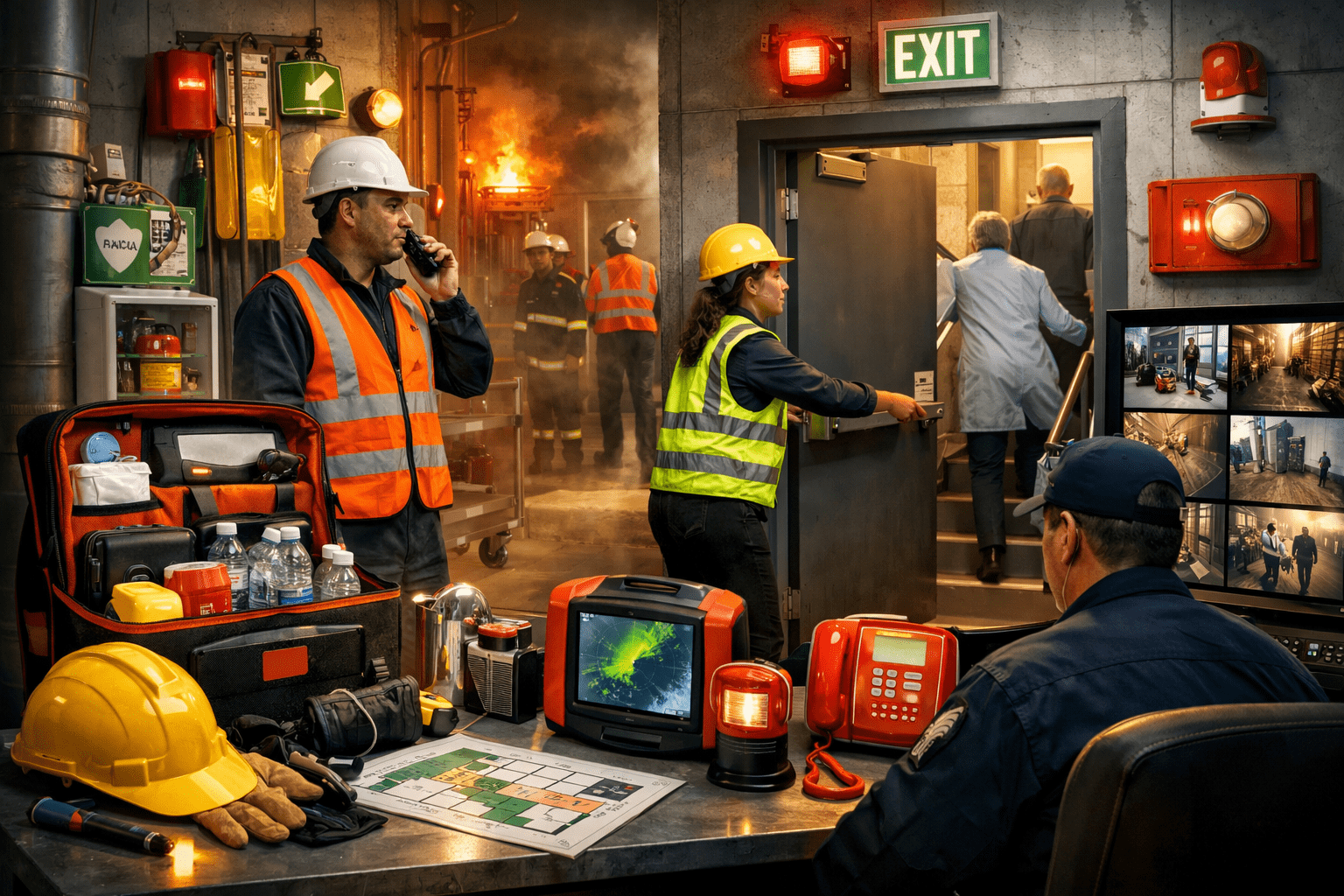
Emergency preparedness in facilities is a critical responsibility of facilities safety management. From the start, organizations must recognize that unexpected events can threaten lives, disrupt operations, and damage property. Fires, natural disasters, medical emergencies, security incidents, and utility failures often occur without warning. Therefore, facilities that plan ahead respond faster, reduce confusion, and recover more effectively.
This guide explains how facilities can build strong emergency readiness systems. It provides practical direction for facilities managers, safety officers, and organizational leaders who want to improve safety, compliance, and resilience.
Understanding Emergency Preparedness in Facilities Safety
Emergency preparedness refers to the planning and actions that allow facilities to respond effectively during critical events. In facilities safety, preparedness focuses on protecting people first while maintaining control over operations.
Instead of reacting after an incident, prepared facilities anticipate risks. As a result, they establish clear procedures, assign responsibilities, and train occupants in advance. Consequently, people respond with confidence rather than panic.
Moreover, preparedness should remain part of everyday operations. When plans stay current, response efforts remain effective.
Why Emergency Planning Is Essential?
Facilities safety does not stop at routine hazard prevention. In fact, readiness for emergencies plays an equally important role.
Strong emergency planning helps facilities:
- Reduce injuries and fatalities
- Minimize property damage
- Maintain operational stability
- Meet regulatory expectations
- Strengthen employee trust
Without preparation, however, even small incidents can escalate quickly. Therefore, proactive planning remains essential.
Identifying Emergency Risks in Facilities
Before developing response plans, facilities must identify realistic emergency risks. Because every building is different, risks vary based on location, layout, and activities.
Common emergency risks include:
- Fire and smoke incidents
- Earthquakes, floods, or severe weather
- Power outages and utility disruptions
- Medical emergencies
- Hazardous material exposure
- Security threats
To address these risks, facilities safety teams should conduct regular assessments. As conditions change, they must update those assessments to stay relevant.
Developing an Effective Emergency Response Plan
A clear response plan provides direction during emergencies. Therefore, facilities should design plans that are simple and direct, following recognized emergency preparedness guidance like the OSHA Emergency Preparedness and Response resource to ensure procedures are aligned with best practices.
An effective plan typically includes:
- Defined emergency roles
- Evacuation and shelter procedures
- Communication methods
- Emergency contact information
- Accountability processes
Additionally, facilities should tailor plans to specific layouts and operations. Generic templates rarely address real-world conditions.
Evacuation Planning and Safe Movement
Evacuation planning plays a central role in emergency response. When exits are unclear or blocked, injuries often occur.
To improve outcomes, facilities should:
- Mark exit routes clearly
- Keep walkways and stairwells unobstructed
- Maintain emergency lighting
- Post evacuation maps in visible locations
Furthermore, facilities should designate assembly areas outside the building. Through regular drills, occupants learn where to go and how to move safely.
Emergency Communication and Alerts
Clear communication remains critical during emergencies. Without it, confusion spreads quickly.
Facilities safety systems should support:
- Audible alarms and alerts
- Public address announcements
- Mobile notifications
- Visual alerts for accessibility
Equally important, plans should identify who communicates during emergencies. When leadership communicates clearly, occupants respond appropriately.
Training and Drills for Facility Occupants
Training transforms plans into action. Without practice, people often forget procedures under stress.
Facilities safety training should:
- Explain emergency actions clearly
- Assign responsibilities
- Include evacuation and shelter drills
- Address multiple emergency scenarios
After each drill, facilities should review results. As a result, teams can correct weaknesses and improve performance.
Emergency Equipment and Facility Readiness
Emergency readiness depends on reliable equipment. Therefore, facilities must inspect and maintain safety systems consistently.
Essential equipment includes:
- Fire detection and suppression systems
- Emergency lighting and exit signage
- First aid kits and defibrillators
- Backup power sources
When equipment fails, response efforts weaken. For this reason, regular inspections remain non-negotiable.
Defining Roles and Responsibilities
Clear roles reduce delays and confusion. Facilities safety plans should define responsibilities before emergencies occur.
Common roles include:
- Emergency coordinators
- Floor or area wardens
- First aid responders
- Communication leads
When people understand their roles, response actions become faster and more organized.
Supporting Individuals Who Need Assistance
Emergency planning must consider individuals who require additional support. This includes people with mobility limitations, medical conditions, or temporary injuries.
Facilities should:
- Identify assistance needs early
- Assign trained helpers
- Provide accessible evacuation options
- Use inclusive communication methods
By planning inclusively, facilities protect everyone.
Coordination With External Responders
Facilities rarely manage emergencies alone. Therefore, coordination with external responders remains essential.
Facilities safety teams should:
- Share facility layouts
- Maintain updated contact lists
- Establish communication procedures
Through coordination, response times improve and confusion decreases.
Reviewing and Improving Emergency Procedures
Emergency preparedness must evolve. As facilities change, plans must adapt.
Facilities should:
- Review plans annually
- Update procedures after drills or incidents
- Adjust plans following layout or operational changes
- Improve training using lessons learned
Continuous improvement strengthens long-term safety.
Business Benefits of Emergency Preparedness
Prepared facilities experience fewer disruptions and faster recovery. In addition, emergency readiness supports business continuity.
Key benefits include:
- Reduced downtime
- Lower recovery costs
- Increased employee confidence
- Stronger organizational reputation
Therefore, preparedness supports both safety and performance.
Conclusion: Strengthening Facilities Safety Through Preparedness
Emergency preparedness in facilities strengthens facilities safety by reducing uncertainty during critical events. By identifying risks, planning responses, training occupants, maintaining equipment, and reviewing procedures, facilities improve resilience.
Ultimately, preparedness saves lives and protects assets. When emergency planning becomes part of everyday safety management, facilities respond with confidence, clarity, and control.