
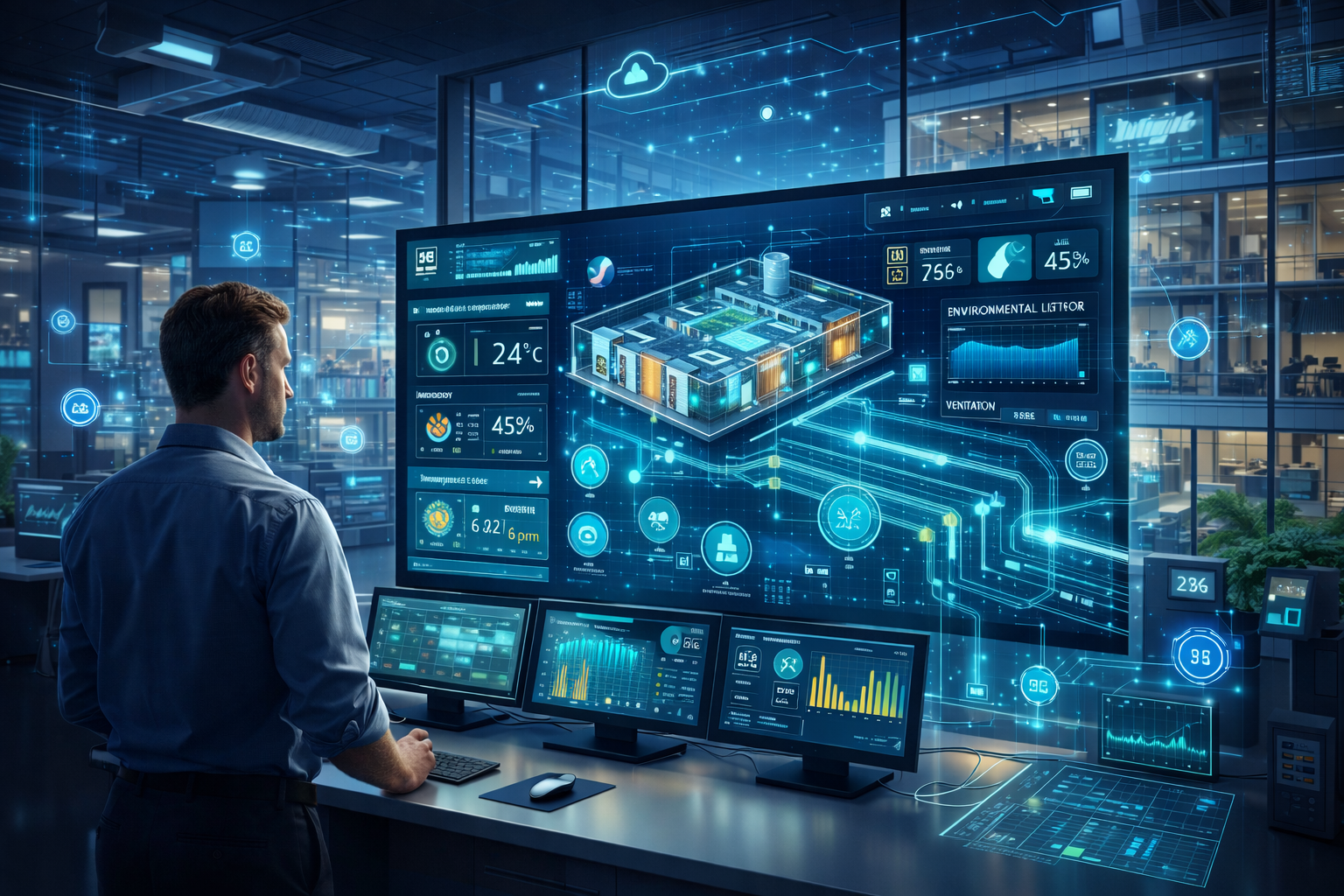
Modern buildings are evolving into intelligent environments designed to optimize comfort, energy efficiency, and operational performance. At the heart of this transformation are environmental control strategies, which regulate indoor conditions such as temperature, humidity, air quality, lighting, and ventilation. These strategies rely on integrated technologies, sensors, and automation platforms to maintain stable indoor environments while minimizing energy consumption.
Within the broader Building Systems Deep Dive, environmental control strategies represent a critical component of smart building infrastructure. They ensure that buildings operate efficiently while supporting the health, productivity, and comfort of occupants. As sustainability goals and energy regulations become more demanding, advanced environmental control techniques are becoming essential for modern facility management.
What Are Environmental Control Strategies?
Environmental control strategies refer to systematic methods used to regulate indoor environmental conditions within a building. These strategies use a combination of mechanical systems, sensors, automation software, and control algorithms to maintain optimal indoor environments.
Typical environmental factors managed by these strategies include:
- Temperature control
- Humidity regulation
- Indoor air quality management
- Ventilation control
- Lighting optimization
- Energy efficiency monitoring
By carefully balancing these environmental variables, buildings can create comfortable and safe indoor spaces while reducing operational costs.
Environmental control strategies are widely used in commercial buildings, hospitals, data centers, educational institutions, and industrial facilities, where maintaining precise environmental conditions is essential.
Why Environmental Control Strategies Are Important
Modern buildings consume significant amounts of energy, much of which is used for heating, cooling, and ventilation. Environmental control strategies help address this challenge by improving the efficiency of building systems.
Key benefits include:
Improved Energy Efficiency
One of the primary goals of environmental control strategies is reducing unnecessary energy consumption. By dynamically adjusting building systems based on occupancy and environmental conditions, buildings can significantly lower energy usage.
For example, intelligent HVAC systems can automatically reduce cooling output when occupancy levels drop or when outside temperatures change.
Enhanced Occupant Comfort
Comfortable indoor environments improve occupant satisfaction and productivity. Environmental control systems maintain consistent temperature levels, proper humidity balance, and adequate airflow.
These systems also prevent issues such as overheating, poor ventilation, or uneven temperature distribution within the building.
Better Indoor Air Quality
Indoor air quality has a major impact on health and well-being. Environmental control strategies regulate ventilation rates and monitor pollutants to ensure healthy indoor air conditions.
Proper air circulation reduces the buildup of contaminants, allergens, and carbon dioxide in indoor environments.
Sustainability and Carbon Reduction
Organizations increasingly aim to reduce their environmental impact. Advanced environmental control strategies help buildings meet sustainability goals by optimizing energy use and integrating renewable energy technologies.
These systems also support compliance with green building standards and energy efficiency regulations.
Core Components of Environmental Control Strategies
Environmental control strategies rely on multiple building technologies working together to maintain stable indoor conditions. These components form a coordinated control ecosystem.
Heating, Ventilation, and Air Conditioning (HVAC) Systems
HVAC systems are the backbone of environmental control. They regulate temperature, humidity, and airflow throughout the building.
Modern HVAC systems include:
- smart thermostats
- variable air volume (VAV) systems
- energy recovery ventilation
- variable speed drives
These technologies allow HVAC systems to respond dynamically to environmental conditions and building occupancy.
Environmental Sensors
Environmental control strategies depend on accurate environmental data collected throughout the building. Advanced sensors and monitoring technologies continuously track conditions such as temperature, humidity, air quality, and occupancy to help automation systems maintain optimal indoor environments.
Sensors provide the data required to implement effective environmental control strategies. They continuously measure environmental variables and send this information to building management platforms.
Common sensors used in environmental monitoring include:
- temperature sensors
- humidity sensors
- carbon dioxide sensors
- air quality sensors
- occupancy sensors
- light sensors
These sensors enable real-time monitoring of building conditions and allow control systems to adjust operations automatically.
Building Automation Systems (BAS)
Environmental control strategies are typically coordinated through building automation systems. These systems collect sensor data, analyze environmental conditions, and automatically control building equipment.
A BAS platform integrates multiple building subsystems, including HVAC, lighting, and ventilation. By coordinating these systems, automation platforms can optimize environmental performance across the entire building.
Automation also allows facility managers to monitor building conditions remotely and adjust control settings through centralized dashboards.
Ventilation and Airflow Management
Proper ventilation is essential for maintaining healthy indoor air quality. Environmental control strategies regulate airflow using mechanical ventilation systems and automated dampers.
Advanced ventilation strategies may include:
- demand-controlled ventilation
- air filtration systems
- energy recovery ventilators
- fresh air intake management
These systems ensure that indoor spaces receive adequate fresh air while maintaining energy efficiency.
Advanced Environmental Control Techniques
As building technologies evolve, environmental control strategies are becoming more sophisticated. Modern smart buildings use advanced techniques to improve performance and efficiency.
Demand-Controlled Ventilation
Demand-controlled ventilation adjusts airflow based on occupancy levels. Carbon dioxide sensors detect when rooms become occupied and increase ventilation rates accordingly.
When occupancy decreases, the system reduces ventilation to conserve energy. This strategy significantly improves HVAC efficiency in large buildings.
Adaptive Thermal Comfort
Traditional environmental control systems use fixed temperature setpoints. However, adaptive thermal comfort models adjust indoor conditions based on outdoor climate conditions and occupant preferences.
This approach allows buildings to maintain comfort while reducing energy consumption.
For example, indoor temperature setpoints may vary slightly depending on seasonal changes or natural ventilation availability.
Daylight Harvesting
Lighting systems can consume a large portion of a building’s electricity. Daylight harvesting strategies use light sensors to measure natural daylight levels.
When sufficient sunlight is available, the system automatically reduces artificial lighting intensity.
This strategy reduces electricity consumption while maintaining consistent indoor illumination levels.
Predictive Environmental Control
Predictive environmental control uses data analytics and machine learning to forecast building conditions.
These systems analyze historical building data and weather forecasts to adjust HVAC and ventilation settings before environmental changes occur.
For example, predictive control systems may pre-cool a building before peak afternoon temperatures arrive.
Environmental Control and Smart Building Integration
Modern environmental control strategies are increasingly integrated with digital infrastructure that allows buildings to monitor and adjust indoor conditions automatically. Research on smart building technologies shows that intelligent systems can continuously analyze environmental data and optimize energy performance across the entire facility.
Key technologies enabling smart environmental control include:
- Internet of Things (IoT) sensor networks
- cloud-based building management platforms
- artificial intelligence analytics
- digital twin simulations
These technologies allow buildings to continuously analyze environmental data and refine control strategies automatically.
Smart environmental control systems also provide facility managers with detailed performance insights, enabling better decision-making and long-term optimization.
Challenges in Environmental Control Implementation
Although environmental control strategies provide numerous benefits, implementing them effectively can present challenges.
System Integration
Modern buildings contain many different technologies and subsystems. Integrating HVAC, lighting, and monitoring systems into a unified control platform can require complex engineering and system design.
Initial Installation Costs
Advanced environmental control systems may involve significant upfront investment. However, long-term energy savings often offset these costs.
Maintenance and Calibration
Sensors and control equipment require regular maintenance to ensure accurate performance. Calibration is essential to maintain reliable environmental monitoring.
Cybersecurity Risks
Smart building technologies rely heavily on network connectivity. Ensuring that environmental control systems remain secure from cyber threats is an important aspect of system design.
The Future of Environmental Control Strategies
Environmental control technologies are rapidly evolving as buildings become more connected and intelligent.
Future trends in environmental control include:
AI-Driven Environmental Optimization
Artificial intelligence will enable building systems to continuously learn from environmental data and optimize building performance automatically.
Digital Twin Modeling
Digital twins allow engineers to create virtual models of buildings that simulate environmental conditions and system performance.
These models help improve system design and optimize environmental control strategies before implementation.
Net-Zero Energy Buildings
As sustainability goals become more ambitious, environmental control systems will play a major role in achieving net-zero energy buildings.
These buildings combine advanced control strategies with renewable energy systems such as solar panels and energy storage.
Conclusion
Environmental control strategies are a critical element of modern building systems. By regulating temperature, humidity, ventilation, and lighting, these strategies create comfortable and healthy indoor environments while minimizing energy consumption.
Through the integration of sensors, HVAC systems, and automation platforms, environmental control strategies enable buildings to respond dynamically to changing conditions.
As part of the broader Building Systems Deep Dive, these strategies demonstrate how intelligent building technologies are transforming modern infrastructure. With the continued development of smart building technologies, environmental control systems will become even more advanced, helping organizations achieve greater sustainability, efficiency, and occupant comfort.
Understanding environmental control strategies is essential for engineers, facility managers, and building technology professionals who are designing the next generation of smart, efficient, and environmentally responsible buildings.