
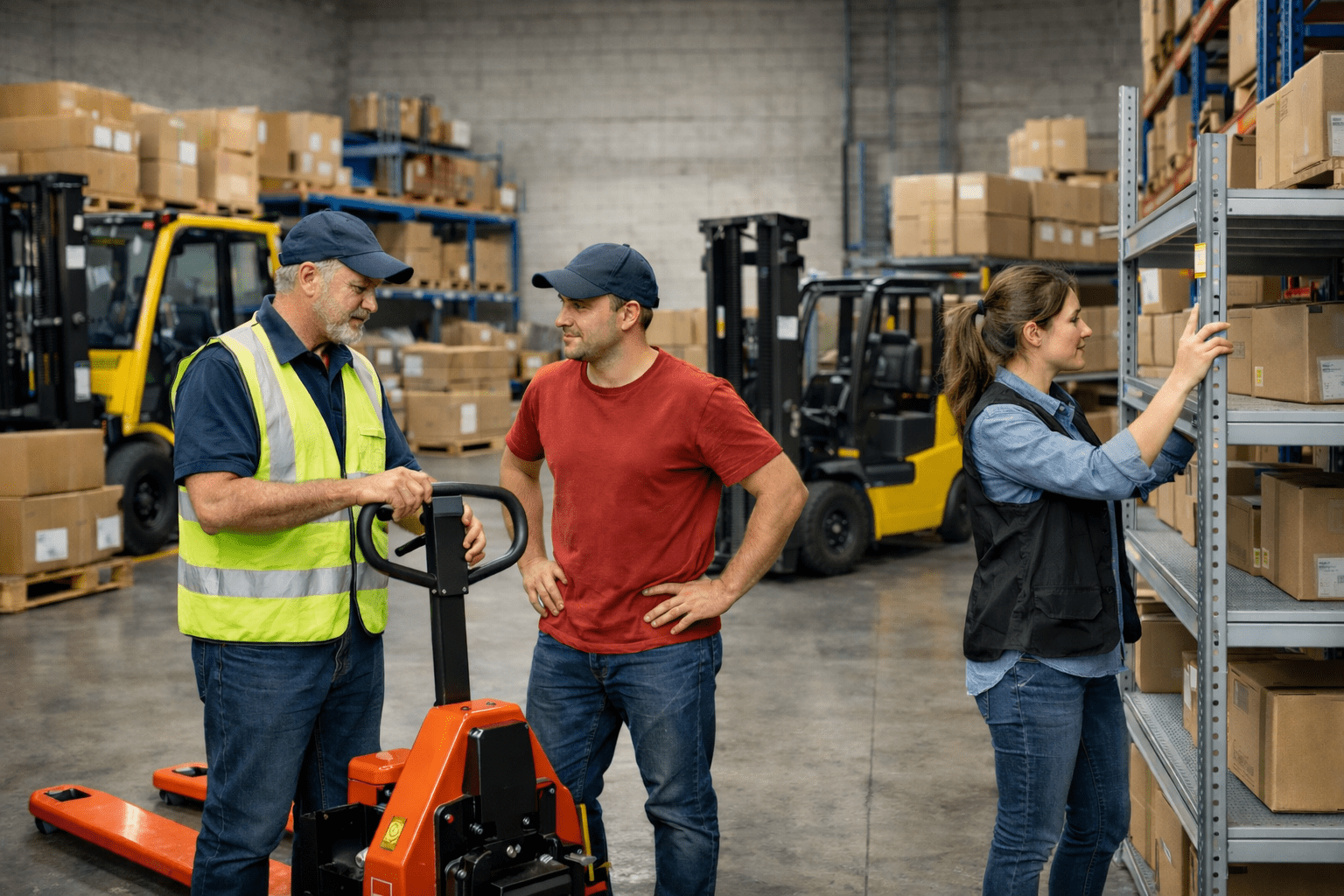
E-commerce has transformed how businesses manage physical operations. Even small online stores must operate with the efficiency of large fulfillment centers to meet customer expectations for fast shipping, accurate orders, and low costs. At the heart of this efficiency lies one critical decision: equipment selection for small warehouses.
For startups and growing e-commerce brands, choosing the right warehouse equipment can mean the difference between smooth operations and daily bottlenecks. This beginner-friendly yet technical guide explains how to select the right equipment for small warehouse operations, covering storage systems, material handling tools, picking equipment, packing stations, safety systems, and scalability planning.
Why Equipment Selection Matters in Small E-commerce Warehouses?
Small warehouses typically range from 500 to 10,000 square feet. Unlike large distribution centers, space is limited, budgets are tighter, and labor is often minimal. Poor equipment selection can result in:
- Wasted vertical space
- Slow picking and packing processes
- Inventory damage
- Worker fatigue and injuries
- High long-term operating costs
Strategic equipment selection for small warehouses focuses on space optimization, operational efficiency, worker safety, and future scalability.
Step 1: Understand Your Operational Requirements
Before purchasing any equipment, analyze your operational profile:
1. Order Volume
- How many orders per day?
- Seasonal spikes?
- Average order size?
2. SKU Count
- Number of unique products?
- Small items vs bulky products?
3. Inventory Turnover
- Fast-moving SKUs (high velocity)
- Slow-moving inventory (low velocity)
4. Fulfillment Model
- Direct-to-consumer (DTC)
- B2B bulk shipping
- Hybrid model
This data determines storage configuration, picking strategy, and material handling equipment.
Step 2: Storage Equipment Selection
Storage systems form the foundation of physical warehouse operations. Small warehouse operators must evaluate storage systems, material handling tools, packing stations, and safety equipment before making investment decisions. For a broader overview of common warehouse tools and categories, you can review this essential warehouse equipment list to understand how different systems support operational efficiency.
1. Static Shelving
Ideal for small warehouses with lightweight products.
Best for:
- Apparel
- Small electronics
- Beauty products
- Accessories
Technical Considerations:
- Load capacity per shelf
- Adjustable shelf heights
- Galvanized vs powder-coated steel
- Modular expansion capability
Static shelving works well for manual picking operations.
2. Pallet Racking Systems
If your small warehouse handles bulk inventory or heavy goods, pallet racking is essential.
Types for Small Warehouses:
- Selective pallet racking (most common)
- Drive-in racking (high density)
- Push-back racking (space optimization)
Key Technical Factors:
- Pallet dimensions
- Forklift aisle width
- Floor load-bearing capacity
- Ceiling height clearance
For most small e-commerce warehouses, selective pallet racking offers flexibility and ease of access.
3. Vertical Storage Solutions
Small warehouses often waste vertical space. Installing:
- Mezzanine floors
- Vertical lift modules (VLMs)
- Tall shelving with rolling ladders
Maximizes cubic storage instead of just floor space.
When ceiling height exceeds 12 feet, vertical storage becomes highly cost-effective.
Step 3: Material Handling Equipment
Efficient movement of goods inside the warehouse reduces labor time and improves safety.
1. Hand Trucks and Dollies
Suitable for very small operations handling lightweight goods. Low cost, minimal training required.
2. Pallet Jacks
There are two primary types:
- Manual pallet jacks
- Electric pallet jacks
Manual pallet jacks are cost-effective and suitable for low-volume warehouses.
Electric pallet jacks improve productivity when daily pallet movement exceeds 20–30 pallets.
Technical specifications to consider:
- Load capacity (usually 2–3 tons)
- Fork length compatibility
- Turning radius
- Battery runtime (for electric models)
3. Forklifts (When Necessary)
Not all small warehouses require forklifts. However, if:
- Pallets exceed 2 meters in height
- Heavy bulk goods are stored
- Mezzanine levels are used
Then a compact electric forklift may be required.
Electric forklifts are preferable for indoor e-commerce warehouses due to:
- Zero emissions
- Lower noise levels
- Reduced ventilation requirements
Step 4: Order Picking Equipment
Picking is the most labor-intensive warehouse activity.
1. Picking Carts
Multi-tier picking carts allow workers to fulfill multiple orders in one trip.
Features to evaluate:
- Weight capacity
- Wheel quality (urethane vs rubber)
- Adjustable bins
- Barcode scanner holders
Batch picking strategies significantly increase efficiency in small warehouse operations.
2. Barcode Scanners and Mobile Devices
Even small warehouses should adopt digital tracking.
Required components:
- Wireless barcode scanners
- Warehouse Management System (WMS)
- Label printers
- Wi-Fi coverage
A basic WMS improves inventory accuracy and reduces picking errors.
Step 5: Packing Station Equipment
Packing speed directly impacts shipping time.
Essential Packing Equipment:
- Adjustable height packing tables
- Ergonomic anti-fatigue mats
- Tape dispensers
- Void fill machines
- Label printers
- Digital weighing scales
Technical considerations include:
- Table load capacity
- Integration with shipping software
- Scale accuracy (legal-for-trade compliance)
Ergonomic packing stations reduce repetitive strain injuries and improve productivity.
Step 6: Safety Equipment
Safety should never be overlooked in small warehouse design.
Required Safety Equipment:
- Fire extinguishers
- Clearly marked exits
- First aid kits
- Safety signage
- Rack guards
- High-visibility floor markings
If forklifts are used:
- Safety mirrors
- Audible warning systems
- Load backrests
Compliance with local occupational safety regulations is mandatory.
Step 7: Workflow Layout Optimization
Equipment selection must align with warehouse layout.
Basic Layout Zones:
- Receiving area
- Storage area
- Picking area
- Packing station
- Shipping dock
Design for one-directional flow:
Receiving → Storage → Picking → Packing → Shipping
Minimize cross-traffic to prevent congestion.
Step 8: Scalability Planning
Many small e-commerce businesses grow quickly. Equipment selection should allow:
- Modular expansion
- Additional shelving rows
- Upgrade from manual to electric equipment
- Mezzanine installation later
Avoid overspending early, but choose equipment that supports growth.
Budget Planning for Small Warehouse Equipment
Typical cost allocation:
- 40% Storage systems
- 25% Material handling
- 20% Packing stations
- 10% Technology (WMS, scanners)
- 5% Safety equipment
Leasing options are available for forklifts and high-cost automation systems.
Automation Considerations for Small Warehouses
While full automation may not be necessary, semi-automation can help:
- Conveyor belts for packing lines
- Automated label printing
- Pick-to-light systems
- Inventory tracking software
Start simple and upgrade gradually.
Common Equipment Selection Mistakes
- Overbuying forklifts too early
- Ignoring vertical space
- Skipping WMS implementation
- Underestimating picking cart importance
- Not planning for seasonal inventory spikes
Avoid these mistakes to maintain lean operations.
Final Thoughts on Equipment Selection for Small Warehouses
Physical operations in e-commerce require thoughtful planning, even at a small scale. Equipment selection for small warehouses should focus on:
- Space optimization
- Workflow efficiency
- Worker safety
- Technology integration
- Scalability
By investing in the right storage systems, material handling tools, picking equipment, and packing stations, small e-commerce businesses can compete effectively with larger fulfillment centers.
Well-planned physical operations reduce costs, improve customer satisfaction, and support long-term growth. For beginners entering warehouse management, starting with structured planning and data-driven equipment selection is the smartest path forward.