
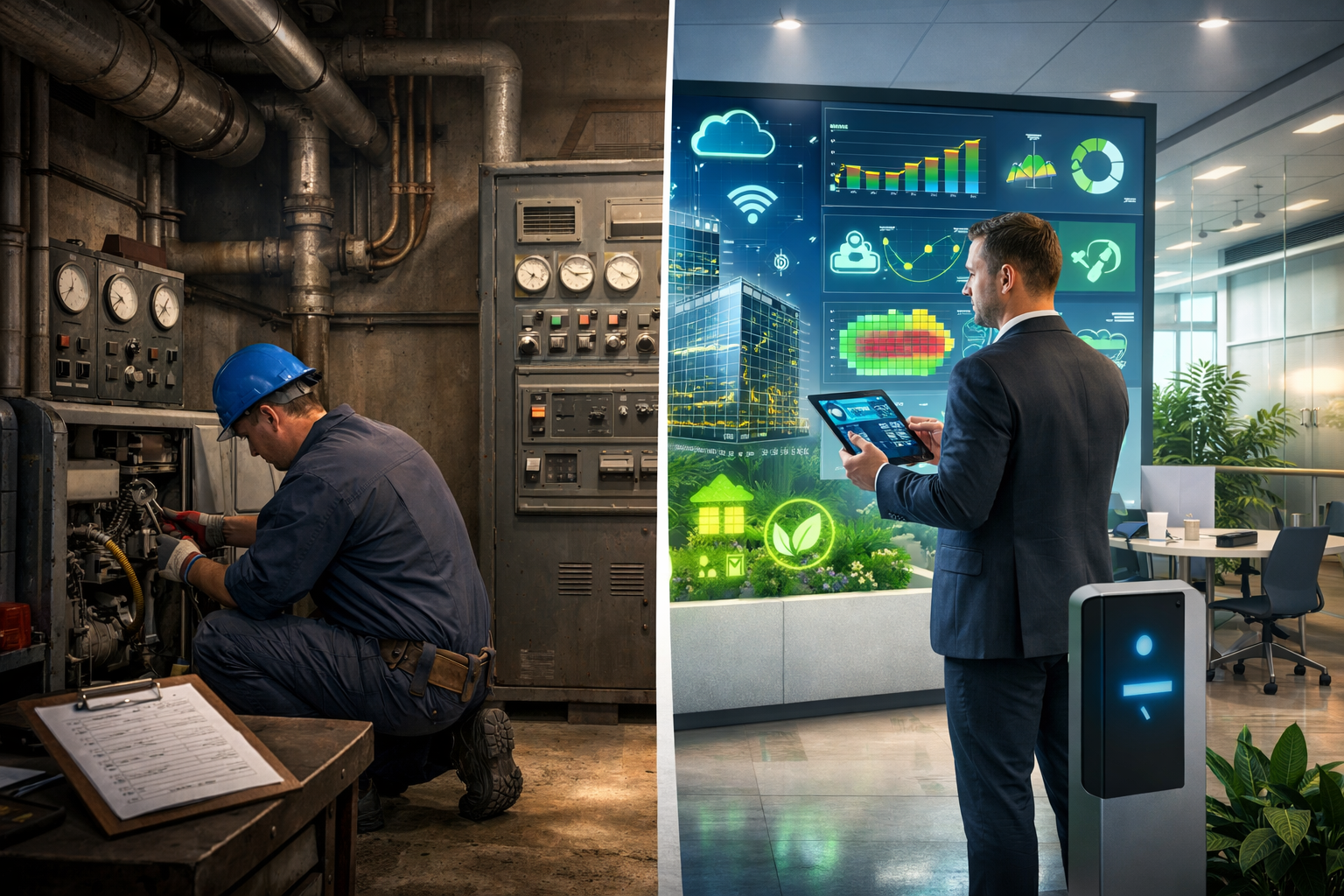
The evolution of facilities management reflects how organizations have transformed the way they operate, maintain, and optimize the built environment. What began as a basic maintenance function has matured into a strategic discipline that directly influences business continuity, sustainability, employee experience, and financial performance.
Understanding this transformation helps professionals see why facilities management (FM) is no longer just about fixing equipment. It is about managing assets, technology, people, and performance in a coordinated and data-driven way.
Understanding Facilities Management
Facilities management involves coordinating the physical workplace with people and organizational goals. For readers new to the field, understanding key concepts and common facilities terminology is essential before exploring how the discipline has developed over time. It typically includes:
- Building operations and maintenance
- Space planning and utilization
- Health and safety compliance
- Energy and sustainability management
- Security services
- Vendor and contract oversight
- Asset lifecycle planning
While these responsibilities seem standard today, the evolution of facilities management shows that this wide scope developed gradually over decades.
The Early Years: Reactive Maintenance
In its earliest form, facilities work was almost entirely reactive. During the mid-20th century, organizations relied on maintenance teams to respond when something failed.
Responsibilities were limited to:
- Repairing broken systems
- Maintaining heating and cooling units
- Ensuring utilities remained operational
- Addressing immediate safety concerns
There was minimal long-term planning. Paper logs were common, asset tracking was inconsistent, and budgeting was largely based on emergency needs.
At this stage, facilities operations were viewed strictly as a cost center. Leadership rarely connected building performance with productivity or strategic growth.
The Preventive Maintenance Era
The next stage in the evolution of facilities management introduced preventive maintenance. Organizations realized that waiting for equipment failure led to higher repair costs and operational disruptions.
From the 1970s through the 1980s, companies began implementing:
- Scheduled inspections
- Routine servicing programs
- Maintenance calendars
- Equipment documentation systems
This shift reduced downtime and extended asset life. It also marked the beginning of structured facilities planning.
Instead of reacting to breakdowns, facilities teams started anticipating them. Although still operational in focus, this approach introduced discipline and measurable performance improvements.
Strategic Alignment with Business Goals
During the 1990s and early 2000s, facilities management began aligning more closely with corporate performance and long-term planning. Professional associations and industry leaders have documented this transformation, offering insights into the growing strategic importance of the field through various industry perspectives on the evolution of facilities management.
Organizations began recognizing that facilities influence:
- Employee productivity
- Operating expenses
- Risk exposure
- Brand reputation
- Business continuity
Facilities leaders started participating in budgeting discussions, capital planning, and long-term strategy meetings. Outsourcing models and integrated service contracts became more common, allowing organizations to streamline operations under unified service agreements.
This phase redefined facilities management as a strategic function rather than purely operational support.
Technology and Digital Transformation
One of the most significant chapters in the evolution of facilities management is digital transformation. Technology reshaped how facilities teams collect data, monitor assets, and make decisions.
Modern tools include:
- Computerized Maintenance Management Systems (CMMS)
- Integrated Workplace Management Systems (IWMS)
- Building automation systems
- Smart sensors and IoT devices
These technologies enable:
Real-Time Monitoring
Sensors track temperature, occupancy, equipment health, and energy usage continuously.
Predictive Maintenance
Data analytics identifies potential failures before they happen, reducing downtime and repair costs.
Automated Controls
Lighting, HVAC, and security systems adjust automatically based on occupancy patterns.
Centralized Reporting
Dashboards provide performance insights across multiple facilities in real time.
The transformation from manual tracking to digital ecosystems dramatically increased efficiency and visibility across operations.
Sustainability and Environmental Responsibility
Another major milestone in the progression of facilities management is sustainability integration. As environmental regulations tightened and corporate responsibility gained attention, facilities teams became key contributors to sustainability goals.
Modern facilities strategies now include:
- Energy efficiency optimization
- Carbon footprint reduction
- Water conservation initiatives
- Waste management programs
- Green building certifications
Facilities professionals analyze energy performance data, implement renewable solutions, and track emissions metrics. Sustainability is no longer an optional initiative—it is embedded in operational planning.
This expansion of responsibility highlights how the field has grown beyond maintenance into environmental stewardship.
The Human-Centered Workplace
Workplace expectations have also reshaped the growth of FM practices. Today’s organizations prioritize employee experience, wellness, and flexibility.
Facilities managers collaborate with HR and IT departments to design environments that support:
- Hybrid work models
- Flexible seating arrangements
- Collaboration zones
- Indoor air quality monitoring
- Touchless access systems
The modern workplace is no longer static. It must adapt to changing workforce needs and evolving technology. Facilities professionals now play a critical role in shaping environments that enhance engagement and productivity.
Risk Management and Resilience
Global disruptions have reinforced the importance of resilience planning. Facilities teams are responsible for ensuring operational continuity during unexpected events.
Modern responsibilities include:
- Emergency preparedness planning
- Disaster recovery coordination
- Health and safety compliance programs
- Infrastructure risk assessments
- Cybersecurity considerations for smart buildings
Resilient facilities protect both physical assets and organizational stability. This expanded focus reflects how far the discipline has progressed from its early maintenance-only roots.
Data-Driven Decision Making
The advancement in facility operations has been strongly influenced by data analytics. Metrics and key performance indicators (KPIs) now guide strategic decisions.
Facilities leaders track:
- Energy consumption trends
- Asset lifecycle costs
- Space utilization rates
- Maintenance response times
- Budget performance
With accurate data, organizations can forecast expenses, justify capital investments, and optimize operational efficiency. Data-driven management supports smarter planning and long-term cost control.
Emerging Trends Shaping the Future
The future continues to build upon the evolution of facilities management, with innovation accelerating across multiple areas.
Artificial Intelligence
AI enhances predictive maintenance and optimizes space planning.
Digital Twins
Virtual building replicas allow managers to simulate operational changes before implementing them physically.
Automation and Robotics
Autonomous cleaning machines and inspection drones improve efficiency and reduce labor strain.
Cloud-Based Oversight
Centralized platforms enable remote monitoring of global property portfolios.
Smart Infrastructure Integration
Facilities are increasingly connected to citywide infrastructure systems, improving coordination and resource efficiency.
These trends indicate that facilities management will continue evolving into a technology-driven, highly strategic discipline.
Why This Evolution Matters?
Understanding the evolution of facilities management helps professionals and organizations prepare for future challenges.
Key benefits include:
- Better cost control
- Improved asset performance
- Enhanced sustainability outcomes
- Stronger risk mitigation
- Increased employee satisfaction
Modern facilities managers require skills beyond technical maintenance. They must understand data analytics, financial planning, contract management, sustainability frameworks, and technology systems.
The discipline now sits at the intersection of operations, technology, and strategy.
Conclusion
The evolution of facilities management demonstrates a clear transformation from reactive maintenance to intelligent, strategic oversight of the built environment.
What started as a repair-focused role has grown into a comprehensive profession that supports sustainability, resilience, digital innovation, and workplace experience. Organizations that embrace this transformation position themselves for long-term operational excellence.
Facilities management is no longer simply about maintaining buildings. It is about optimizing performance, protecting assets, and enabling organizational success in an increasingly complex world.
As technology continues advancing and sustainability demands grow, the field will keep evolving—strengthening its role as a vital driver of modern business strategy.