
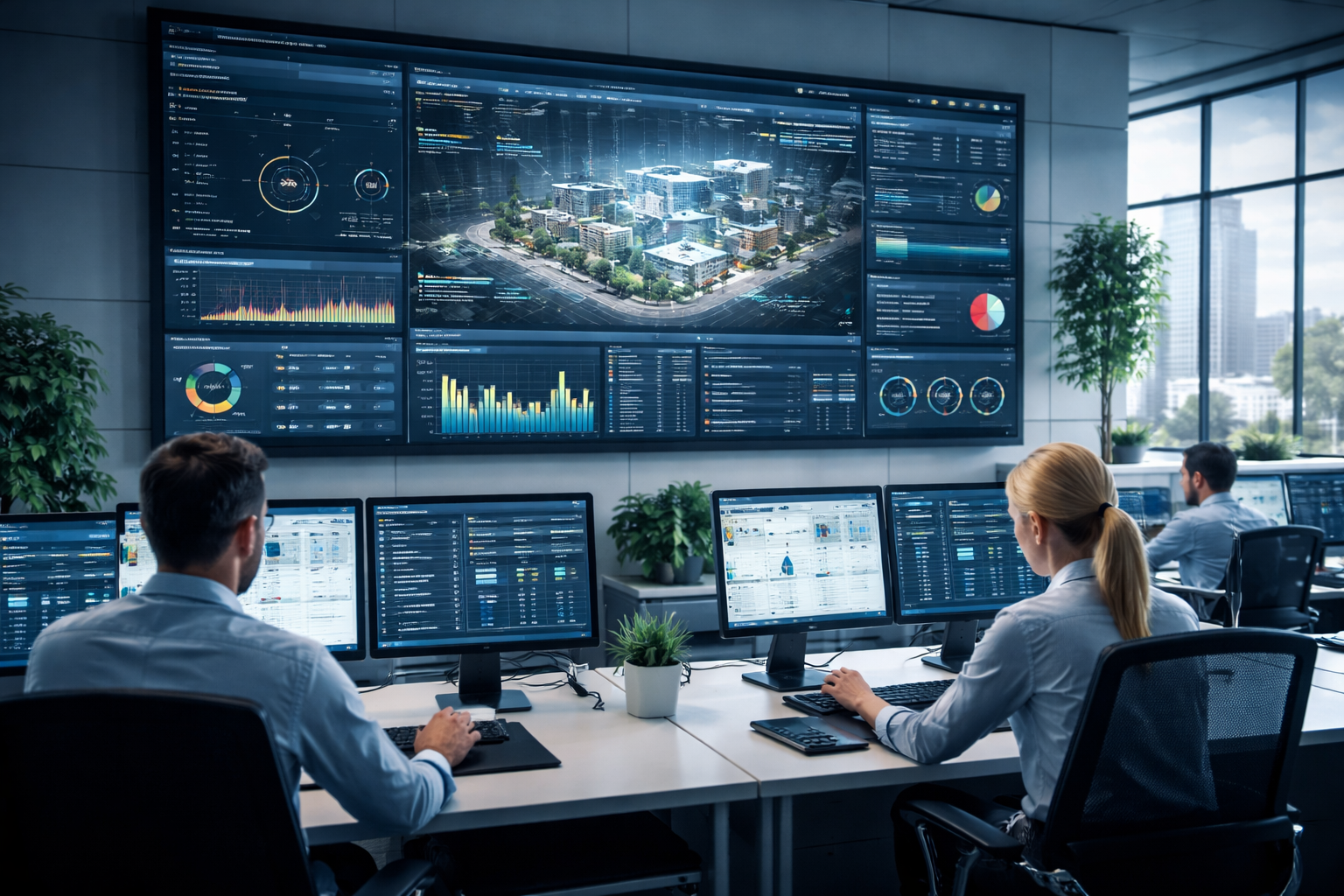
In modern facilities operations, data is everywhere—but without the right tools, it can be difficult to turn that data into actionable insights. Therefore, solutions like Facility Management Dashboard Explained highlight how centralized dashboards enable real-time visibility and smarter decision-making.. Therefore, a facilities management dashboard becomes essential. By centralizing information, it provides real-time visibility into operations. As a result, managers can monitor performance, track assets, and make faster, more informed decisions. In turn, this improves operational efficiency and responsiveness.
As organizations continue to scale, the need for centralized control becomes even more critical. In addition, dashboards connect systems, people, and processes into one unified platform. Because of this, operations become more efficient and costs are reduced. Furthermore, overall control improves significantly across all facilities. At the same time, teams gain better coordination and visibility.
What Is a Facilities Management Dashboard?
A facilities management dashboard is a digital platform that consolidates operational data into a single, visual interface. Instead of switching between multiple systems, users can access key metrics in one place. In other words, it simplifies complex operations and improves accessibility.
Typically, these dashboards integrate with:
- CMMS platforms
- CAFM systems
- IoT devices and sensors
- Workforce management tools
- Energy monitoring systems
By combining these systems, organizations gain real-time insights into performance. Consequently, decision-making becomes faster and more accurate. As a result, teams can respond to issues proactively.
Why a Facilities Management Dashboard Matters
Adopting a facilities management dashboard enhances both visibility and control across operations. More importantly, it allows teams to act proactively rather than reactively. As a result, operational risks are minimized and efficiency improves.
Key Benefits
- Real-Time Monitoring
Teams can track performance instantly. Therefore, issues are detected earlier and resolved faster - Improved Decision-Making
Accurate data supports better planning. In turn, this leads to smarter operational strategies - Operational Efficiency
Bottlenecks become easier to identify. Thus, workflows can be optimized effectively - Cost Optimization
Resource usage is continuously monitored. Consequently, unnecessary expenses are reduced - Enhanced Accountability
Performance metrics are visible across teams. As a result, responsibility and ownership improve
Key Features of a Facilities Management Dashboard
An effective facilities management dashboard includes essential capabilities that support modern operations. At the same time, these features ensure scalability and adaptability.
1. Real-Time Data Visualization
Instead of relying on static reports, dashboards provide dynamic visualizations. For example, charts and graphs display trends clearly. As a result, users can quickly interpret data and take action.
2. Asset and Maintenance Tracking
Tracking asset performance becomes more efficient with centralized visibility. In addition, maintenance activities can be monitored continuously.
Capabilities include:
- Preventive maintenance scheduling
- Asset lifecycle tracking
- Downtime monitoring
Because of these features, equipment reliability improves. As a result, operational disruptions are reduced.
3. Workforce Performance Insights
Understanding workforce performance is essential for success. With built-in analytics, managers gain insights into productivity and efficiency. As a result, teams can be optimized more effectively.
4. Multi-Site Visibility
For organizations managing multiple locations, centralized oversight is critical. With this approach, operations across sites can be monitored from a single platform.
This allows:
- Performance comparisons across locations
- Remote monitoring capabilities
- Standardized reporting
Therefore, consistency is maintained even as operations scale.
5. Customizable KPIs and Metrics
Every organization has unique goals. For this reason, dashboards must support customization. By focusing on relevant KPIs, performance tracking becomes more meaningful and actionable.
Technology Behind Facilities Management Dashboards
Modern facilities management dashboard solutions rely on advanced technologies. In particular, these technologies enable real-time insights and automation.
Key Technologies
- Cloud Computing
Enables centralized access. As a result, scalability improves - IoT Integration
Provides real-time data. Therefore, monitoring becomes continuous - AI and Analytics
Supports predictive insights. Consequently, issues can be prevented - API Connectivity
Integrates systems seamlessly. In turn, operations become unified
Designing an Effective Facilities Management Dashboard
To maximize value, dashboards must be designed strategically. Above all, usability and clarity should remain priorities.
1. Focus on Key Metrics
Too much information can overwhelm users. Instead, focus on essential KPIs. This ensures clarity and usability.
2. Ensure Data Accuracy
Reliable data is critical for decision-making. Without it, insights lose value. Therefore, data validation is essential.
3. Use Clear Visualizations
Simple visuals improve understanding. For example, charts allow quick interpretation. As a result, decisions are made faster.
4. Enable Customization
Different roles require different views. Thus, customization enhances usability and relevance.
5. Support Mobile Access
Modern teams require flexibility. With mobile access, managers can monitor operations anywhere. As a result, responsiveness improves.
Facilities Management Dashboard for Multi-Site Operations
Managing multiple facilities becomes significantly easier with centralized dashboards. In particular, they provide a unified operational view.
Key Advantages
- A single view of all facilities
- Consistent reporting across sites
- Faster issue identification
- Improved coordination between teams
As a result, organizations can scale operations without losing control.
Common Challenges and Solutions
Despite their advantages, dashboards can present challenges. However, these can be addressed with the right approach.
1. Integration Complexity
Solution: Use systems with strong integration capabilities. This ensures seamless data flow
2. Information Overload
Solution: Focus on essential metrics. As a result, usability improves
3. User Adoption
Solution: Provide training and support. Consequently, adoption increases
4. Data Reliability Issues
Solution: Use validated data sources. Therefore, accuracy improves
Best Practices for Using a Facilities Management Dashboard
To maximize value, organizations should follow proven strategies. In doing so, they improve long-term performance.
1. Align with Business Goals
This ensures strategic alignment across operations
2. Monitor Performance Regularly
As a result, issues are identified early
3. Automate Reporting
In addition, efficiency and accuracy improve
4. Continuously Optimize
Therefore, dashboards remain effective over time
5. Train Teams Effectively
Consequently, organizations maximize system value
Future Trends in Facilities Management Dashboards
The future of the facilities management dashboard is driven by innovation. At the same time, technology continues to evolve rapidly.
Emerging Trends
- AI-Powered Dashboards → predictive insights
- Smart Building Integration → real-time data
- Mobile-First Platforms → improved accessibility
- Advanced Visualization Tools → deeper insights
As these trends develop, dashboards will become even more powerful and essential.
Choosing the Right Facilities Management Dashboard
Selecting the right platform is critical for success. Therefore, organizations must evaluate key factors carefully.
Key Considerations
- Ease of use
- Integration capabilities
- Scalability
- Customization options
- Vendor support
By considering these factors, organizations can choose a solution that supports long-term growth.
Conclusion
A well-designed facilities management dashboard transforms operations by providing real-time visibility and actionable insights. By combining centralized data and advanced analytics, organizations can improve efficiency and reduce costs.
Ultimately, dashboards are strategic tools that drive performance. As facilities operations continue to evolve, investing in the right solution ensures scalability, efficiency, and long-term success.