
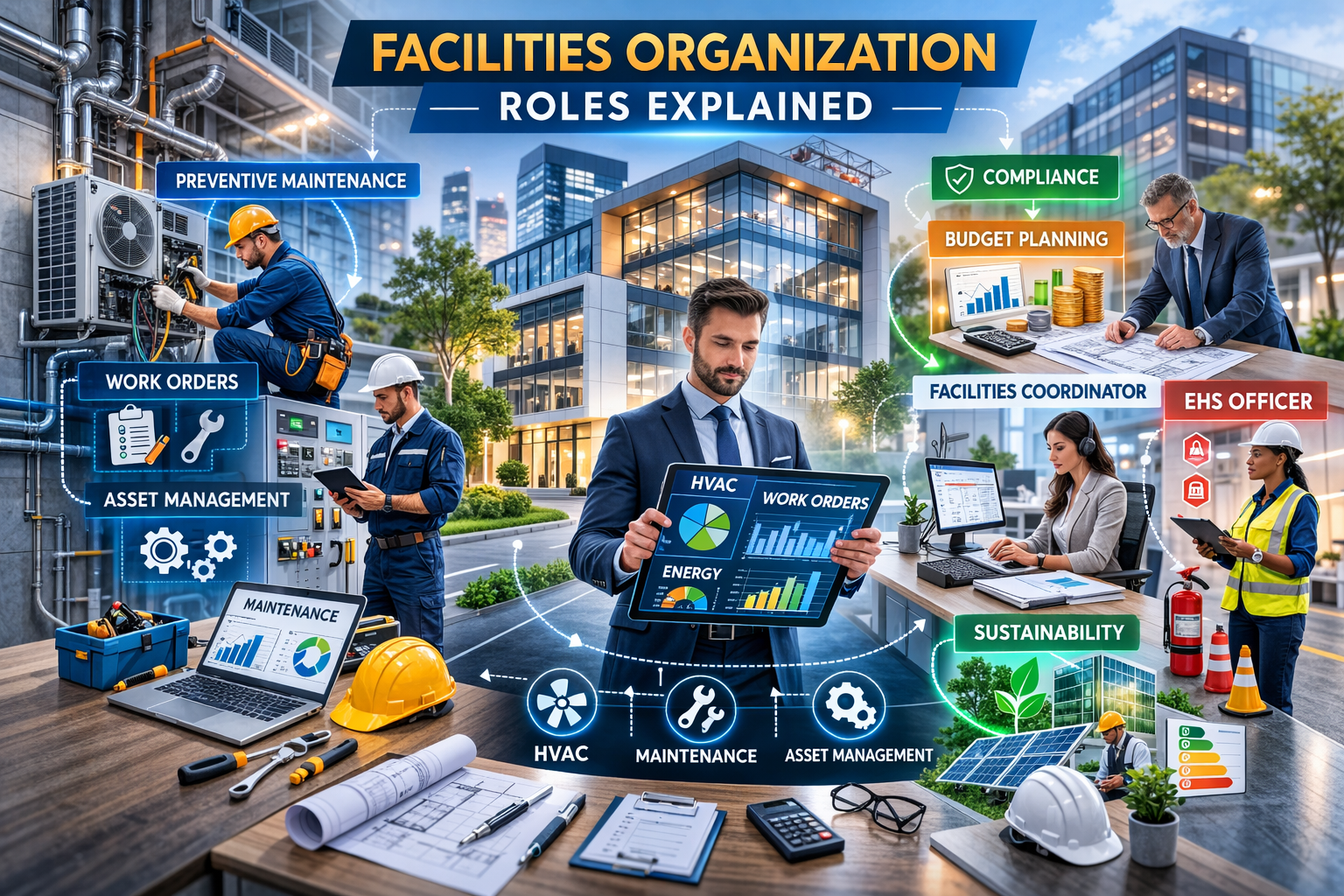
A well-structured facilities organization is the backbone of safe, efficient, and high-performing buildings and workplaces. Whether supporting a corporate headquarters, hospital, university, manufacturing plant, or mixed-use property, a facilities organization ensures that people, processes, and infrastructure operate seamlessly.
Understanding the roles within a facilities organization is essential for business leaders, property owners, and aspiring facilities professionals. If you are new to the industry, reviewing essential terms used in a facilities organization can help you better understand role responsibilities and operational processes. You can explore this detailed guide on common facilities terminology.
This guide explains how a facilities organization is structured, the responsibilities of each role, and how these positions work together to deliver operational excellence.
What Is a Facilities Organization?
A facilities organization is the internal department or outsourced team responsible for managing buildings, infrastructure, equipment, and support services within an organization. Its mission is to ensure safety, functionality, regulatory compliance, cost efficiency, and occupant satisfaction.
The structure can vary depending on the size and complexity of the property portfolio. However, most facilities organizations include leadership, technical, operational, administrative, and support roles.
Leadership Roles in a Facilities Organization
Leadership provides strategic direction and ensures alignment between facilities operations and business objectives.
1. Chief Facilities Officer (CFO) or Director of Facilities
The Chief Facilities Officer or Director of Facilities oversees the entire facilities organization. This role focuses on:
- Long-term facilities planning
- Budget management and capital forecasting
- Risk management and compliance
- Sustainability initiatives
- Vendor and contract oversight
- Strategic alignment with executive leadership
In large enterprises, this leader reports directly to the COO or CEO and plays a critical role in business continuity planning.
2. Facilities Manager
The Facilities Manager is the operational leader. This role bridges strategy and execution.
Responsibilities include:
- Managing daily operations
- Supervising maintenance staff
- Coordinating vendors and contractors
- Implementing preventive maintenance programs
- Monitoring building systems performance
- Ensuring health and safety compliance
A Facilities Manager must combine technical knowledge with leadership and communication skills.
Technical Roles Within a Facilities Organization
Technical professionals maintain the physical infrastructure and systems that keep buildings functional.
3. Maintenance Supervisor
The Maintenance Supervisor leads technicians and ensures work orders are completed efficiently. Key duties include:
- Assigning tasks to technicians
- Monitoring preventive maintenance schedules
- Ensuring safety procedures are followed
- Tracking work order completion rates
This role supports the operational backbone of a facilities organization.
4. Maintenance Technicians
Maintenance Technicians perform hands-on work such as:
- HVAC system maintenance
- Electrical repairs
- Plumbing fixes
- Equipment inspections
- Lighting and minor carpentry
Technicians are essential to minimizing downtime and preventing costly system failures.
In specialized environments like hospitals or manufacturing facilities, technicians may require certifications in areas such as high-voltage systems or cleanroom standards.
5. Building Engineer
A Building Engineer monitors and optimizes building systems, including:
- HVAC performance
- Energy management systems
- Fire safety systems
- Elevators and mechanical equipment
Building Engineers often analyze performance data and recommend improvements. In advanced facilities organizations, they may oversee automation platforms and smart building technologies.
Administrative and Support Roles
A facilities organization also relies on administrative professionals to ensure efficiency and compliance.
6. Facilities Coordinator
The Facilities Coordinator supports the Facilities Manager by handling:
- Work order intake and tracking
- Vendor scheduling
- Document management
- Service request communication
- Inventory control
This role ensures smooth communication between departments and external vendors.
7. Procurement and Contract Specialist
In larger facilities organizations, procurement specialists manage:
- Vendor contracts
- Service-level agreements (SLAs)
- Cost comparisons
- Bid evaluations
- Purchase orders
Effective procurement ensures quality service delivery while controlling costs.
Health, Safety, and Compliance Roles
Compliance and safety are critical pillars of any facilities organization.
8. Environmental Health and Safety (EHS) Officer
An EHS Officer ensures that the facilities organization complies with:
- Occupational safety standards
- Environmental regulations
- Fire safety codes
- Emergency preparedness requirements
Responsibilities include conducting audits, safety training, and incident investigations.
9. Compliance Manager
A Compliance Manager focuses on:
- Regulatory documentation
- Risk assessments
- Internal policy enforcement
- Audit preparation
In industries such as healthcare, pharmaceuticals, and manufacturing, this role is vital for maintaining certifications and licenses.
Strategic and Specialized Roles
As facilities management evolves, modern facilities organizations include advanced roles that support sustainability and innovation.
10. Energy Manager
An Energy Manager works to reduce operational costs and environmental impact by:
- Monitoring utility usage
- Identifying efficiency improvements
- Managing renewable energy initiatives
- Implementing sustainability programs
Energy management is becoming central to long-term facilities planning.
11. Space Planner
Space Planners optimize workplace layouts to improve:
- Productivity
- Safety
- Collaboration
- Compliance with occupancy codes
In hybrid work environments, this role is increasingly important within a facilities organization.
12. Asset Manager
An Asset Manager oversees lifecycle planning for:
- Major equipment
- Infrastructure systems
- Capital assets
This role ensures timely replacement and avoids unexpected failures. Asset lifecycle planning strengthens financial predictability within a facilities organization.
Security and Support Services Roles
Some facilities organizations also oversee physical security and support services.
13. Security Manager
A Security Manager is responsible for:
- Access control systems
- Surveillance operations
- Incident response planning
- Security personnel oversight
In high-risk facilities, this role works closely with IT security teams.
14. Custodial and Grounds Supervisors
These supervisors manage cleaning crews and landscaping teams. Their work ensures:
- Clean and sanitary environments
- Safe walkways and parking areas
- Professional property appearance
Although often overlooked, custodial and grounds teams significantly influence occupant satisfaction.
How Roles Work Together in a Facilities Organization?
A successful facilities organization operates as an integrated ecosystem. Communication and coordination are essential.
For example:
- A Facilities Coordinator receives a service request.
- A Maintenance Supervisor assigns the task.
- A Technician performs the repair.
- A Building Engineer verifies system performance.
- The Facilities Manager reviews cost and performance metrics.
Each role contributes to overall operational efficiency.
Organizational Structure Models
Facilities organizations typically follow one of three structures:
1. Centralized Structure
All facilities functions are managed by a single corporate department. This model ensures consistency and cost control.
2. Decentralized Structure
Each location manages its own facilities team. This allows flexibility and faster response times.
3. Hybrid Structure
A combination of centralized leadership and localized operational teams. This model is increasingly popular in large enterprises.
Skills Required Across a Facilities Organization
Regardless of role, professionals within a facilities organization benefit from:
- Technical knowledge of building systems
- Budget and financial literacy
- Project management skills
- Risk management awareness
- Communication and leadership skills
- Data-driven decision-making ability
Technology proficiency is also increasingly important. Modern facilities organizations rely on computerized maintenance management systems (CMMS), building automation systems (BAS), and analytics platforms.
Career Growth Within a Facilities Organization
A facilities organization offers multiple career pathways. For example:
Technician → Maintenance Supervisor → Facilities Manager → Director of Facilities
Administrative roles can also progress into leadership positions with additional certifications and experience.
Certifications such as Certified Facility Manager (CFM) or Facility Management Professional (FMP), offered by the International Facility Management Association (IFMA), can significantly accelerate career growth and professional credibility within a facilities organization.
Why Defining Roles in a Facilities Organization Matters?
Clearly defined roles:
- Improve accountability
- Reduce duplication of effort
- Enhance safety compliance
- Increase operational efficiency
- Strengthen long-term planning
When responsibilities are unclear, work orders are delayed, budgets are mismanaged, and risks increase.
A well-structured facilities organization prevents these issues by aligning people, processes, and technology.
Final Thoughts
Understanding the roles within a facilities organization is fundamental to maintaining safe, efficient, and sustainable environments. From executive leadership to maintenance technicians, every position plays a critical part in operational success.
As buildings become smarter and regulations more complex, the facilities organization continues to evolve. Clear role definitions, strategic leadership, and strong coordination ensure that facilities teams remain proactive rather than reactive.
For businesses seeking operational excellence, investing in a structured and well-managed facilities organization is not optional—it is essential.