
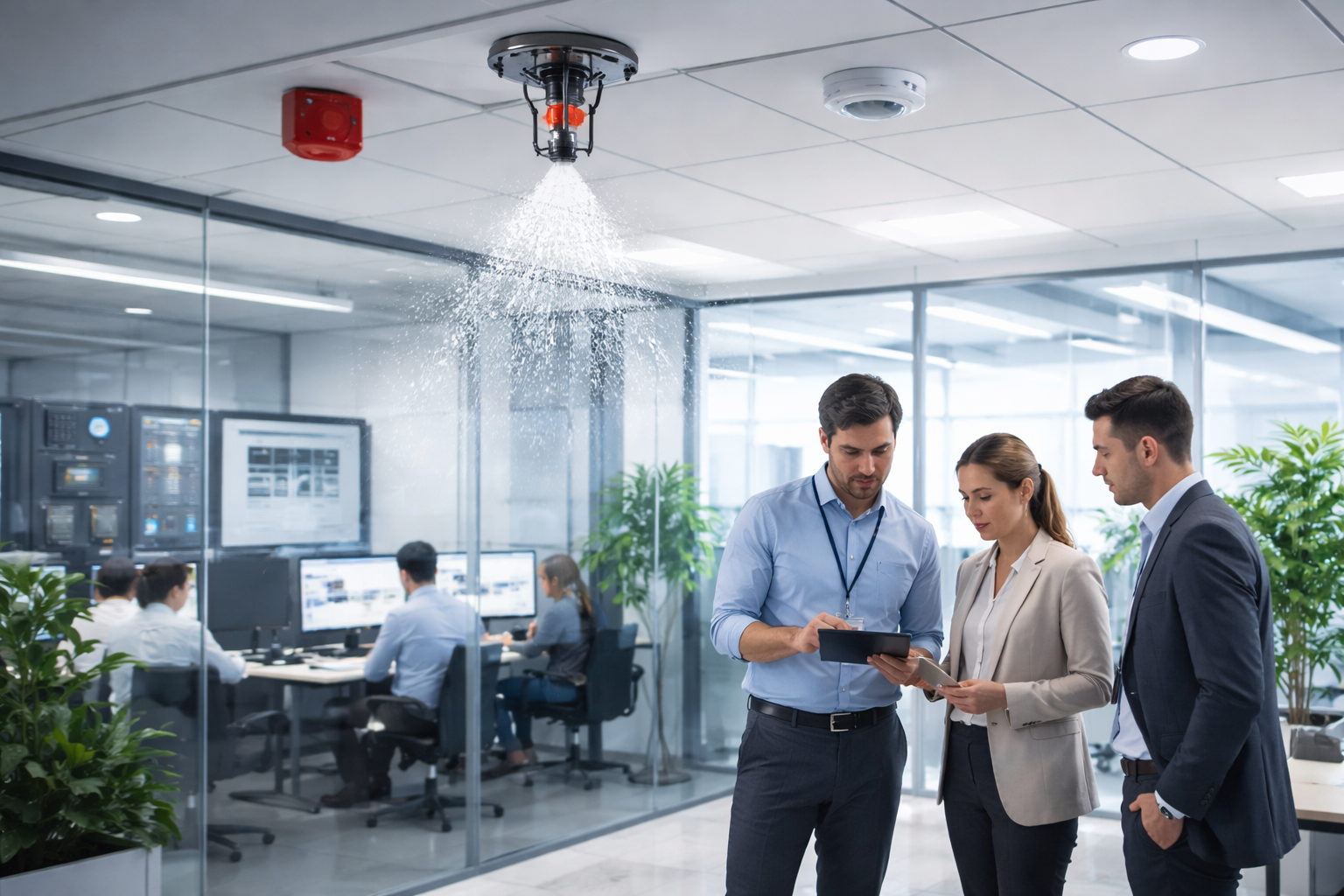
Modern buildings rely on advanced infrastructure to maintain safety, efficiency, and operational continuity. Among the most critical safety technologies are which detect and control fires before they spread throughout a structure. These systems protect occupants, reduce property damage, and help organizations maintain operations during emergencies.
In the broader Building Systems Deep Dive, fire suppression systems represent a key layer of building safety engineering. Today, smart buildings integrate automation platforms, environmental sensors, and monitoring technologies to improve fire protection. As a result, modern suppression technologies respond faster and provide stronger protection for complex building environments.
Because modern facilities contain dense electrical networks and advanced equipment, fire hazards can develop quickly. Therefore, effective fire suppression infrastructure is essential for protecting both people and property.
What Are Fire Suppression Systems?
Fire suppression systems are engineered safety technologies that detect and extinguish fires automatically or through manual activation. Modern buildings rely on advanced fire suppression systems that detect and extinguish fires automatically using technologies such as water sprinklers, clean agents, or gas-based suppression.
Engineers design these systems to identify fire conditions early and release suppression agents that interrupt the combustion process. In most facilities worked alongside fire detection sensors and alarm infrastructure. Consequently, buildings can respond quickly when smoke, heat, or flame sensors detect hazardous conditions.
Many industries depend on fire suppression systems, including:
- commercial office buildings
- healthcare facilities and hospitals
- data centers and server rooms
- industrial manufacturing plants
- residential high-rise buildings
- transportation hubs and airports
Because these systems activate rapidly, they often stop fires before they escalate into major emergencies.
Why Fire Suppression Systems Are Essential
Fire safety remains one of the most important aspects of building design. Electrical equipment, mechanical systems, and dense occupancy increase the potential risk of fire incidents. Therefore, reliable suppression technologies help maintain safe building environments.
Protecting Human Life
First and foremost, protecting building occupants. Early suppression reduces flame growth and slows the spread of heat and smoke. Consequently, occupants gain more time to evacuate safely.
Furthermore, automating reduce fire intensity and improve evacuation conditions. In large buildings such as hospitals or high-rise offices, this rapid response can significantly improve occupant safety.
Reducing Property Damage
Fires can damage infrastructure, equipment, and building systems within minutes. However, helping control flames quickly and limit structural damage.
For example, sprinkler systems release water directly onto the fire source. As a result, the system can contain the fire long enough for emergency responders to arrive. In addition, suppression systems often prevent fires from spreading into adjacent rooms or floors.
Supporting Business Continuity
Fire incidents often disrupt business operations. Companies may lose equipment, infrastructure, or valuable data during fire emergencies.
Therefore, many organizations install advanced suppression technologies to protect critical systems. In particular, data centers, telecommunications facilities, and financial institutions rely on automated fire protection systems to safeguard essential operations.
Meeting Safety Regulations
Most building codes require fire protection infrastructure in commercial and residential structures. For instance, many regulations mandate automatic sprinkler systems and fire detection devices.
By installing fire suppression systems, building owners comply with safety standards while protecting occupants and property.
Types of Fire Suppression Systems
Different building environments require different fire protection strategies. Therefore, engineers select suppression technologies based on fire risks, building design, and operational requirements.
Water-Based Fire Sprinkler Systems
Water sprinkler systems represent the most common fire suppression technology used in buildings. These systems release water automatically when heat activates temperature-sensitive sprinkler heads.
For example, when the surrounding temperature rises above a specific threshold, the sprinkler head opens and releases water onto the flames. Consequently, the water cools the fire and prevents further spread.
Common sprinkler configurations include:
- wet pipe systems
- dry pipe systems
- pre-action sprinkler systems
- deluge sprinkler systems
Each system configuration addresses specific building environments and fire protection needs.
Gas-Based Fire Suppression Systems
Some facilities contain sensitive electronic equipment that water could damage. In these cases, engineers install gas-based suppression systems.
These systems release specialized gases that interrupt the combustion process without leaving residue.
Common suppression gases include:
- FM-200
- Inergen
- carbon dioxide (CO₂)
For instance, data centers frequently use gas suppression systems because they extinguish fires without harming servers or network equipment.
Foam Fire Suppression Systems
Foam suppression systems are designed for fires involving flammable liquids. These systems combine water with foam concentrate to create a thick blanket that covers the fuel source.
As a result, the foam blocks oxygen and stops the combustion process. Additionally, foam systems prevent re-ignition, which makes them particularly effective in industrial environments.
Facilities commonly install foam systems in:
- aircraft hangars
- chemical processing plants
- fuel storage facilities
Water Mist Fire Suppression Systems
Water mist systems use extremely fine droplets of water to control fires. These droplets absorb heat rapidly and reduce oxygen near the flame.
Consequently, water mist systems extinguish fires while using significantly less water than traditional sprinkler systems.
Facilities often install water mist technology in:
- museums and archives
- historic buildings
- marine vessels
These environments require reliable fire protection while minimizing water damage.
Key Components of Fire Suppression Systems
Several interconnected components ensure that fire suppression systems operate effectively.
Fire Detection Sensors
Detection sensors monitor building environments for signs of fire. These devices continuously detect smoke, heat, or flame activity.
Common detection technologies include:
- smoke detectors
- heat sensors
- flame detectors
- gas detection devices
When sensors detect abnormal conditions, they immediately send signals to the control system.
Fire Control Panels
Fire control panels manage the entire fire protection system. These panels analyze signals from sensors and determine when suppression agents should activate.
In addition, control panels trigger building alarms and notify occupants during emergencies.
Suppression Agent Storage
Fire suppression systems store suppression agents in pressurized containers. These containers hold water, gas, foam concentrate, or chemical agents.
Proper storage ensures that suppression agents deploy quickly during emergencies.
Distribution Infrastructure
Distribution systems deliver suppression agents throughout the building. Engineers install networks of pipes, pumps, valves, and discharge nozzles to ensure reliable coverage.
Because these systems are strategically positioned, suppression agents can reach fire sources quickly.
Integration with Smart Building Technologies
Smart building safety systems rely on continuous electrical power to operate alarms, sensors, and emergency controls. Therefore, reliable backup power systems are essential for maintaining fire protection infrastructure during power outages.
Modern buildings increasingly rely on smart automation platforms to manage safety systems. Consequently, building management systems often integrate fire suppression infrastructure.
Smart building platforms allow facility managers to monitor fire protection systems in real time. For example, operators can track sensor activity, system status, and equipment performance through centralized dashboards.
Moreover, smart systems can perform automated emergency actions, such as:
- activating building alarms
- unlocking emergency exits
- shutting down ventilation systems to control smoke spread
- notifying emergency responders
As a result, building operators gain better situational awareness during emergencies.
Fire Suppression Planning and Risk Assessment
Fire protection engineers must carefully evaluate building risks before designing suppression systems.
During planning, engineers analyze factors such as:
- building occupancy levels
- construction materials
- electrical infrastructure
- fire hazard risks
- regulatory safety requirements
By evaluating these factors, engineers can select the most appropriate fire suppression technologies.
In large facilities, engineers often combine multiple suppression methods to create layered fire protection strategies.
Maintenance and System Testing
Regular maintenance ensures that fire suppression systems remain reliable. Therefore, technicians perform routine inspections and testing.
Typical maintenance tasks include:
- testing fire detection sensors
- inspecting sprinkler heads
- checking gas cylinder pressure
- verifying pump performance
- examining piping networks
Additionally, facility teams conduct scheduled system tests to confirm proper operation. Ultimately, preventive maintenance reduces the risk of system failure during emergencies.
The Future of Fire Suppression Systems
Fire protection technologies continue to evolve as buildings become more connected and intelligent.
AI-Based Fire Detection
Engineers increasingly use artificial intelligence to analyze environmental data and identify fire hazards earlier. Consequently, AI-powered detection systems reduce false alarms and improve response times.
Cloud-Based Monitoring Platforms
Cloud monitoring technologies allow facility managers to monitor fire protection systems remotely. These platforms provide real-time alerts, system diagnostics, and maintenance notifications.
As a result, operators can respond quickly when safety issues arise.
Environmentally Friendly Suppression Agents
Researchers are developing new suppression agents that replace older chemicals harmful to the environment. These eco-friendly solutions reduce environmental impact while maintaining effective fire control.
Conclusion
Fire suppression systems play a vital role in modern building safety. These technologies detect fires quickly, release suppression agents, and protect occupants and infrastructure.
Through technologies such as sprinkler systems, gas suppression systems, foam suppression, and water mist systems, buildings can implement fire protection strategies tailored to specific risks.
As part of the Building Systems Deep Dive, fire suppression systems demonstrate how intelligent safety infrastructure improves resilience in smart buildings. With continued advancements in automation, detection technologies, and environmentally friendly suppression solutions, fire protection systems will continue evolving to meet the demands of modern building environments.
Ultimately, understanding fire suppression systems helps engineers, architects, and facility managers design safer buildings capable of protecting both people and infrastructure during fire emergencies.