
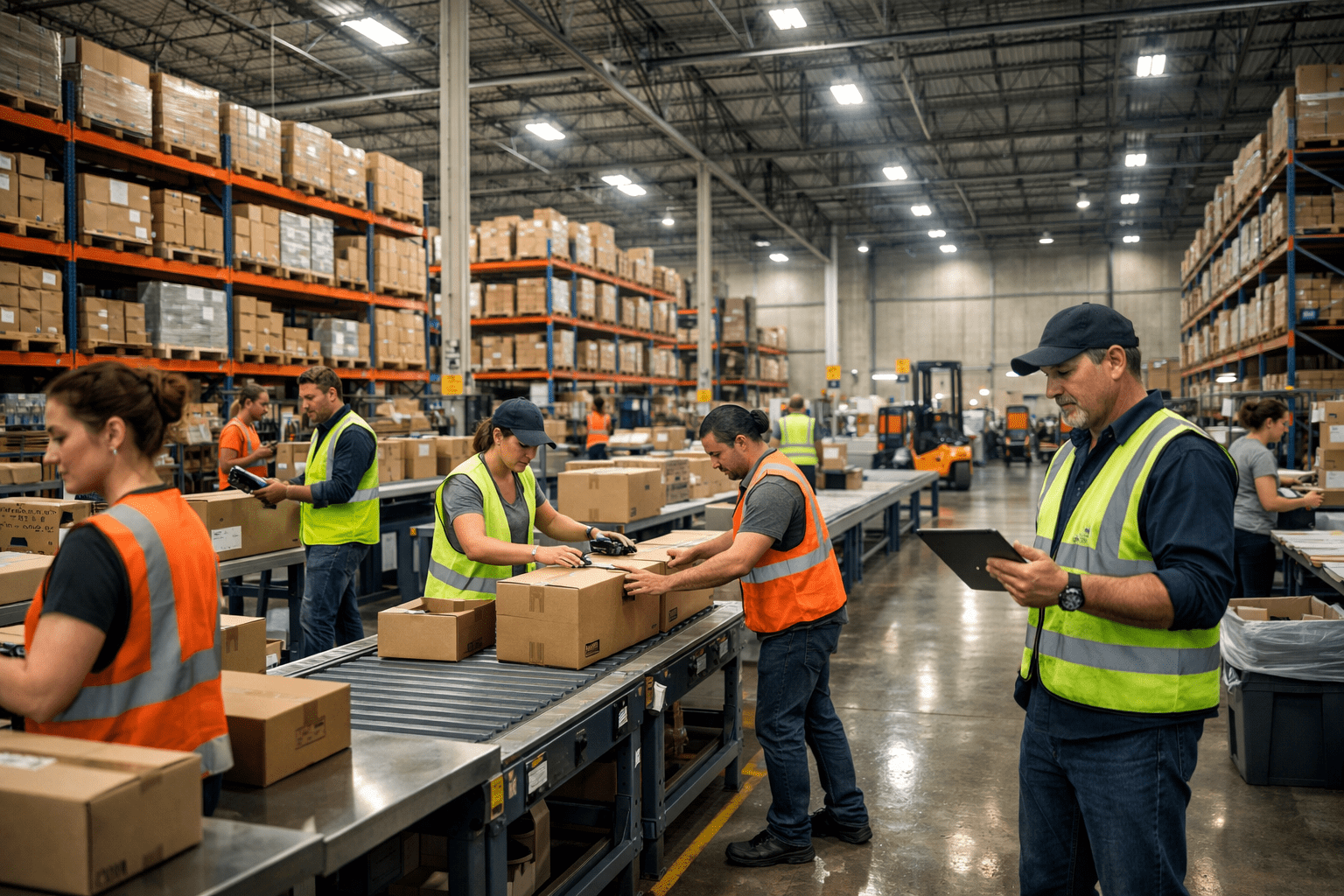
E-commerce may look digital from the outside, but behind every successful online store is a well-planned physical operation. One of the most critical elements of that operation is understanding fulfillment space requirements. Without the right amount of space — and without organizing that space properly — even a profitable store can struggle with delays, inventory errors, and rising costs.
In this guide, we will explore fulfillment space requirements in a clear, beginner-friendly way. At the same time, we will explain the technical principles that drive warehouse layout, storage planning, and operational efficiency.
What Are Fulfillment Space Requirements?
It refer to the amount and type of physical space needed to store inventory, process orders, pack products, and prepare shipments in an e-commerce operation.
In simple terms, it answers this question:
How much space do you need to run your online store efficiently?
However, the answer is not just about square footage. It also include:
- Storage configuration (shelving, pallet racks, bins)
- Picking and packing stations
- Receiving and returns areas
- Safety aisles and walking paths
- Equipment clearance
- Future growth capacity
Therefore, calculating It, is both a logistical and strategic decision.
Why Fulfillment Space Requirements Matter?
Many new e-commerce entrepreneurs underestimate space needs. At first, inventory may fit in a spare room or small warehouse. However, as sales grow, poor space planning creates serious problems.
Here’s why fulfillment space requirements are so important:
1. Order Processing Speed
When space is too tight, employees move slower. Congestion increases picking time. As a result, shipping delays become common.
2. Inventory Accuracy
Properly allocated space reduces misplaced items. Clearly defined zones improve tracking and reduce shrinkage.
3. Operational Efficiency
Well-designed fulfillment space requirements minimize travel distance. This directly improves labor productivity.
4. Scalability
If you do not plan for growth, you will relocate too soon. Relocations are expensive and disruptive.
In short, smart fulfillment space planning supports long-term business stability.
Core Components of Fulfillment Space Requirements
To understand fulfillment space requirements technically, we must break them into operational zones. To better understand how these operational zones function together, you can review this detailed ecommerce fulfillment process guide, which breaks down receiving, storage, picking, packing, and shipping workflows in depth.
1. Receiving Area
The receiving area is where inventory arrives. This space must accommodate:
- Pallet unloading
- Quality inspection
- Barcode labeling
- Temporary staging
A common beginner mistake is underestimating receiving space. During peak seasons, shipments arrive in bulk. Without proper receiving allocation, inventory backs up into packing areas.
2. Storage Area
Storage is usually the largest part of fulfillment space requirements. However, storage design depends on product type.
There are three common storage methods:
- Bin shelving – ideal for small items
- Pallet racking – suitable for bulk goods
- Vertical shelving systems – maximizes ceiling height
To calculate storage space, consider:
- Number of SKUs
- Average inventory per SKU
- Reorder frequency
- Safety stock levels
A technical rule of thumb: allocate 15–20% additional space beyond current needs to allow for seasonal fluctuation.
3. Picking Area
The picking area should be optimized for speed. In small operations, storage and picking are combined. However, as order volume grows, separating fast-moving SKUs into a dedicated picking zone improves efficiency.
This zone should minimize walking distance and support logical product grouping.
4. Packing Stations
Packing stations require:
- Table space
- Packaging material storage
- Label printers
- Scales
- Computer terminals
Each packing station typically needs 50–100 square feet depending on workflow design.
When calculating fulfillment space requirements, packing is often underestimated. However, during peak sales periods, packing becomes a bottleneck.
5. Shipping Staging Area
Before carrier pickup, completed orders must be staged. This area needs enough room for:
- Carrier sorting
- Outbound pallets
- High-volume order consolidation
Without proper staging space, workflow slows significantly.
6. Returns Processing Area
E-commerce return rates can range from 10% to 30% depending on product category. Therefore, fulfillment space requirements must include a dedicated returns zone.
Returns require inspection, restocking, repackaging, or disposal. If returns mix with outbound operations, confusion increases.
How to Calculate Fulfillment Space Requirements?
Now let’s look at the technical side of space calculation.
Step 1: Calculate Storage Volume
Start by determining:
- Total inventory units
- Average cubic size per unit
Multiply these values to calculate total cubic storage volume.
For example:
1,000 units × 0.5 cubic feet = 500 cubic feet
Next, account for aisle space. Storage systems typically require 30–40% additional space for movement and accessibility.
Step 2: Factor in Workflow Space
Storage is not everything. Add space for:
- Packing stations
- Receiving dock
- Returns area
- Office or administrative space
Many beginners focus only on storage volume and forget operational flow.
Step 3: Apply Growth Multiplier
A common professional practice is to apply a 1.25–1.5 multiplier to projected needs. This ensures flexibility.
Therefore:
Projected 2,000 sq ft requirement × 1.3 = 2,600 sq ft recommended lease
This prevents early overcrowding.
Vertical Space vs. Floor Space
When discussing fulfillment space requirements, it is important to distinguish between vertical and horizontal space.
Warehouses with high ceilings allow vertical expansion through:
- Multi-tier shelving
- Mezzanine systems
- Automated storage systems
Using vertical space reduces the need for larger square footage. However, it requires proper safety compliance and structural evaluation.
In many cases, investing in vertical storage reduces rent costs significantly.
Fulfillment Space Requirements for Different Business Sizes
Small E-commerce (0–500 orders/month)
Typical space needs:
- 200–800 square feet
- Combination storage and packing
- Limited receiving area
Many startups begin in home garages or small commercial units.
Medium E-commerce (500–5,000 orders/month)
Typical space needs:
- 1,000–5,000 square feet
- Defined zones
- Multiple packing stations
- Dedicated receiving dock
At this level, workflow design becomes critical.
Large E-commerce (5,000+ orders/month)
Typical space needs:
- 10,000+ square feet
- Zoned operations
- Conveyor systems
- Advanced inventory management
Here, fulfillment space requirements must align with automation strategies.
Technology and Fulfillment Space Requirements
Technology significantly affects space efficiency.
Warehouse Management Systems (WMS)
A WMS improves space utilization by optimizing:
- Slotting strategies
- Inventory turnover
- Picking paths
Barcode and RFID Systems
Accurate tracking reduces safety stock requirements. Lower safety stock means reduced storage needs.
Automation Systems
Automated storage and retrieval systems (AS/RS) maximize vertical capacity. Although costly, they significantly reduce floor space demand.
Therefore, technology directly influences fulfillment space requirements.
Common Mistakes in Fulfillment Space Planning
Even growing e-commerce businesses make planning errors.
1. Ignoring Seasonal Peaks
Holiday sales may double order volume. Without buffer space, operations collapse under pressure.
2. Overcrowded Aisles
Insufficient aisle width reduces productivity and increases safety risks.
3. Poor Product Slotting
Fast-moving items placed far from packing stations increase travel time.
4. Underestimating Returns
High-return industries like fashion require more inspection space.
Avoiding these mistakes ensures efficient physical operations.
Future Trends Affecting Fulfillment Space Requirements
The e-commerce landscape continues to evolve. Several trends are changing fulfillment space requirements:
- Micro-fulfillment centers near urban areas
- Same-day delivery demand
- Sustainable packaging zones
- Robotics integration
- Dark warehouses (lights-out automation)
As consumer expectations rise, fulfillment space must adapt to faster turnaround times.
Final Thoughts
Although e-commerce operates online, physical infrastructure determines operational success. Carefully evaluating fulfillment space requirements ensures efficiency, scalability, and profitability.
To summarize:
- Analyze storage volume accurately.
- Allocate space for receiving, packing, and returns.
- Plan for growth with a buffer.
- Optimize vertical space.
- Integrate technology for efficiency.
Most importantly, treat fulfillment space requirements as a strategic investment rather than a simple lease decision.
When properly planned, your physical operations will support growth instead of limiting it.