
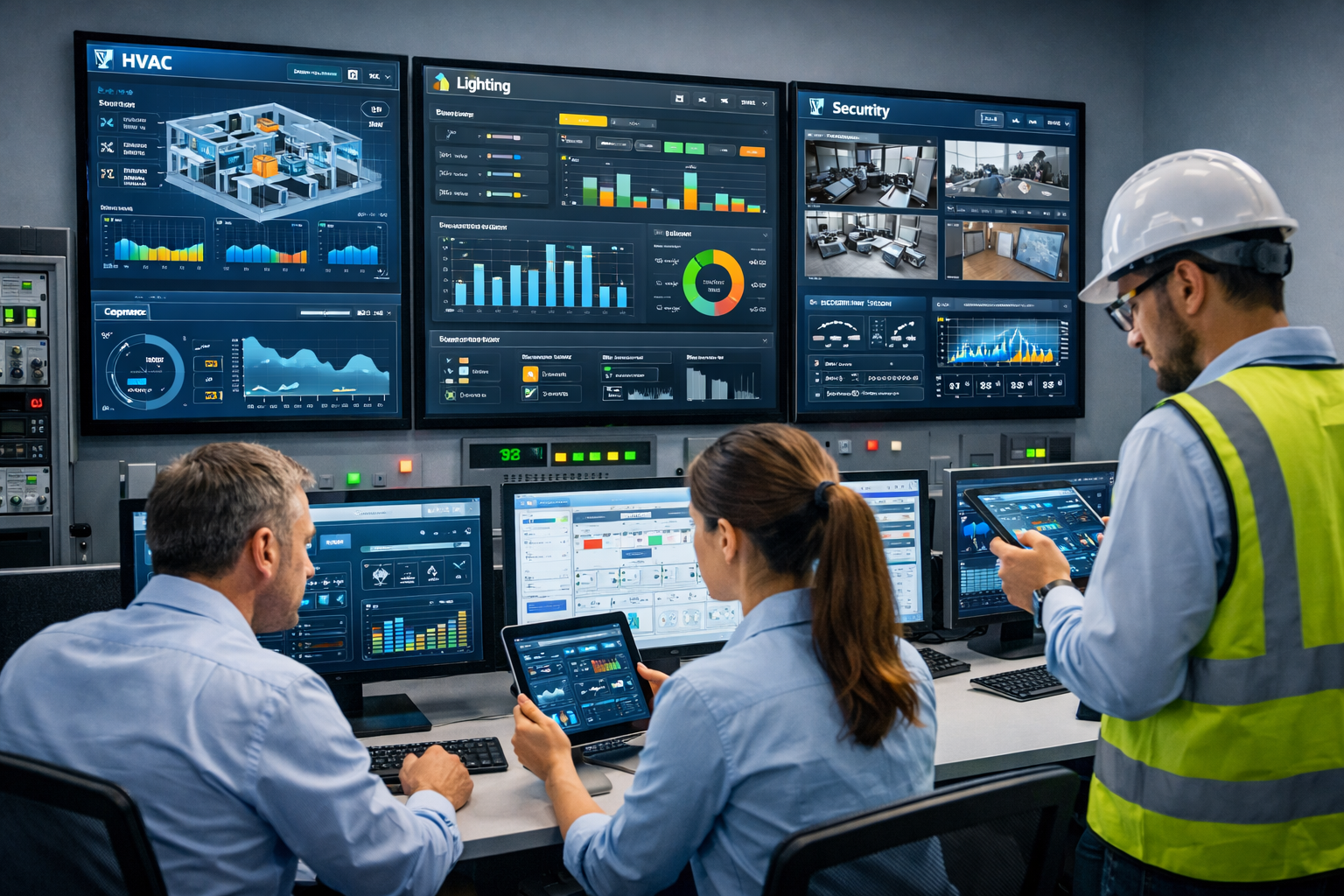
Integrated building systems are at the forefront of modern building design and operation. These systems combine multiple building technologies into a coordinated framework that improves energy efficiency, occupant comfort, safety, and operational performance. From mechanical and electrical systems to lighting, security, and automation, integration allows engineers to manage complex buildings efficiently.
This article provides a professional overview of integrated building systems, highlighting the benefits, key components, design principles, implementation strategies, and emerging trends in modern facilities.
Understanding Integrated Building Systems
Integrated building systems refer to the coordination of all building technologies to operate as a cohesive unit. Rather than functioning in isolation, these systems communicate and cooperate through centralized controls or a building automation system (BAS).
Benefits of integration include:
- Optimized energy consumption
- Enhanced occupant comfort and productivity
- Improved safety and security
- Streamlined maintenance and operational efficiency
- Real-time monitoring and predictive analytics
By combining systems, engineers can achieve synergy, where the combined performance exceeds the sum of individual components.
Key Components of Integrated Building Systems
Integrated systems encompass multiple subsystems, which often include:
1. Mechanical Systems
Mechanical systems form the backbone of building operations. Integration ensures:
- HVAC systems operate efficiently, responding to occupancy and environmental conditions
- Energy usage is minimized through coordinated control of chillers, boilers, pumps, and fans
- Indoor air quality is maintained with sensors for temperature, humidity, and CO₂ levels
2. Electrical Systems
Electrical systems support power distribution, lighting, and critical operations. Integration allows:
- Load management to reduce peak demand
- Coordination with emergency power and backup generators
- Smart metering and energy monitoring to identify inefficiencies
3. Lighting Systems and Controls
Lighting integration improves energy efficiency and comfort. Key strategies include:
- Dimming and occupancy-based control
- Daylight harvesting for spaces with natural light
- Centralized monitoring to optimize lighting schedules
4. Fire and Life Safety Systems
Fire alarms, sprinkler systems, smoke detection, and emergency lighting are critical for safety. Integration ensures:
- Automated responses during emergencies
- Coordination with HVAC to prevent smoke spread
- Notifications and alerts for building operators
5. Security and Access Control
Integrated security systems enhance building safety:
- CCTV, intrusion detection, and access control systems
- Monitoring and alerting through a centralized platform
- Integration with fire and emergency systems for coordinated evacuation
6. Building Automation Systems (BAS)
The BAS is the central nervous system of an integrated building. It:
- Monitors all connected systems
- Provides dashboards and reporting tools
- Enables predictive maintenance through real-time analytics
- Supports remote management and automated responses
Design Principles for Integrated Building Systems
Designing integrated systems requires a strategic approach. Key principles include:
Interoperability
All systems must communicate effectively, often using standardized protocols such as:
- BACnet (Building Automation and Control Networks)
- Modbus for equipment interfaces
- KNX or LonWorks for lighting and automation systems
Scalability
Integrated systems should support future upgrades without major overhauls. Engineers design systems with modularity to add new technologies over time.
Reliability and Redundancy
Critical systems such as fire safety and emergency power require:
- Redundant components to prevent single points of failure
- Fail-safe designs to maintain operations during system faults
User-Centric Design
Systems must be intuitive for operators and occupants. Dashboards, alerts, and automated responses help users interact effectively with the integrated system.
Energy Efficiency
Integration enables:
- Coordinated HVAC, lighting, and electrical systems to reduce consumption
- Peak load management
- Optimization of renewable energy sources like solar or geothermal
Implementation Strategies
Successful implementation requires careful planning:
Needs Assessment
- Evaluate building requirements and operational goals
- Identify which systems benefit most from integration
- Consider local codes and sustainability certifications (e.g., LEED, BREEAM)
System Selection
- Choose equipment and control platforms that support open protocols
- Ensure compatibility with existing infrastructure
Network and IT Infrastructure
- Reliable communication networks (wired or wireless) are critical
- Cybersecurity measures protect BAS and IoT-connected devices
Commissioning and Testing
- Validate that systems communicate correctly
- Test failover scenarios and emergency responses
- Adjust settings for optimal performance and energy savings
Maintenance and Operational Considerations
Integrated systems simplify maintenance but require:
- Regular software updates for BAS and connected devices
- Sensor calibration to ensure accurate monitoring
- Preventive maintenance of mechanical, electrical, and lighting components
- Data-driven analysis to identify trends and potential failures
Predictive maintenance reduces downtime, prevents costly repairs, and improves occupant comfort.
Emerging Trends in Integrated Building Systems
Technology advancements are expanding the possibilities for integrated buildings:
- IoT-enabled devices provide real-time data and remote monitoring
- AI and machine learning optimize energy usage and predictive maintenance
- Smart grids and energy storage allow buildings to interact with local energy networks
- Human-centric environments adjust lighting, temperature, and airflow for occupant well-being
- Sustainability and green certifications are increasingly integrated into system design
Integration is no longer optional—it is a key driver for efficient, safe, and future-ready buildings. Learn more and see: Lighting Systems and Controls: Building Systems Overview
Conclusion
Integrated building systems transform how modern buildings operate. By connecting mechanical, electrical, lighting, security, and automation systems through a central platform, engineers achieve:
- Enhanced energy efficiency
- Improved occupant comfort and safety
- Streamlined operations and maintenance
- Support for sustainable building goals
Building systems engineers play a critical role in planning, implementing, and maintaining these systems. Proper integration ensures buildings are resilient, adaptive, and efficient, delivering maximum value over their lifecycle.