
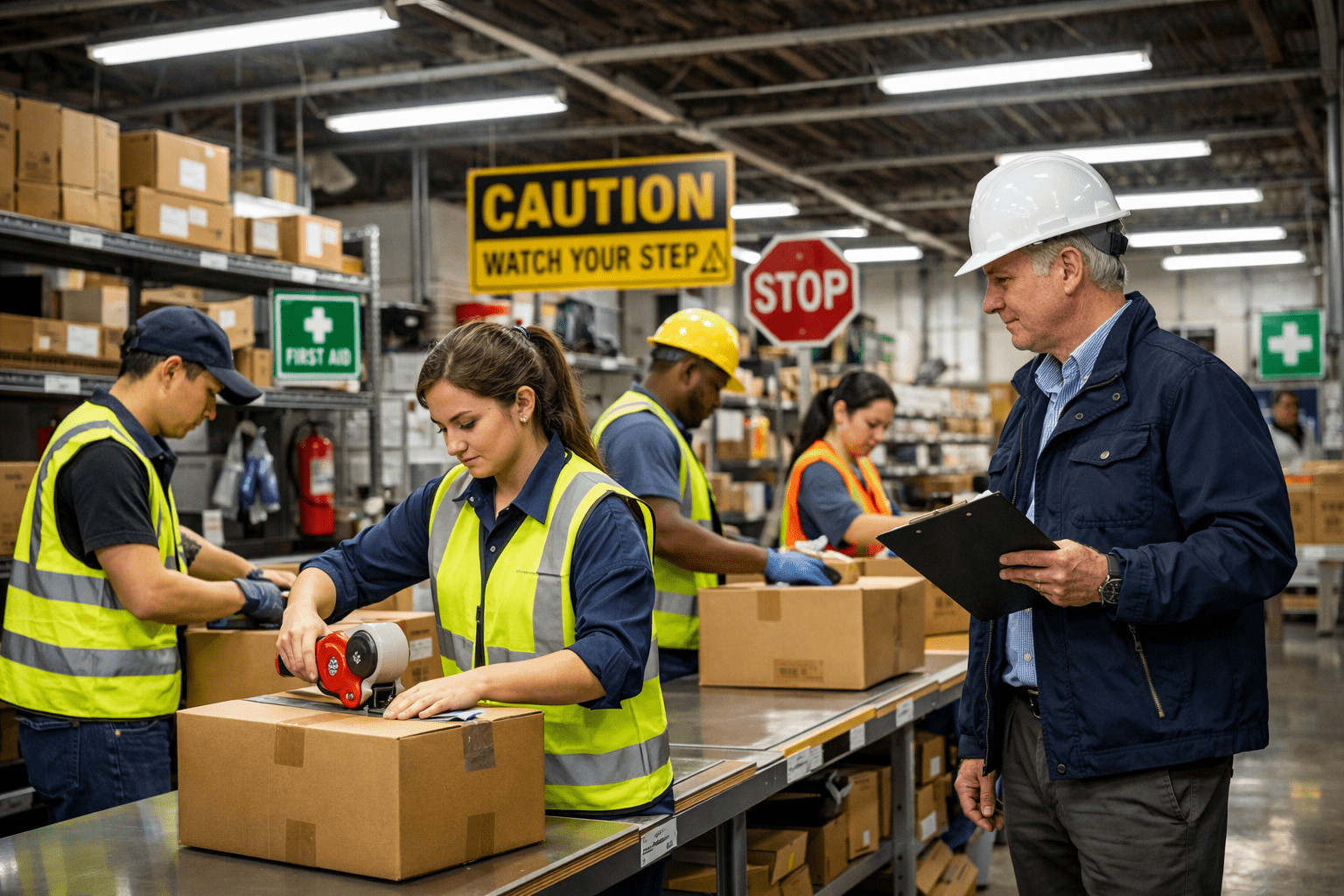
Physical operations for e-commerce extend far beyond websites and digital marketing. While online platforms attract customers, warehouse operations determine whether orders are fulfilled accurately and safely. One of the most critical components of physical operations is lighting and safety in packing areas.
Packing stations serve as the final checkpoint before orders leave the warehouse. Poor lighting and unsafe working conditions can lead to incorrect shipments, product damage, employee injuries, and operational delays. This article explains how proper lighting systems and safety protocols improve efficiency, reduce risk, and support scalable e-commerce growth.
Why Packing Areas Matter in E-commerce Operations?
In a standard e-commerce fulfillment workflow:
- Orders are received through the platform.
- Items are picked from storage locations.
- Products are transferred to packing stations.
- Items are verified, packed, labeled, and sealed.
- Shipments are staged for carrier pickup.
The packing area is the last opportunity to detect errors. If lighting is insufficient or the environment is unsafe, mistakes and accidents become more likely. Therefore, investing in lighting and safety in packing areas is essential for operational excellence.
For a deeper look at how to structure an optimized workstation, this guide on efficient packing station design explains layout strategies that improve workflow efficiency and reduce operational bottlenecks.
Technical Requirements for Proper Lighting in Packing Areas
Lighting in packing areas affects accuracy, speed, and employee health. It must be carefully designed rather than installed randomly.
Recommended Lighting Levels (Lux Standards)
Lighting intensity is measured in lux (lumens per square meter). Recommended standards for e-commerce packing areas include:
- 300–500 lux for general warehouse spaces
- 500–750 lux for packing and label verification tasks
- Up to 1000 lux for high-precision inspection tasks
Insufficient lighting increases eye strain and slows down work. Excessively bright lighting, however, can create glare and fatigue. Balanced illumination improves both productivity and comfort.
LED Lighting Systems for Efficiency
Modern e-commerce warehouses rely on LED lighting systems because they provide:
- Lower energy consumption
- Minimal heat generation
- Longer lifespan (up to 50,000 hours)
- High color rendering accuracy
High Color Rendering Index (CRI) lighting is particularly important when workers must distinguish between similar products. For example, verifying SKU labels or identifying subtle color variations requires accurate lighting conditions.
Color Temperature for Optimal Performance
Color temperature, measured in Kelvin (K), impacts visibility and alertness.
- 4000K–5000K (neutral to cool white) is ideal for packing areas.
Cool white lighting improves concentration and visibility. Warmer lighting may feel comfortable but reduces clarity for detailed tasks such as barcode scanning and product verification.
Eliminating Shadows and Glare
Overhead lighting alone is insufficient. Packing stations should include:
- Direct task lighting above benches
- Adjustable LED arm lights
- Anti-glare diffusers
- Even distribution to reduce shadow formation
Shadows can hide label details, while glare from glossy packaging may interfere with barcode scanners. Proper fixture placement ensures consistent illumination.
Safety Considerations in Packing Areas
Lighting improves visibility, but safety protocols protect employees. E-commerce warehouses involve repetitive motion, lifting, cutting tools, and constant movement. Without structured safety planning, injuries become common.
Ergonomic Workstation Design
Ergonomics reduces strain and improves long-term workforce sustainability.
Key ergonomic elements include:
- Adjustable packing table height (28–42 inches)
- Anti-fatigue floor mats
- Footrests for seated workers
- Proper monitor positioning at eye level
- Easy access to tools and supplies
Repetitive strain injuries (RSIs) are frequent in packing roles. Adjustable workstations reduce musculoskeletal stress and improve employee comfort.
Safe Layout and Clear Pathways
Packing areas must be organized to prevent collisions and falls.
Best practices include:
- Minimum 36-inch pedestrian walkways
- Marked floor zones
- Clear separation of forklift and worker traffic
- Non-slip flooring materials
- Proper cable management
Cluttered floors increase tripping hazards. Implementing daily housekeeping routines prevents accidents and improves workflow efficiency.
Fire Safety Measures
Packing stations contain flammable materials such as:
- Cardboard boxes
- Bubble wrap
- Plastic mailers
- Adhesives
Essential fire safety measures include:
- Fire extinguishers placed within 75 feet
- Clearly marked emergency exits
- Functional sprinkler systems
- No blocked exit routes
Regular fire drills and safety training ensure employees respond effectively during emergencies.
Safe Handling of Cutting Tools
Box cutters and tape dispensers are necessary but potentially dangerous tools.
Recommended precautions:
- Self-retracting safety knives
- Cut-resistant gloves
- Proper tool storage areas
- Mandatory safety training
Minor lacerations are common in packing environments, but they are preventable with proper equipment and awareness.
How Lighting and Safety Work Together?
Lighting and safety in packing areas are interconnected. Poor lighting increases the likelihood of accidents because workers may:
- Misjudge box dimensions
- Overlook sharp objects
- Fail to notice spills
- Improperly seal packages
Well-designed lighting enhances hazard detection. Combined with safety protocols, it creates a controlled and efficient working environment.
Smart Technologies Enhancing Packing Area Operations
Advanced e-commerce warehouses integrate smart systems to improve both lighting and safety.
Motion-Activated Lighting
Sensors activate lights only when workers are present. This reduces energy consumption while maintaining visibility.
Zoned Lighting Controls
Different lighting levels can be applied to:
- Inspection zones
- Label printing stations
- High-volume packing lines
Zoning ensures optimal brightness without unnecessary power usage.
Safety Monitoring Systems
Some facilities implement:
- Wearable safety alerts
- Air quality sensors
- Real-time hazard detection cameras
These technologies reduce risks and support proactive safety management.
Compliance and Regulatory Considerations
E-commerce warehouses must comply with occupational safety regulations. Although specific requirements vary by region, common standards include:
- Minimum lighting levels
- Fire code compliance
- Electrical safety inspections
- Ergonomic risk assessments
Routine audits ensure compliance and reduce liability exposure.
Cost-Benefit Analysis of Proper Lighting and Safety
Investing in lighting and safety in packing areas delivers measurable financial returns.
Reduced Order Errors
Better lighting improves SKU verification accuracy and reduces returns.
Lower Injury Costs
Safe environments decrease workers’ compensation claims and absenteeism.
Higher Productivity
Well-lit, ergonomic stations increase packing speed and output.
Employee Retention
Safe, comfortable workplaces improve morale and reduce turnover rates.
Although LED upgrades and ergonomic redesigns require initial investment, long-term operational savings outweigh upfront costs.
Common Mistakes in Packing Area Design
Many e-commerce operators overlook critical factors, including:
- Relying on outdated fluorescent lighting
- Ignoring glare problems
- Overcrowding packing stations
- Skipping ergonomic customization
- Neglecting routine safety training
Avoiding these mistakes improves operational reliability.
Step-by-Step Plan to Improve Lighting and Safety in Packing Areas
Step 1: Conduct a Lighting Audit
Measure current lux levels and identify shadow zones.
Step 2: Upgrade to LED Fixtures
Install 4000K–5000K LED systems with diffusers.
Step 3: Redesign Workstations
Introduce adjustable tables and anti-fatigue mats.
Step 4: Train Employees
Implement safety and tool-handling programs.
Step 5: Perform Regular Inspections
Schedule quarterly safety and lighting evaluations.
Final Thoughts on Lighting and Safety in Packing Areas
Lighting and safety in packing areas are fundamental components of physical operations for e-commerce. They directly affect order accuracy, employee well-being, regulatory compliance, and profitability.
As e-commerce continues to expand, warehouses must evolve to meet higher operational standards. Proper lighting design, ergonomic workstations, and structured safety protocols transform packing areas into efficient, scalable, and secure environments.
By prioritizing lighting and safety in packing areas, e-commerce businesses build a foundation for long-term operational success and customer satisfaction.