
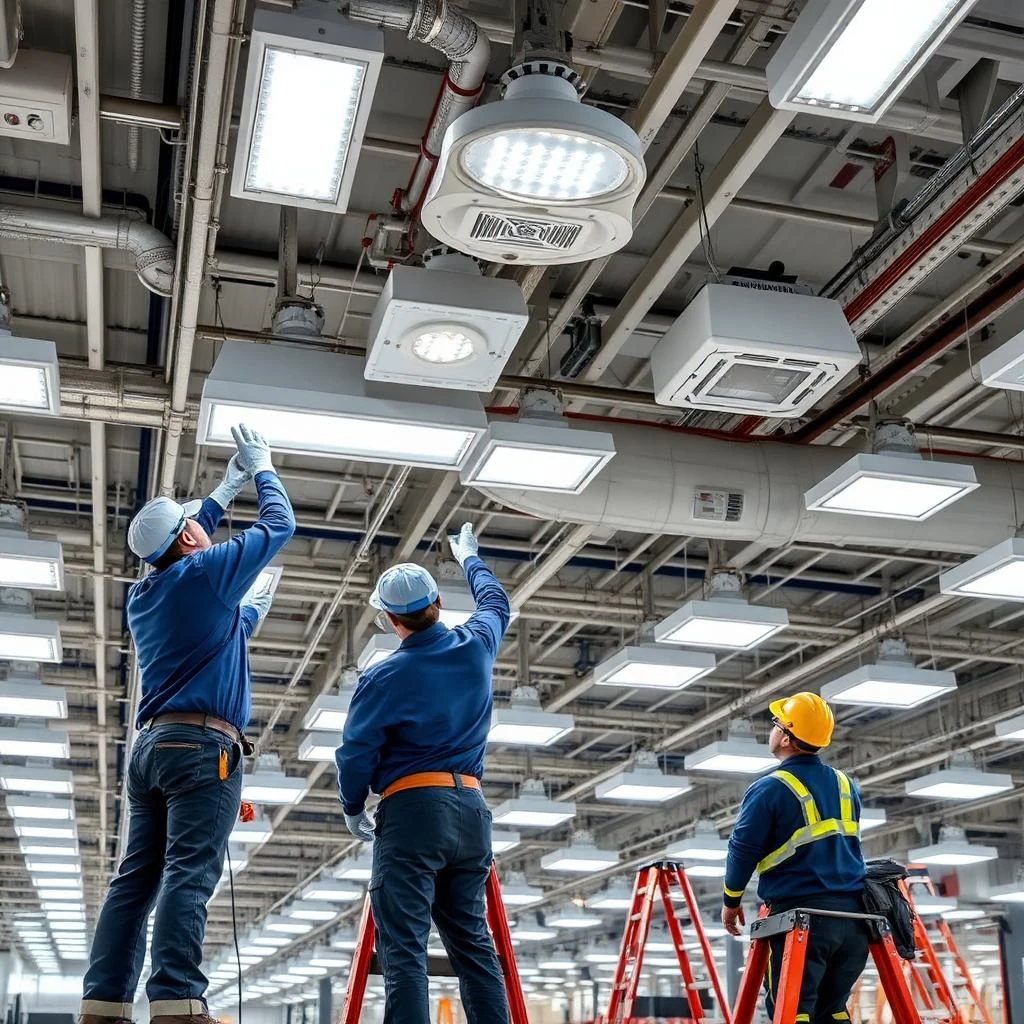
Proper lighting maintenance is essential for workplace safety, operational efficiency, and productivity in industrial, commercial, and construction environments. When lighting systems are neglected, visibility declines, accidents become more likely, and operational costs rise. Therefore, understanding lighting maintenance considerations is critical for maintaining optimal performance, safety, and regulatory compliance.
This article provides an expert guide on maintaining lighting systems, covering inspections, cleaning, replacement schedules, and modern technological solutions to ensure that operational spaces remain well-lit and safe.
Why Lighting Maintenance Is Critical
Lighting affects more than just visibility. Poor maintenance can lead to:
- Safety hazards due to reduced visibility
- Visual fatigue, causing errors and lowered productivity
- Increased energy consumption and operational costs
- Premature failure of lighting equipment
- Non-compliance with OSHA, ANSI, or ISO standards
Consequently, regular maintenance ensures that lighting systems continue to provide uniform illumination, reduce risks, and support efficient operations.
Key Goals of Lighting Maintenance
Effective lighting maintenance should focus on several objectives. First, it ensures safety by keeping all work areas well-illuminated. Second, it enhances efficiency, maintaining energy-saving operation and reducing unnecessary costs. Third, proper maintenance extends fixture lifespan, avoiding premature replacements. Fourth, it maintains performance consistency, ensuring uniform light levels and proper color temperatures. Lastly, it contributes to cost management, reducing unplanned repairs and minimizing operational downtime.
By achieving these goals, facilities can maximize both safety and productivity while controlling long-term expenses.
Types of Lighting Maintenance
Maintaining lighting systems involves preventive, corrective, and predictive strategies. Each type addresses specific challenges and contributes to optimal performance.
1. Preventive Maintenance
Preventive maintenance aims to avoid problems before they occur. Key tasks include:
- Cleaning fixtures and lenses to remove dust, dirt, and debris
- Inspecting electrical connections for looseness or corrosion
- Replacing aging lamps or LED modules proactively
- Checking drivers, ballasts, and control systems for signs of wear
By taking these steps, facilities can minimize unexpected failures and ensure reliable illumination.
2. Corrective Maintenance
In contrast, corrective maintenance addresses failures after they occur. For example:
- Replacing burned-out lamps or malfunctioning LEDs
- Repairing damaged wiring or fixtures
- Adjusting misaligned lighting to restore proper coverage
Although reactive, corrective maintenance is essential for maintaining safety and operational continuity.
3. Predictive Maintenance
Modern technology enables predictive maintenance, which anticipates issues before they affect performance. Smart lighting systems can monitor fixture health, alert maintenance teams to potential failures, and track energy usage patterns. Similarly, IoT sensors can detect abnormal performance, while automated diagnostics measure lumen output to identify underperforming fixtures. Consequently, predictive maintenance reduces downtime and extends the lifespan of lighting assets.
Maintenance Considerations by Lighting Type
Different lighting systems have unique maintenance requirements. Understanding these differences ensures that each fixture continues to perform optimally.
LED Lighting
LEDs are energy-efficient and long-lasting, yet they still require attention. Over time, lumen output may decline, heat buildup can damage internal components, and drivers or power supplies can fail. Therefore, regular inspection and cleaning of heat sinks, as well as monitoring brightness levels, are necessary to maintain performance.
Fluorescent Lighting
Fluorescent lamps require more frequent maintenance than LEDs. For example, flickering or dimming lamps indicate the need for replacement. In addition, ballasts should be checked regularly, and diffusers or reflectors must be cleaned to maintain consistent light output. Neglecting these steps can reduce visibility and efficiency in operational spaces.
High-Intensity Discharge (HID) Lighting
HID systems, often used in warehouses and high-bay facilities, need specific care. Lumen output decreases over time, and reflectors or lenses can accumulate dust. Furthermore, ballasts must be inspected for proper operation. Proper HID maintenance ensures both energy efficiency and safe visibility in large operational areas.
Emergency and Exit Lighting
Emergency lighting is critical for safety and regulatory compliance. Batteries and backup systems must be tested regularly, while burned-out bulbs or LED modules should be replaced immediately. Additionally, exit signs and egress paths need to remain clearly illuminated at all times to guarantee safe evacuation.
Environmental Factors Influencing Maintenance
The environment significantly impacts lighting performance and maintenance needs. Dust and debris are common in industrial facilities and construction sites, reducing light output. Similarly, humidity or moisture can damage fixtures not rated for such conditions, while extreme temperatures may affect LEDs, ballasts, or controls. Mechanical vibrations in manufacturing areas can also stress fixtures, and high operational hours accelerate wear. Consequently, maintenance schedules must account for these environmental and operational factors to ensure reliability.
Planning and Scheduling Maintenance
A structured maintenance program is key to ensuring consistent lighting performance. Start by creating an inventory of all lighting fixtures, including their type, wattage, location, and installation date. Next, establish a routine inspection and cleaning schedule, assigning qualified personnel to each task. Performance tracking is also essential: recording failures, replacements, and observed issues helps identify recurring problems. Finally, coordinate maintenance activities with operational schedules to minimize disruptions. With this approach, facilities can ensure that lighting systems remain safe, efficient, and reliable.
Cleaning and Inspection Best Practices
Regular cleaning and inspection are critical for lighting performance. Fixtures should be cleaned with soft cloths or compressed air to remove dust and grime. Electrical connections must be checked for tightness and corrosion. Additionally, mounting and alignment should be verified to avoid shadows and uneven illumination. Aging components, such as lamps, ballasts, or drivers, must be replaced proactively. Finally, emergency systems should be tested regularly to ensure proper function. These steps help prevent unexpected failures and maintain a safe, well-lit work environment.
Leveraging Technology for Maintenance
Modern lighting technology offers solutions that simplify maintenance. Smart LED systems can monitor fixture health, send alerts for potential issues, and even report energy usage anomalies. IoT-enabled sensors allow predictive maintenance by detecting underperforming fixtures before they fail. Automated diagnostic tools measure lumen output and alert maintenance teams when replacements are needed. In addition, centralized management software can schedule, track, and document maintenance across multiple locations. As a result, technology reduces manual labor, minimizes downtime, and ensures consistent lighting performance.
Cost and Efficiency Benefits
Implementing proper maintenance strategies has clear financial advantages. Preventive and predictive maintenance reduce emergency repairs and associated labor costs. Extending the lifespan of lighting systems lowers replacement expenses, while energy-efficient operation minimizes utility bills. Furthermore, consistent lighting enhances safety, reducing the risk of costly accidents or regulatory fines. In essence, investing in structured lighting maintenance considerations is cost-effective and supports operational efficiency.
Compliance and Safety Considerations
Lighting maintenance is critical for meeting regulatory standards. OSHA standard 1926.56 sets minimum illumination requirements for construction and industrial environments. Similarly, ANSI/IES RP-7 provides guidelines for industrial lighting, and emergency lighting standards ensure safe egress during power outages. By maintaining fixtures according to these standards, facilities not only improve safety but also reduce legal risks.
“For official lighting standards and requirements, visit OSHA Lighting Standards.”
Conclusion
Proper lighting maintenance considerations are essential for safety, visibility, and operational efficiency in industrial, commercial, and construction environments. By implementing preventive, corrective, and predictive maintenance strategies, conducting regular inspections and cleaning, and leveraging modern technological solutions, facilities can ensure optimal lighting performance. Consequently, well-maintained lighting systems enhance safety, reduce operational costs, and extend the lifespan of fixtures, creating a productive and secure workspace.