
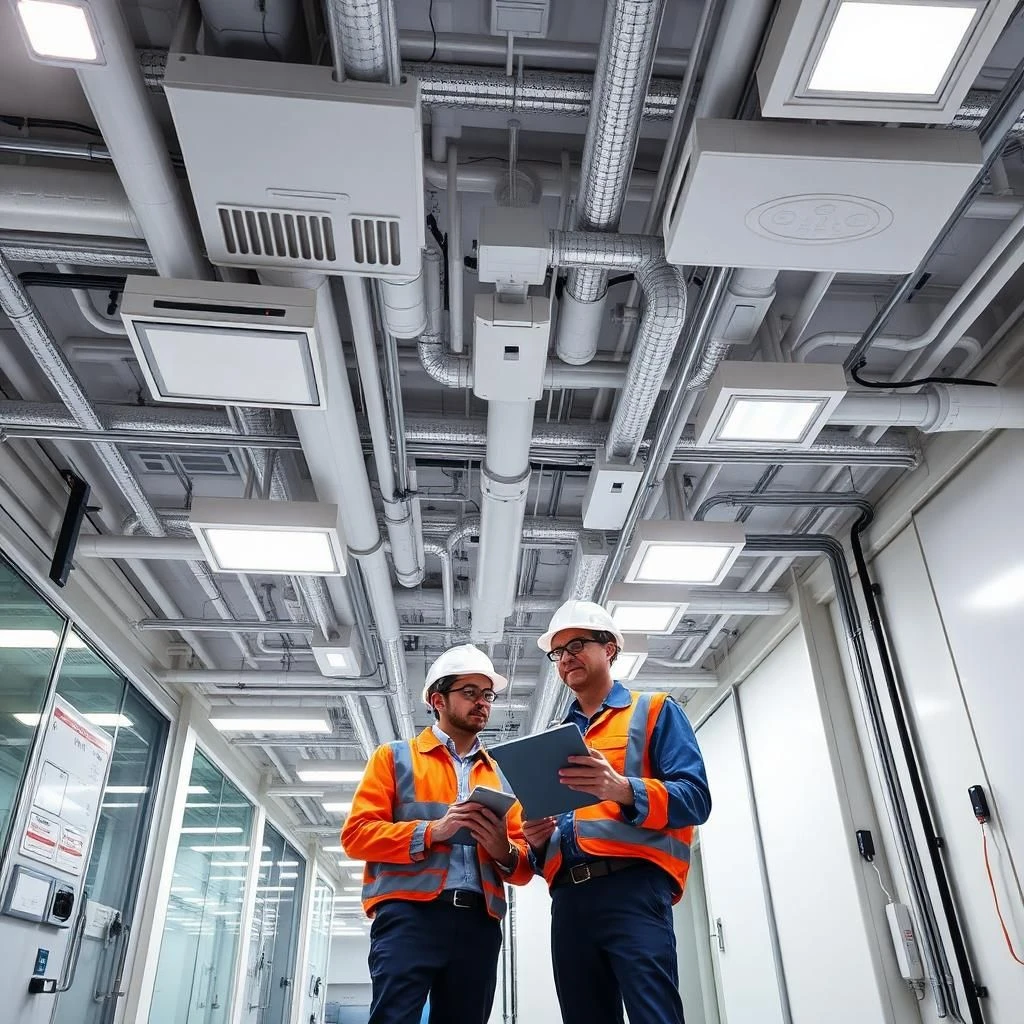
Lighting systems and controls are essential in modern buildings. They provide safe, efficient, and comfortable illumination. Proper lighting improves occupant productivity, safety, and energy efficiency. Building systems engineers design and maintain these systems to meet regulations and optimize performance.
This article provides an expert overview of lighting systems and controls. It covers types of lighting, control strategies, design considerations, maintenance, and emerging trends in buildings.
What Are Lighting Systems and Controls?
Lighting systems and controls include all fixtures, devices, and automation that deliver illumination. They serve several purposes:
- Provide adequate light for tasks and circulation
- Ensure safety and comfort
- Reduce energy use with efficient technologies
- Integrate with building automation systems
Well-designed systems work with HVAC, electrical, and architectural elements to ensure efficiency and compliance.
Key components include:
- Lighting fixtures – LED, fluorescent, and halogen lamps
- Control devices – dimmers, occupancy sensors, and timers
- Lighting control systems – manage multiple zones
- Safety lighting – emergency and exit lights
- Integration with BAS – for monitoring and optimization
Types of Lighting Systems
Different lighting systems serve different purposes. Understanding them is key for lighting systems and controls design.
Ambient or General Lighting
Ambient lighting provides uniform illumination. Examples include:
- LED troffers in offices
- Fluorescent panels in schools and hospitals
- Recessed or pendant lighting in commercial spaces
Good ambient lighting reduces glare and improves safety.
Task Lighting
Task lighting focuses on specific areas. Examples:
- Desk lamps in offices
- Laboratory or industrial workstation lighting
- Kitchen or preparation areas
Controls allow users to adjust light levels, saving energy and improving functionality.
Accent and Decorative Lighting
Accent lighting highlights features or décor. Examples:
- Wall washers in galleries
- Cove lighting for ceilings
- LED strips on feature walls
These systems often use scene settings or programmable dimmers.
Emergency and Safety Lighting
Emergency lighting ensures safe evacuation. Systems include:
- Exit signs
- Emergency luminaires
- Fire alarm-integrated lights
These lights are backed by emergency power sources to function during outages.
Lighting Controls
Modern lighting systems and controls use automation to improve efficiency and comfort.
Occupancy Sensors
Occupancy sensors detect presence and turn lights on or off. Common areas include:
- Restrooms and corridors
- Conference rooms
- Warehouses and storage areas
Daylight Sensors and Dimming
Daylight sensors adjust artificial light based on natural light. Dimming reduces energy while maintaining optimal illumination.
Time-Based Controls
Timers or schedules automatically switch lights. Useful for:
- Exterior lighting
- Common areas in offices
- Industrial facilities
Centralized Control Systems
Advanced control systems allow centralized management:
- Scheduling and occupancy adjustments
- Energy monitoring and reporting
- Integration with HVAC and BAS
These systems also enable predictive maintenance and energy optimization.
Design Considerations
Effective design ensures lighting systems and controls meet user needs and energy goals.
Illumination Levels
Engineers set illumination levels based on space use and standards:
- IESNA recommendations
- OSHA or local code requirements
- Energy efficiency targets
Energy Efficiency
Key strategies include:
- LED fixtures with long life
- Occupancy and daylight sensors
- Integration with building energy management systems
Visual Comfort
Comfort impacts productivity. Consider:
- Color temperature selection
- Color rendering index (CRI)
- Minimizing glare and flicker
Integration With Other Systems
Lighting is coordinated with:
- HVAC systems
- Fire safety
- Electrical distribution
This reduces peak loads and improves energy management.
Maintenance of Lighting Systems
Routine maintenance ensures safety and performance:
- Clean fixtures and lenses regularly
- Replace lamps and LED drivers
- Test and calibrate control devices
- Check emergency lighting functionality
Preventive maintenance lowers costs and improves occupant satisfaction.
Emerging Trends
Lighting technology is evolving rapidly. Trends include:
- Smart LED lighting – IoT-enabled luminaires
- Daylight harvesting – automated adjustment to natural light
- Human-centric lighting – supports circadian rhythms
- Energy reporting – integrated with BAS
- Wireless control systems – flexible and cost-efficient
These innovations make lighting systems and controls more efficient, responsive, and sustainable. Learn more and see: Plumbing and Water Systems: Building Systems Overview
Conclusion
Lighting systems and controls are essential for building safety, comfort, and efficiency. From ambient and task lighting to emergency systems and automation, proper design and maintenance are critical.
Building systems engineers play a vital role in creating energy-efficient, resilient, and user-friendly lighting systems. With modern control technologies, engineers can optimize performance while reducing costs and environmental impact.