
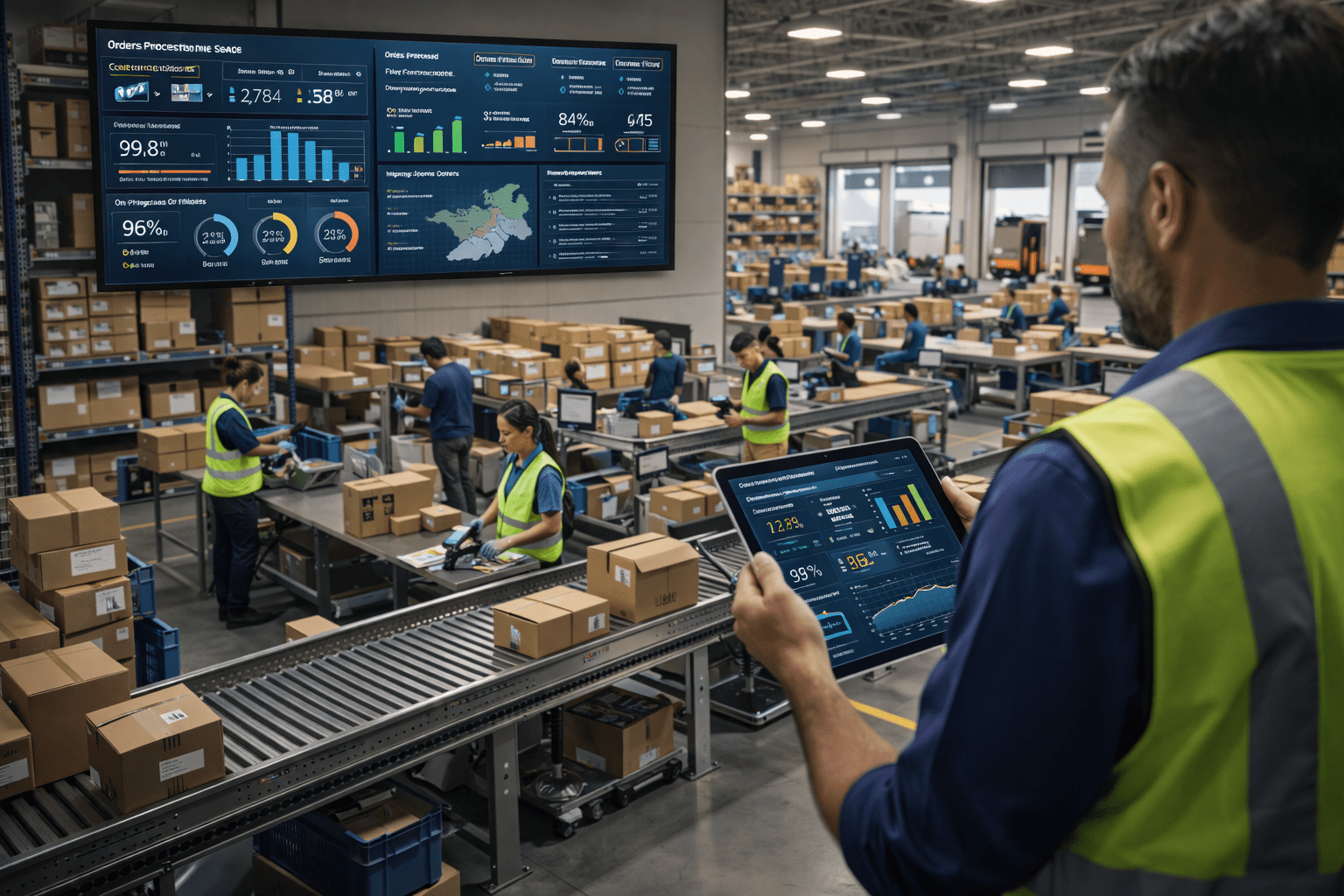
Growth is exciting. More orders, more customers, and expanding revenue signal success. However, scaling physical commerce operations introduces complexity. Systems that worked at 20 orders per day may fail at 200. This is why maintaining efficiency at scale becomes one of the most important priorities for growing product-based businesses.
Efficiency is not about working harder. It is about building systems that allow higher volume without sacrificing speed, accuracy, or profitability. This guide explains how to grow your physical commerce business while protecting operational performance.
Why Efficiency Declines During Growth?
When order volume increases, common problems appear:
- Slower fulfillment times
- Inventory errors
- Shipping mistakes
- Rising labor costs
- Workflow bottlenecks
- Increased returns
These issues happen because processes designed for small operations cannot handle larger demand.
Maintaining efficiency at scale requires upgrading systems, improving workflows, and making data-driven decisions.
Step 1: Optimize Workflow Before Expanding
Many businesses attempt to grow without refining their current processes. Before adding staff or leasing more space, evaluate your workflow.
Ask:
- Is picking and packing organized logically?
- Are high-volume products stored strategically?
- Are there unnecessary movement steps?
- Are returns handled efficiently?
Simple layout improvements can reduce labor time significantly.
Scaling physical commerce operations successfully starts with improving what already exists.
Step 2: Standardize Operating Procedures
Informal processes may work in small teams, but scaling requires structure.
Create documented Standard Operating Procedures (SOPs) for:
- Receiving inventory
- Stocking shelves
- Order picking
- Packing guidelines
- Shipping label printing
- Returns processing
When processes are standardized, new employees can integrate quickly and errors decrease.
Maintaining efficiency at scale depends on consistency.
Step 3: Invest in the Right Technology
Manual systems limit growth. Businesses aiming to improve operational performance should review a scalable fulfillment operations guide to understand how technology and workflow design support long-term efficiency.
Consider implementing:
- Inventory management software
- Warehouse management systems (WMS)
- Barcode scanning
- Automated shipping integrations
- Real-time reporting dashboards
Technology reduces human error and improves visibility across operations.
For example, barcode scanning alone can significantly increase picking accuracy and reduce costly mistakes.
Step 4: Improve Inventory Management
Inventory problems are one of the biggest threats to efficiency.
Common issues include:
- Overstocking slow-moving products
- Stockouts on bestsellers
- Inaccurate stock counts
- Poor demand forecasting
To maintain operational performance:
- Track inventory turnover rates
- Implement cycle counting
- Analyze sales trends
- Set reorder thresholds
Accurate inventory control supports smooth scaling physical commerce operations.
Step 5: Focus on Layout and Space Utilization
As volume grows, space becomes a constraint.
Optimize your warehouse by:
- Using vertical shelving
- Separating receiving and shipping zones
- Creating dedicated packing stations
- Placing bestsellers near packing areas
- Reducing cross-traffic
Efficient layout design minimizes walking distance and increases productivity.
Maintaining efficiency at scale often starts with physical organization.
Step 6: Train and Empower Your Team
People drive operations. As your team grows, leadership becomes critical.
Invest in:
- Clear job descriptions
- Performance metrics
- Safety training
- Ongoing skills development
- Regular performance reviews
When employees understand expectations and workflows, productivity increases.
Scaling physical commerce operations requires a strong operational culture.
Step 7: Monitor Key Performance Indicators
Growth without measurement leads to inefficiency.
Track these essential metrics:
- Order fulfillment time
- Picking accuracy rate
- Shipping cost per order
- Labor cost per unit
- Inventory turnover
- Return rate
Regularly reviewing performance data helps identify bottlenecks early.
Maintaining efficiency at scale requires continuous monitoring and adjustment.
Step 8: Control Operational Costs
Increased volume does not automatically increase profit. Costs can rise just as quickly.
Evaluate:
- Carrier shipping contracts
- Packaging material usage
- Labor scheduling
- Equipment maintenance
- Utility expenses
Small inefficiencies multiply at higher volumes.
Cost control protects margins during expansion.
Step 9: Implement Automation Strategically
Automation should support efficiency, not create complexity.
Consider:
- Automated order routing
- Conveyor systems
- Label printing automation
- Inventory alerts
- Forecasting software
Start with processes that produce the highest return on investment.
Maintaining efficiency at scale does not require robotics immediately. It requires smart automation decisions.
Step 10: Strengthen Supplier Relationships
Supply chain reliability affects operational performance.
Communicate with suppliers about:
- Forecasted growth
- Lead times
- Volume discounts
- Backup options
Unexpected stock shortages disrupt efficiency and damage customer trust.
Scaling physical commerce operations requires a dependable supply chain.
Step 11: Prepare for Peak Demand
Seasonal spikes test operational strength.
Plan ahead by:
- Increasing temporary staff
- Pre-packing popular items
- Negotiating carrier capacity
- Monitoring stock levels closely
Peak season planning ensures efficiency remains stable even under pressure.
Maintaining efficiency at scale includes preparation for growth surges.
Step 12: Reduce Errors and Returns
Returns increase workload and reduce profitability.
Common causes include:
- Incorrect items shipped
- Damaged packaging
- Poor product descriptions
- Inaccurate inventory counts
Improving quality control at the packing stage can significantly lower return rates.
Efficiency is not just about speed. It is also about accuracy.
Step 13: Foster Continuous Improvement
Efficiency is not a one-time achievement. It requires ongoing refinement.
Encourage:
- Employee feedback
- Process reviews
- Performance audits
- Quarterly operational evaluations
Small improvements over time produce significant long-term results.
Maintaining efficiency at scale is a continuous process.
Common Mistakes to Avoid
Growing businesses often make preventable errors.
Avoid:
- Expanding without process improvement
- Hiring too quickly without structure
- Ignoring technology upgrades
- Overlooking cost tracking
- Failing to measure performance
Structured growth prevents operational breakdowns.
Aligning Efficiency With Customer Experience
Operational efficiency directly affects customers.
Fast shipping, accurate orders, and reliable tracking improve:
- Customer satisfaction
- Repeat purchases
- Brand reputation
- Online reviews
Scaling physical commerce operations is not only about internal systems. It is about delivering consistent value to customers.
Long-Term Strategic Perspective
Efficiency at scale supports:
- Higher profit margins
- Predictable growth
- Reduced operational stress
- Improved employee morale
- Stronger competitive positioning
Businesses that prioritize operational discipline often outperform competitors who grow too quickly without structure.
Final Thoughts
Growth is a positive sign, but it introduces complexity. Maintaining efficiency at scale ensures that increased demand strengthens your business instead of overwhelming it.
Focus on:
- Workflow optimization
- Technology integration
- Inventory accuracy
- Performance measurement
- Cost control
- Team development
Scaling physical commerce operations requires structured systems, disciplined management, and continuous improvement.
When efficiency becomes a core priority, your business can handle higher volume, deliver consistent service, and grow sustainably for the long term.