
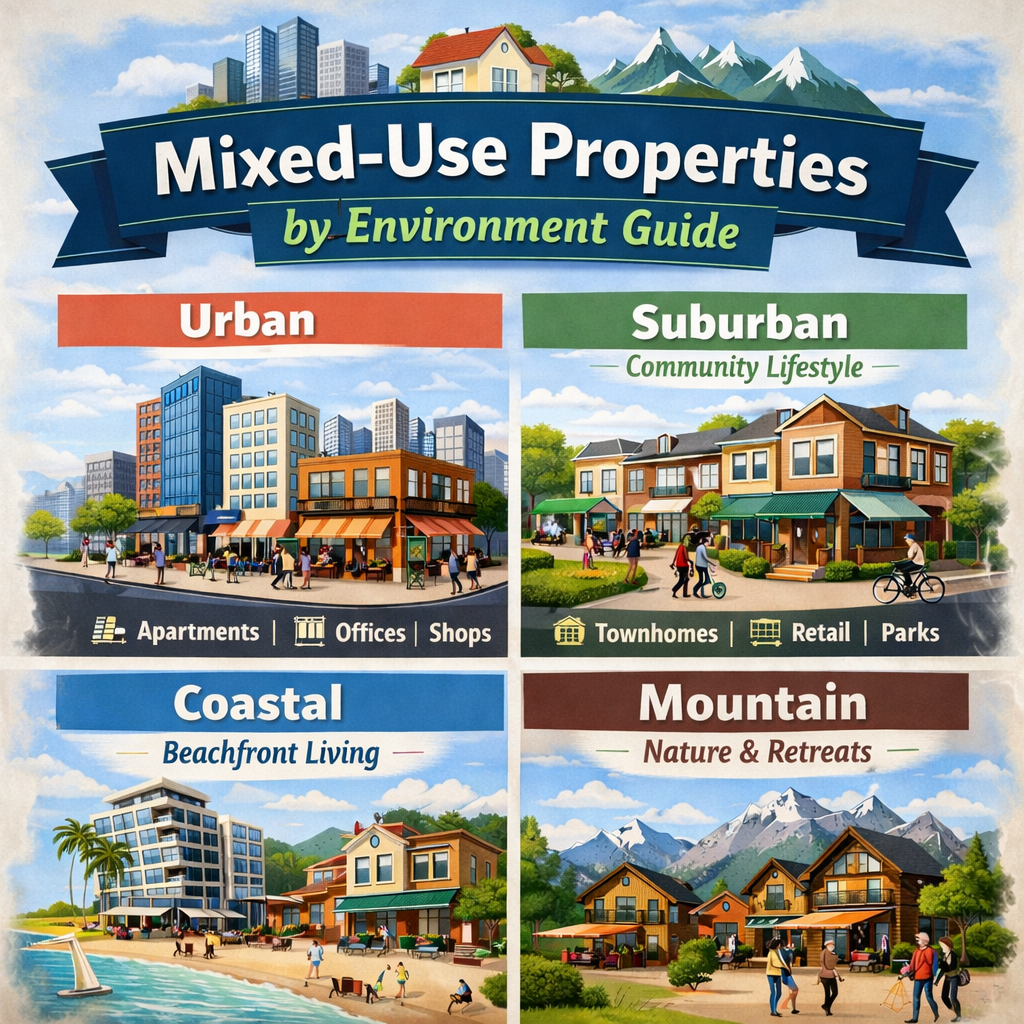
Mixed-use properties are becoming a defining feature of modern urban development. By combining residential, commercial, retail, and sometimes hospitality or entertainment functions within a single development, these properties create dynamic environments that support integrated living, working, and social interaction. Within the Facilities by Environment framework, mixed-use properties represent one of the most complex facility types to manage due to their multi-functional nature and diverse user groups.
This article provides a professional and expert-level overview of mixed-use properties, explaining how environment-specific facilities management ensures operational efficiency, safety, regulatory compliance, and long-term asset value.
Understanding Mixed-Use Properties
Mixed-use development refers to projects that blend residential, commercial, and other functional spaces within a unified environment, enabling integrated urban living and activity patterns. According to a widely recognized definition, a mixed-use development combines two or more significant land uses into one cohesive design.
Unlike single-purpose buildings, mixed-use properties must accommodate varied operational requirements, user expectations, and regulatory standards. Consequently, facilities management must coordinate multiple systems, stakeholders, and service models within a unified operational framework.
Key characteristics include:
- Multiple occupancy types
- Shared infrastructure and services
- High foot traffic
- Continuous operational cycles
- Complex ownership and leasing structures
As a result, mixed-use environments demand flexible and highly integrated facilities management strategies.
Facilities by Environment in Mixed-Use Developments
Facilities by environment is a strategic approach that adapts facilities management practices to the functional realities of different building types. In mixed-use developments, this approach is particularly valuable because it recognizes that no single operational model can serve all occupants effectively.
Moreover, facilities management must balance competing priorities such as residential comfort, commercial productivity, retail accessibility, and public safety. Therefore, environment-specific planning becomes essential for maintaining harmony between diverse uses.
Key challenges include:
- Coordinating services across different tenant groups
- Managing shared systems and spaces
- Maintaining consistent safety and compliance standards
- Optimizing energy and resource use
- Supporting long-term scalability
Thus, facilities by environment provides a structured framework for managing complexity.
Core Functions of Facilities Management in Mixed-Use Properties
Effective facilities management in mixed-use environments is built on several foundational functions.
1. Infrastructure and Building Systems
Mixed-use properties rely on integrated infrastructure systems that serve multiple functional zones. These systems must be designed and managed to support varied usage patterns without compromising reliability.
Key systems include:
- Electrical and power distribution networks
- HVAC systems with zoning controls
- Water supply and wastewater systems
- Fire detection and suppression systems
- Vertical transportation systems
Additionally, facilities managers must ensure that redundancy and capacity planning account for peak demand across all uses.
2. Safety, Security, and Access Control
Safety and security are critical in mixed-use properties due to high occupancy levels and diverse user profiles. Facilities by environment frameworks prioritize risk management and controlled access.
Key responsibilities include:
- Surveillance and monitoring systems
- Access control for restricted areas
- Emergency response planning
- Crowd management strategies
- Lighting and visibility design
Consequently, facilities management must balance openness with protection.
Regulatory Compliance and Governance
Mixed-use properties operate under multiple regulatory frameworks simultaneously. For example, residential areas follow housing codes, while commercial and retail spaces comply with business and occupational regulations.
Facilities management ensures:
- Compliance with building and fire codes
- Adherence to health and safety standards
- Environmental protection compliance
- Accessibility and disability regulations
- Lease and contractual obligations
Therefore, governance structures must be well-defined and consistently enforced.
Technology and Smart Systems Integration
Technology plays a central role in modern mixed-use facilities management. Smart systems enable centralized monitoring and control of complex environments.
Key technologies include:
- Building Management Systems (BMS)
- Smart access and identity systems
- Energy management platforms
- IoT sensors for real-time monitoring
- Digital communication platforms
As a result, facilities teams gain greater visibility and responsiveness across all zones.
Energy Management and Sustainability
Sustainability is a strategic priority in mixed-use developments due to their scale and environmental impact. Facilities management must align sustainability initiatives with diverse operational needs.
Key sustainability strategies include:
- Smart energy monitoring
- Renewable energy integration
- Water efficiency programs
- Waste segregation and recycling
- Green building certifications
Therefore, facilities by environment ensures that sustainability supports both environmental goals and financial performance.
Space Planning and Functional Zoning
Space planning is especially complex in mixed-use properties because each functional zone has unique spatial requirements.
Facilities management supports:
- Clear separation of residential and commercial zones
- Optimized retail layouts for customer flow
- Efficient service corridors and back-of-house areas
- Shared public spaces
- Flexible design for future reconfiguration
Consequently, effective zoning improves usability and operational efficiency.
Workforce and Tenant Support
Facilities management directly impacts tenant satisfaction and retention. In mixed-use environments, this responsibility extends across multiple user groups.
Key support functions include:
- 24/7 maintenance services
- Cleaning and sanitation programs
- Communication and helpdesk systems
- Vendor coordination
- Service level agreements (SLAs)
Moreover, proactive tenant engagement strengthens long-term relationships.
Risk Management and Business Continuity
Mixed-use properties face complex risk profiles due to their operational diversity. Facilities management must anticipate and mitigate a wide range of potential disruptions.
Major risk categories include:
- Power and system failures
- Fire and natural disasters
- Security breaches
- Equipment breakdowns
- Public health incidents
Therefore, comprehensive business continuity plans are essential.
Financial Performance and Asset Value
Facilities management plays a strategic role in protecting and enhancing the financial performance of mixed-use assets. Efficient operations reduce costs and increase tenant satisfaction.
Key financial contributions include:
- Lifecycle cost management
- Energy cost optimization
- Asset performance monitoring
- Capital planning and forecasting
- Return on investment (ROI) improvement
Thus, facilities by environment becomes a value creation tool rather than a cost center.
Best Practices for Mixed-Use Facilities Management
Organizations managing mixed-use properties should adopt the following best practices:
- Implement integrated facilities management systems.
- Use environment-specific operational frameworks.
- Invest in smart building technologies.
- Establish clear governance and communication structures.
- Conduct regular safety and compliance audits.
- Align sustainability initiatives with operational goals.
- Engage tenants through transparent service models.
These practices support operational excellence and long-term resilience.
The Strategic Role of Facilities by Environment
Facilities by environment provides a structured approach for managing the inherent complexity of mixed-use developments. Organizations that adopt this framework achieve superior operational outcomes and stronger stakeholder satisfaction.
Specifically, they benefit from:
- Improved service quality
- Reduced operational risk
- Higher tenant retention
- Enhanced asset performance
- Stronger market positioning
Therefore, facilities management becomes a strategic differentiator in competitive urban markets.
Conclusion
Mixed-use properties represent one of the most sophisticated facility types in modern development. By applying facilities by environment principles, organizations can design management strategies that reflect the multi-functional nature of these environments.
From infrastructure and security to sustainability and financial performance, effective facilities management ensures that mixed-use properties remain efficient, safe, and future-ready. In an increasingly integrated urban landscape, environment-specific facilities strategies are essential for long-term success.