
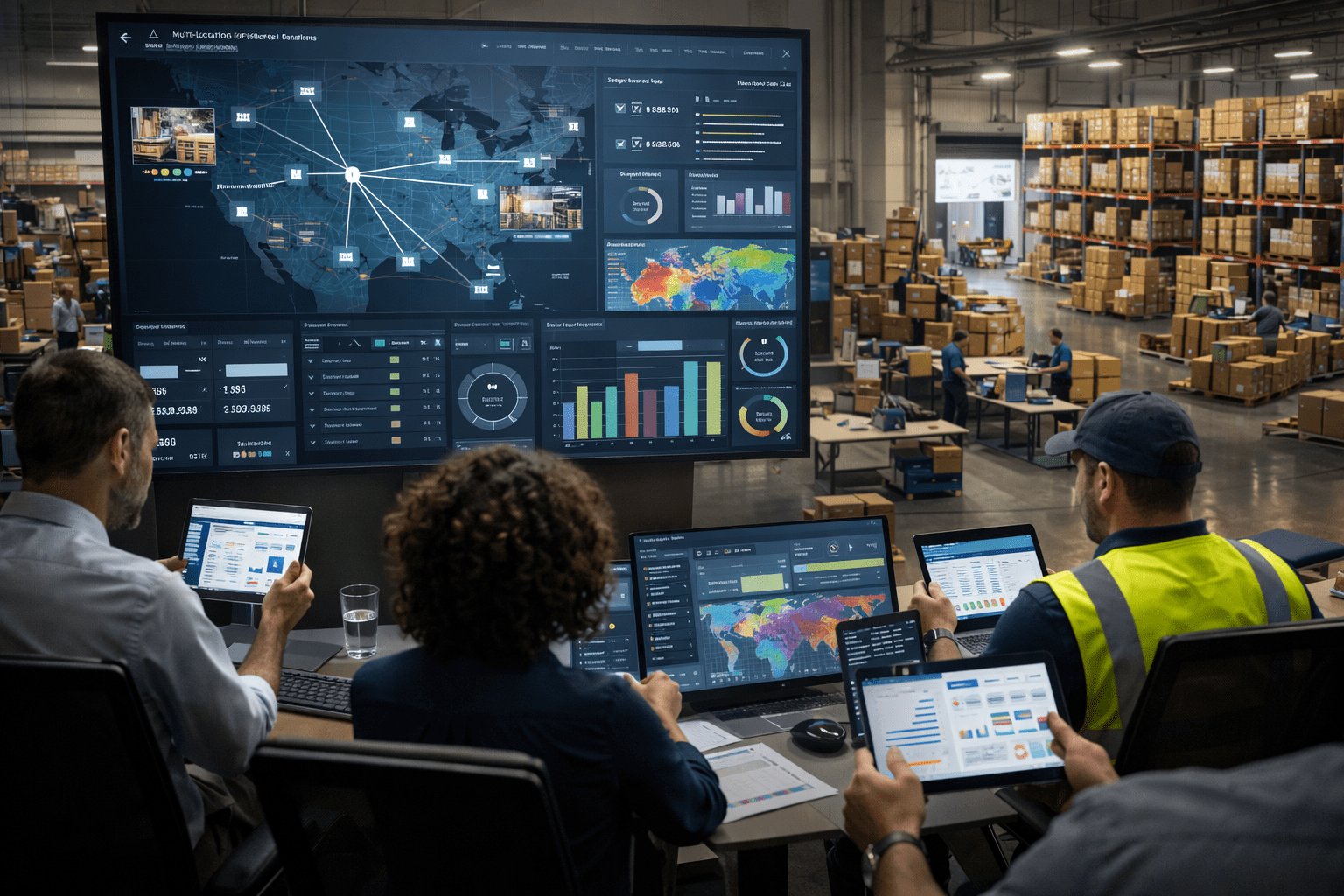
As ecommerce brands grow, shipping from a single location may no longer be enough. Multi-location fulfillment considerations become essential when order volume increases, customers spread across regions, and delivery speed becomes a competitive advantage.
Scaling physical commerce operations requires more than just more inventory. It demands strategic decisions about where products are stored, how orders are routed, and how logistics costs are controlled.
This guide explains everything beginners need to know about expanding into multi-location fulfillment while maintaining efficiency and profitability.
What Is Multi-Location Fulfillment?
Multi-location fulfillment refers to storing and shipping inventory from more than one warehouse or distribution center. Instead of shipping every order from a single facility, businesses distribute stock across different geographic locations.
This approach helps companies:
- Reduce shipping time
- Lower delivery costs
- Improve customer satisfaction
- Decrease last-mile logistics expenses
- Increase resilience during disruptions
Understanding multi-location fulfillment considerations early prevents costly mistakes during expansion.
Why Growing Brands Move Beyond One Warehouse?
A single warehouse works well during early growth. However, as operations scale, challenges appear:
- Higher shipping costs to distant regions
- Slower delivery times
- Increased carrier surcharges
- Inventory bottlenecks
- Risk exposure if one facility experiences delays
When customers expect two-day or even next-day delivery, geographic distance matters. Distributing inventory strategically can reduce transit time significantly.
Scaling physical commerce operations means aligning logistics strategy with customer demand patterns.
When Should You Consider Multiple Locations?
Not every business needs multiple warehouses. Expansion should be data-driven. Businesses exploring multi-warehouse expansion should study proven multi-location warehousing strategy models to understand how inventory allocation and order routing impact cost efficiency and delivery speed.
You may be ready if:
- Orders are consistently coming from different regions
- Shipping costs exceed acceptable margins
- Delivery times are impacting customer satisfaction
- You are entering wholesale or B2B markets
- You plan national or international expansion
Before expanding, analyze order heat maps and shipping cost breakdowns. Data reveals whether multi-location fulfillment considerations are necessary.
Key Benefits of Multi-Location Fulfillment
1. Faster Shipping Times
Storing inventory closer to customers reduces transit time. Faster shipping improves:
- Customer satisfaction
- Repeat purchase rates
- Competitive positioning
Speed often influences buying decisions.
2. Lower Shipping Costs
Shipping zones affect carrier pricing. The farther a package travels, the higher the cost. By distributing inventory across regions, businesses can reduce zone-based surcharges.
Over time, this can significantly improve profit margins.
3. Reduced Risk Exposure
If one warehouse experiences:
- Weather disruptions
- Labor shortages
- Equipment failures
- Supply chain delays
Other locations can continue fulfilling orders. Redundancy protects revenue.
4. Improved Scalability
As order volume increases, distributing operations prevents congestion in a single facility. It allows smoother growth and easier workforce management.
Core Multi-Location Fulfillment Considerations
Expanding into multiple locations requires careful planning. Here are the most important factors.
Inventory Allocation Strategy
Decide how much inventory goes to each location. Allocation should be based on:
- Regional demand data
- Seasonal sales trends
- Product popularity
- Storage capacity
Improper allocation leads to overstock in one warehouse and stockouts in another.
Use forecasting tools to balance distribution.
Technology Integration
Operating multiple warehouses without integrated systems creates chaos.
You will need:
- Centralized inventory management software
- Real-time stock visibility
- Automated order routing
- Barcode scanning systems
- Unified reporting dashboards
Technology ensures accuracy and prevents overselling.
Order Routing Logic
When a customer places an order, the system must determine:
- Which warehouse ships the order
- Whether to split shipments
- How to minimize cost while meeting delivery speed
Clear routing logic reduces errors and improves efficiency.
Operational Consistency
Each location must follow identical procedures.
Create standardized operating procedures (SOPs) for:
- Receiving inventory
- Quality control
- Picking and packing
- Returns handling
- Shipping carrier coordination
Consistency protects brand experience.
Staffing and Management
Managing multiple facilities increases leadership complexity.
Consider:
- Warehouse managers at each site
- Regional operations supervisors
- Clear performance metrics
- Communication systems
Scaling physical commerce operations means building strong operational oversight.
Cost Factors to Evaluate
Expanding into additional fulfillment centers involves new expenses:
- Lease agreements
- Security deposits
- Utilities
- Labor
- Equipment
- Insurance
- Technology subscriptions
Compare these costs against projected shipping savings. Multi-location fulfillment considerations should always be financially justified.
In-House vs Third-Party Fulfillment
Businesses have two main options:
In-House Expansion
Pros:
- Full operational control
- Custom branding
- Flexible processes
Cons:
- High upfront investment
- Greater management responsibility
Third-Party Logistics (3PL)
Pros:
- Faster implementation
- Lower initial cost
- Logistics expertise
Cons:
- Per-order fees
- Less operational control
Choosing the right model depends on business size, growth plans, and available capital.
Data-Driven Decision Making
Before expanding, analyze:
- Top shipping destinations
- Average shipping cost per region
- Delivery time complaints
- Customer satisfaction scores
- Inventory turnover rates
Multi-location fulfillment considerations must be based on measurable data, not assumptions.
Common Mistakes to Avoid
Many growing brands rush into expansion without preparation.
Avoid these errors:
- Expanding without consistent demand
- Poor inventory forecasting
- Inconsistent procedures across locations
- Ignoring technology integration
- Underestimating labor costs
- Overcomplicating order routing
Strategic growth prevents operational strain.
How to Plan a Multi-Location Expansion?
Follow a phased approach:
- Analyze shipping and demand data
- Model projected cost savings
- Select strategic geographic locations
- Implement centralized inventory systems
- Pilot operations before full rollout
- Monitor performance metrics
- Adjust allocation strategies
Scaling physical commerce operations should always be gradual and measurable.
Performance Metrics to Track
After implementation, track:
- Average shipping cost per order
- Delivery speed improvements
- Order accuracy rate
- Inventory turnover
- Regional sales growth
- Customer satisfaction scores
Continuous monitoring ensures your strategy remains effective.
The Long-Term Strategic Advantage
Multi-location fulfillment is not just about speed. It creates long-term strategic benefits:
- Greater national reach
- Improved resilience
- Better customer experience
- Enhanced operational efficiency
- Increased brand credibility
Businesses that plan carefully often gain a competitive edge in crowded markets.
Final Thoughts
Scaling physical commerce operations requires thoughtful logistics planning. Multi-location fulfillment considerations become essential when growth outpaces a single warehouse’s capabilities.
Before expanding, focus on:
- Accurate demand forecasting
- Financial feasibility
- Technology integration
- Standardized processes
- Clear performance tracking
Growth should increase efficiency, not complexity.
When executed strategically, multi-location fulfillment allows businesses to serve customers faster, reduce costs, and build a scalable foundation for long-term success.
By prioritizing structure, data, and operational discipline, expanding into multiple fulfillment locations becomes a powerful step toward sustainable growth.