
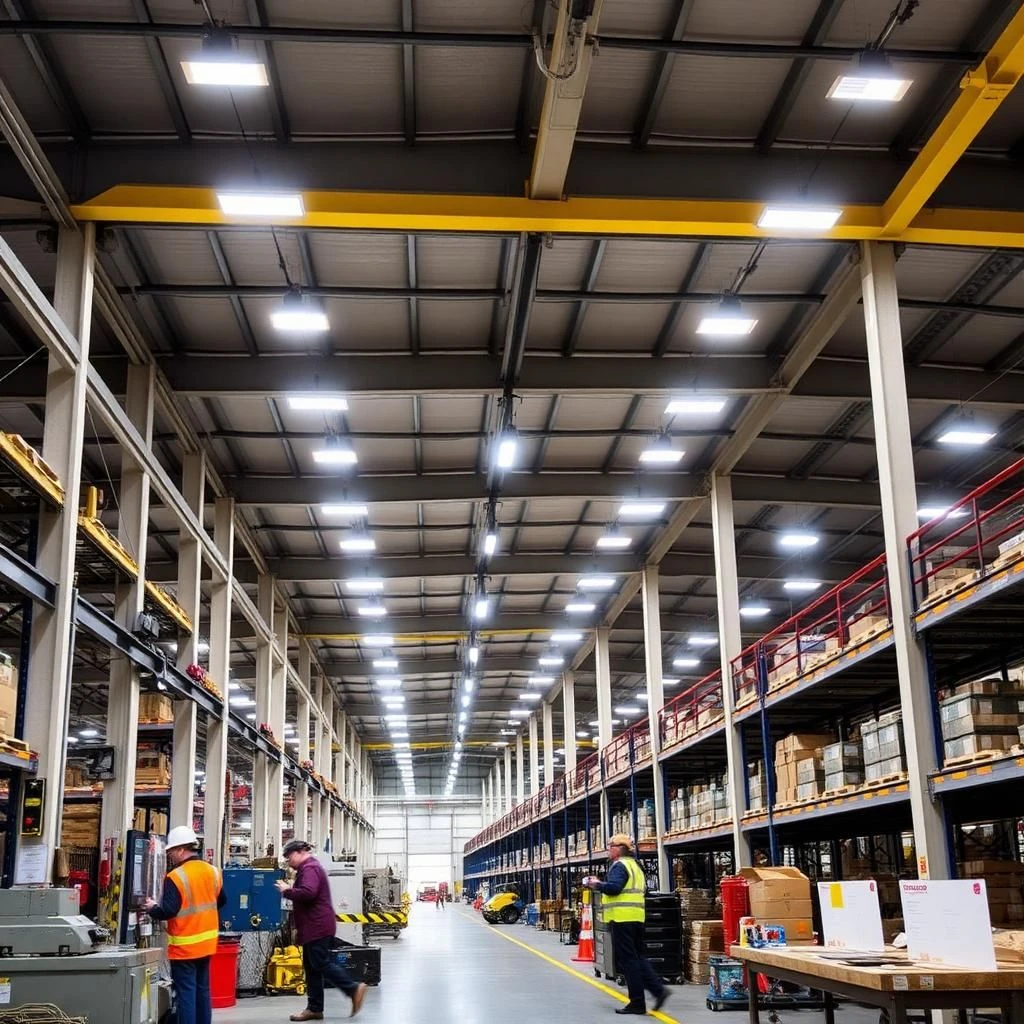
Ensuring safety and visibility in operational spaces is a critical component of modern workplace management. From industrial plants and warehouses to commercial facilities and construction sites, proper lighting systems are essential for maintaining operational efficiency, reducing accidents, and supporting regulatory compliance. Understanding the principles behind lighting and visibility systems helps facility managers, safety engineers, and operations professionals create safer, more productive environments.
The Importance of Safety and Visibility in Operational Spaces
Lighting is not merely a matter of illumination; it directly impacts employee safety, operational efficiency, and overall workplace performance. Poorly lit operational spaces can lead to accidents, errors, and fatigue, while well-designed lighting improves visibility, alertness, and worker morale.
Accident reports consistently indicate that inadequate lighting contributes to slips, trips, falls, and equipment-related injuries. For high-risk industries like manufacturing, logistics, and construction, maintaining proper lighting is not optional—it is a regulatory and operational necessity.
Key Benefits of Proper Lighting in Operational Spaces
- Enhanced Safety: Adequate lighting minimizes hazards and reduces the likelihood of accidents.
- Improved Productivity: Workers can perform tasks more accurately and efficiently.
- Regulatory Compliance: Meets OSHA, ANSI, and ISO standards for workplace safety.
- Employee Well-being: Proper lighting reduces eye strain and fatigue, supporting worker health.
- Energy Efficiency: Modern lighting solutions save energy and lower operational costs.
Fundamentals of Lighting and Visibility Systems
Designing lighting systems for operational spaces requires careful attention to multiple factors. Key fundamentals include illumination levels, uniformity, glare reduction, color rendering, energy efficiency, and compliance with safety standards.
1. Illumination Levels
The first step in achieving safety and visibility is ensuring proper illumination. Light intensity, measured in lux or foot-candles, must match the type of task and operational environment:
- High-precision tasks: Assembly lines, inspections, or quality control often require 500–1,000 lux.
- General operational areas: Corridors, storage, and general work zones usually need 100–300 lux.
- Emergency and hazard areas: Exit pathways and hazardous zones require at least 50–100 lux to maintain safe navigation.
Regular light audits and measurements are essential to maintain consistent illumination throughout operational spaces.
2. Uniformity and Glare Management
Uneven lighting and glare reduce visibility and contribute to eye strain, errors, and fatigue. Ensuring uniform light distribution is a cornerstone of effective operational lighting:
- Use diffused or indirect lighting to minimize harsh shadows.
- Position fixtures strategically to avoid dark zones or overlaps.
- Install anti-glare shields in areas with reflective surfaces or machinery.
Uniform illumination ensures that all critical operational areas are visible and safe for employees.
3. Color Rendering and Visual Accuracy
The Color Rendering Index (CRI) measures a light source’s ability to accurately represent colors. High CRI lighting is particularly important in operational spaces requiring detailed visual assessment, such as quality control, inspection, or inventory management. Low-CRI lighting may result in errors or misidentification of materials and equipment.
4. Energy Efficiency and Sustainable Lighting
Modern operational spaces must balance safety and visibility with energy efficiency. LED lighting has become the industry standard for its long lifespan, low energy consumption, and adaptability. Other strategies include:
- Installing motion sensors in low-traffic areas.
- Utilizing timers or programmable lighting for intermittent operations.
- Implementing daylight harvesting where natural light is available.
Efficient lighting not only reduces costs but also supports environmental sustainability initiatives.
5. Compliance with Safety Standards
Operational lighting must comply with safety regulations such as OSHA, ANSI, and ISO. Compliance ensures worker protection, legal adherence, and reduced liability. Key considerations include:
- Emergency lighting: Provides reliable illumination during power failures.
- Exit and egress lighting: Ensures safe evacuation routes.
- Hazard-specific lighting: Dedicated lighting for machinery, chemical areas, or high-risk zones.
Types of Lighting Systems for Operational Spaces
Different operational zones require different lighting solutions. Understanding the types of lighting systems enables optimal visibility:
1. Ambient Lighting
Ambient lighting provides general illumination throughout a facility. It ensures that employees can navigate safely and perform routine tasks without difficulty.
2. Task Lighting
Task lighting focuses on specific areas where detailed work is performed. Adjustable fixtures provide concentrated illumination for workstations, control panels, and inspection areas.
3. Accent and Safety Lighting
Accent lighting highlights critical zones, while safety lighting ensures visibility of exits, emergency pathways, and hazardous areas. Low-level safety lighting can reduce accidents in dark or low-traffic zones.
4. High-Bay and Low-Bay Lighting
High-bay lighting is used in facilities with ceilings above 20 feet, such as warehouses and industrial plants, delivering powerful illumination over large areas. Low-bay lighting is suited for areas with lower ceilings, like workshops and commercial facilities.
5. Exterior and Site Lighting
Outdoor operational areas require proper visibility for both safety and security. Strategies include perimeter lighting, task-specific lighting for loading docks or outdoor machinery, and glare-reducing fixtures to protect workers and surrounding areas.
Advanced Technologies Enhancing Safety and Visibility
Technological advancements have greatly improved lighting and visibility in operational spaces:
- LED and smart lighting systems: Adjustable brightness, color temperature, and energy-saving modes.
- Motion and occupancy sensors: Automatically control lighting based on human presence.
- Emergency backup lighting: Ensures continuous illumination during power outages.
- IoT-integrated systems: Enable centralized monitoring, predictive maintenance, and automated lighting adjustments.
These technologies enhance safety while reducing operational costs and energy consumption.
Design Considerations for Optimal Operational Lighting
Effective lighting begins at the design stage. Professionals must consider:
- Task requirements: Analyze workflows to determine illumination needs.
- Fixture placement: Avoid shadows, glare, and dark zones.
- Color temperature: Cooler light (~5000K) enhances alertness; warmer light (~3000K) improves comfort in break areas.
- Flexibility: Design adaptable lighting zones that can be modified as operational requirements change.
Well-designed lighting promotes safety, efficiency, and employee satisfaction.
Training and Awareness
Even the most advanced lighting systems are ineffective without proper awareness. Training employees on lighting zones, emergency pathways, and hazard visibility is essential. Facilities should include lighting orientation in safety briefings and ongoing training programs to reinforce proper use of operational lighting systems.
Maintenance and Longevity
Lighting systems require regular maintenance to sustain performance. Effective maintenance practices include:
- Scheduled cleaning of fixtures and reflective surfaces.
- Timely replacement of aging bulbs or LEDs.
- Regular inspections to ensure uniform illumination and functionality.
Neglecting maintenance can lead to decreased safety, higher energy costs, and reduced productivity.
Conclusion
Safety and visibility in operational spaces are critical for protecting employees, maintaining productivity, and complying with regulations. By understanding lighting and visibility systems
, implementing adequate illumination, managing glare, ensuring high color rendering, and integrating energy-efficient technologies, organizations can create safe and efficient work environments.
Strategically planned lighting, combined with staff training and proactive maintenance, ensures operational spaces remain safe, visible, and productive. For additional guidance on lighting standards, resources such as the Industrial Facility Lighting Guide provide authoritative best practices for facility managers and safety professionals.