
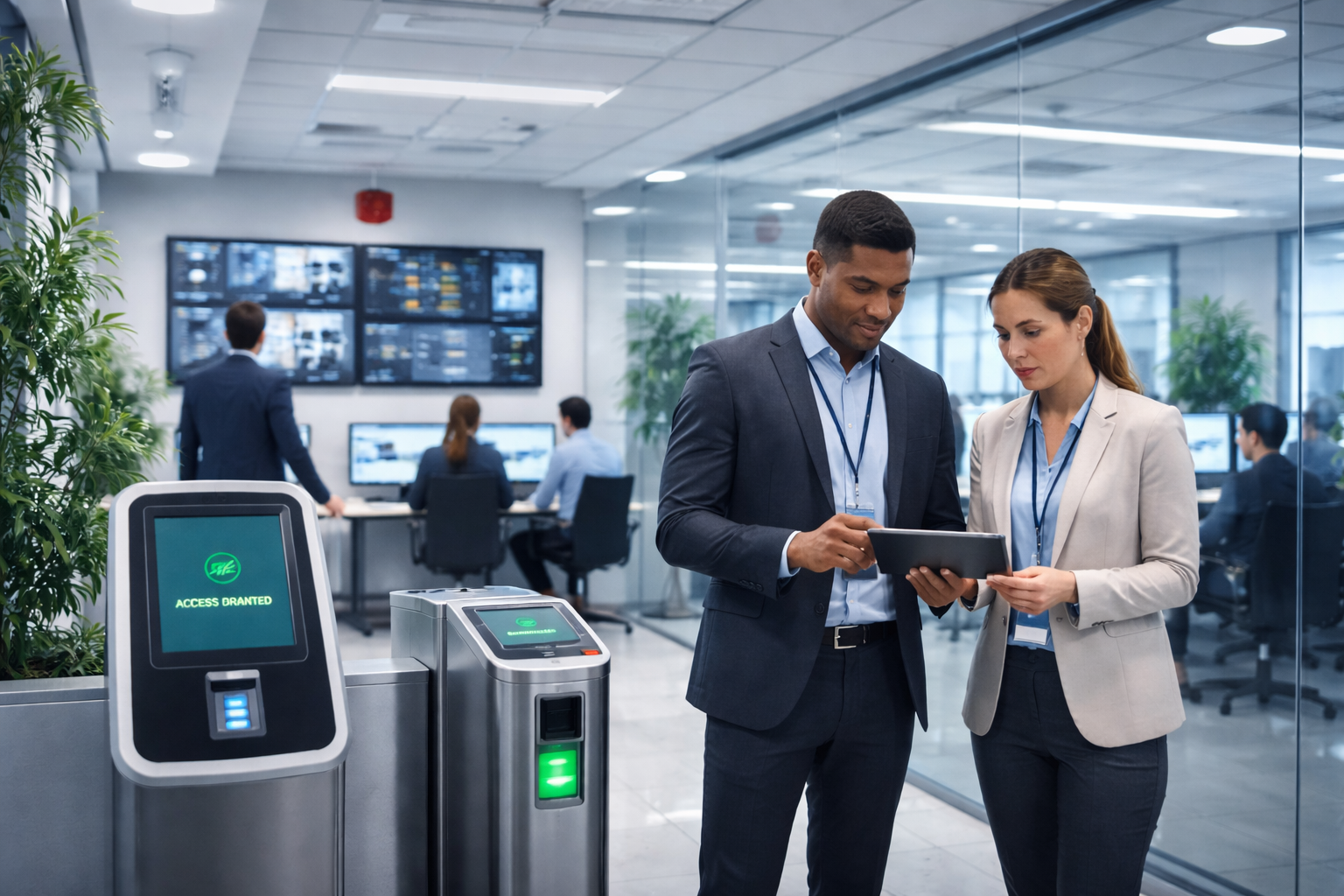
Modern buildings increasingly rely on advanced digital infrastructure to manage safety, operations, and occupant experience. Among the most important components of this infrastructure are security and access control systems. These systems regulate who can enter specific areas, monitor building activity, and protect people, assets, and sensitive information.
Within the Building Systems Deep Dive, security and access control systems form a critical layer of building protection. As buildings become more connected and automated, security infrastructure has evolved from simple lock-and-key mechanisms to intelligent digital systems that integrate with building automation platforms.
Today, smart buildings deploy advanced technologies such as biometric authentication, mobile credentials, and centralized security monitoring to manage access and maintain secure environments.
What Are Security and Access Control Systems?
Security and access control systems are technologies designed to regulate and monitor entry to buildings, rooms, and restricted areas. A modern building access control system verifies identities using credentials such as keycards, mobile devices, or biometric authentication before granting entry to restricted areas.
These systems authenticate users before granting access and record entry activity for security management.
In modern buildings, access control technologies work alongside surveillance cameras, alarm systems, and building automation platforms. Consequently, building operators can monitor and manage security infrastructure in real time.
Security and access control systems are widely used in:
- commercial office buildings
- healthcare facilities
- universities and campuses
- data centers
- industrial facilities
- residential complexes
Because these systems provide centralized management, facility operators can easily adjust permissions, monitor activity, and respond to security events.
Why Security and Access Control Systems Are Important
Security infrastructure plays a major role in protecting building occupants and critical assets. As organizations rely more on digital infrastructure and connected technologies, physical security has become increasingly important.
Protecting Building Occupants
First and foremost, security and access control systems help protect people inside the building. By restricting entry to authorized individuals, these systems reduce the risk of unauthorized access or potential threats.
For example, office buildings often require employees to authenticate using access cards before entering secure areas.
Protecting Assets and Sensitive Information
Many organizations store valuable equipment and confidential information within their facilities. Therefore, access control systems prevent unauthorized individuals from entering restricted areas such as server rooms or laboratories.
As a result, businesses can better protect sensitive infrastructure and data.
Monitoring Building Activity
Access control technologies also help monitor building activity. Entry logs record when individuals enter or exit specific areas.
Consequently, security teams can review activity records if incidents occur. This capability improves accountability and strengthens building security policies.
Supporting Regulatory Compliance
Certain industries must follow strict security regulations. For instance, healthcare facilities must protect patient data, while financial institutions must secure sensitive financial information.
Access control systems help organizations meet these regulatory requirements by controlling and documenting facility access.
Key Components of Security and Access Control Systems
Modern access control infrastructure includes several interconnected components that work together to manage building security.
Access Credentials
Access credentials verify the identity of individuals requesting entry. These credentials can take several forms:
- keycards or RFID access cards
- PIN codes
- mobile credentials on smartphones
- biometric identifiers such as fingerprints or facial recognition
Because digital credentials can be managed remotely, administrators can easily update or revoke access permissions.
Access Control Readers
Access control readers authenticate credentials at entry points. These devices scan cards, smartphones, or biometric data before allowing access.
Common reader technologies include:
- RFID card readers
- NFC mobile readers
- biometric scanners
- keypad authentication devices
Readers communicate with control systems to verify authorization before unlocking doors.
Control Panels
Access control panels serve as the central processing unit for building security systems. These panels store access rules and determine whether a user can enter a specific area.
When a user presents credentials, the reader sends the information to the control panel for verification.
If authorization is confirmed, the control panel signals the door lock to unlock.
Electronic Door Locks
Electronic locks secure entry points throughout the building. These locks remain closed until authorized credentials are verified.
Common lock types include:
- electromagnetic locks
- electric strike locks
- smart locks integrated with building automation systems
These locks allow building operators to control entry remotely through centralized management platforms.
Security Management Software
Security management software provides centralized control of access infrastructure. Administrators can monitor entry events, update access permissions, and review security logs through a single dashboard.
Furthermore, many systems provide automated alerts when unusual activity occurs.
Types of Access Control Systems
Different buildings require different levels of security. Therefore, engineers design access control systems based on operational needs and risk levels.
Discretionary Access Control (DAC)
In discretionary access control systems, administrators assign access permissions to individual users.
For example, a manager might grant employees access to specific office areas while restricting access to server rooms.
This approach offers flexibility but requires careful management.
Role-Based Access Control (RBAC)
Role-based access control assigns permissions based on job roles rather than individual users.
For instance, employees in the IT department may automatically receive access to network equipment rooms.
Consequently, RBAC simplifies permission management and reduces administrative complexity.
Mandatory Access Control (MAC)
Mandatory access control systems enforce strict security policies controlled by a central authority.
These systems are commonly used in government or military environments where security requirements are extremely high.
Users cannot modify permissions, which ensures consistent security enforcement.
Integration with Smart Building Technologies
Smart building platforms integrate multiple safety technologies to improve emergency response. For example, fire suppression systems work alongside access control infrastructure to protect occupants and minimize damage during fire incidents.
Modern buildings increasingly integrate access control infrastructure with smart building systems. As a result, security platforms can communicate with other building technologies.
For example, integrated systems can coordinate:
- security cameras and surveillance systems
- alarm and intrusion detection systems
- building automation platforms
- emergency response systems
This integration improves situational awareness and allows building operators to manage security more efficiently.
For instance, if an unauthorized access attempt occurs, the system can trigger surveillance cameras or send alerts to security personnel.
Remote Monitoring and Cloud-Based Security
Cloud technology has transformed modern security systems. Today, many buildings deploy cloud-based access control platforms that allow administrators to manage security remotely.
These platforms provide several advantages:
- centralized management across multiple locations
- real-time activity monitoring
- automated security alerts
- simplified software updates
As a result, organizations can maintain stronger security oversight even when managing large facilities or multiple buildings.
Cybersecurity Considerations
As access control systems become more connected, cybersecurity also becomes a critical concern. Hackers may attempt to exploit network vulnerabilities to gain unauthorized access.
Therefore, organizations must implement strong cybersecurity protections, including:
- encrypted communication between devices
- secure authentication protocols
- network segmentation
- regular system updates and patches
By combining physical security with cybersecurity practices, buildings can maintain comprehensive protection.
The Future of Security and Access Control Systems
Security technologies continue to evolve as buildings become smarter and more connected.
Biometric Authentication
Biometric systems such as fingerprint scanners, facial recognition, and iris scanners are becoming more common in modern buildings.
Because biometric credentials are difficult to replicate, they provide stronger security than traditional access cards.
Mobile-Based Access
Many organizations now allow employees to use smartphones as access credentials. Mobile credentials reduce the need for physical cards and improve convenience.
In addition, mobile access systems can integrate with building apps that manage visitor registration and meeting room access.
Artificial Intelligence for Security Monitoring
Artificial intelligence is increasingly used to analyze surveillance data and detect unusual behavior.
AI-powered security systems can automatically identify suspicious activity and alert security teams.
Consequently, building operators can respond to threats more quickly.
Conclusion
Security and access control systems play a vital role in modern building infrastructure. These systems regulate entry, protect assets, and help maintain safe environments for building occupants.
Through technologies such as biometric authentication, mobile credentials, and centralized security management platforms, modern buildings can implement flexible and scalable access control strategies.
As part of the Building Systems Deep Dive, security and access control systems highlight how intelligent building technologies improve safety and operational efficiency. With continued advancements in cloud platforms, artificial intelligence, and integrated building automation, access control systems will continue evolving to meet the demands of modern smart buildings.
Ultimately, well-designed security and access control infrastructure helps organizations protect people, data, and physical assets while maintaining efficient building operations.