
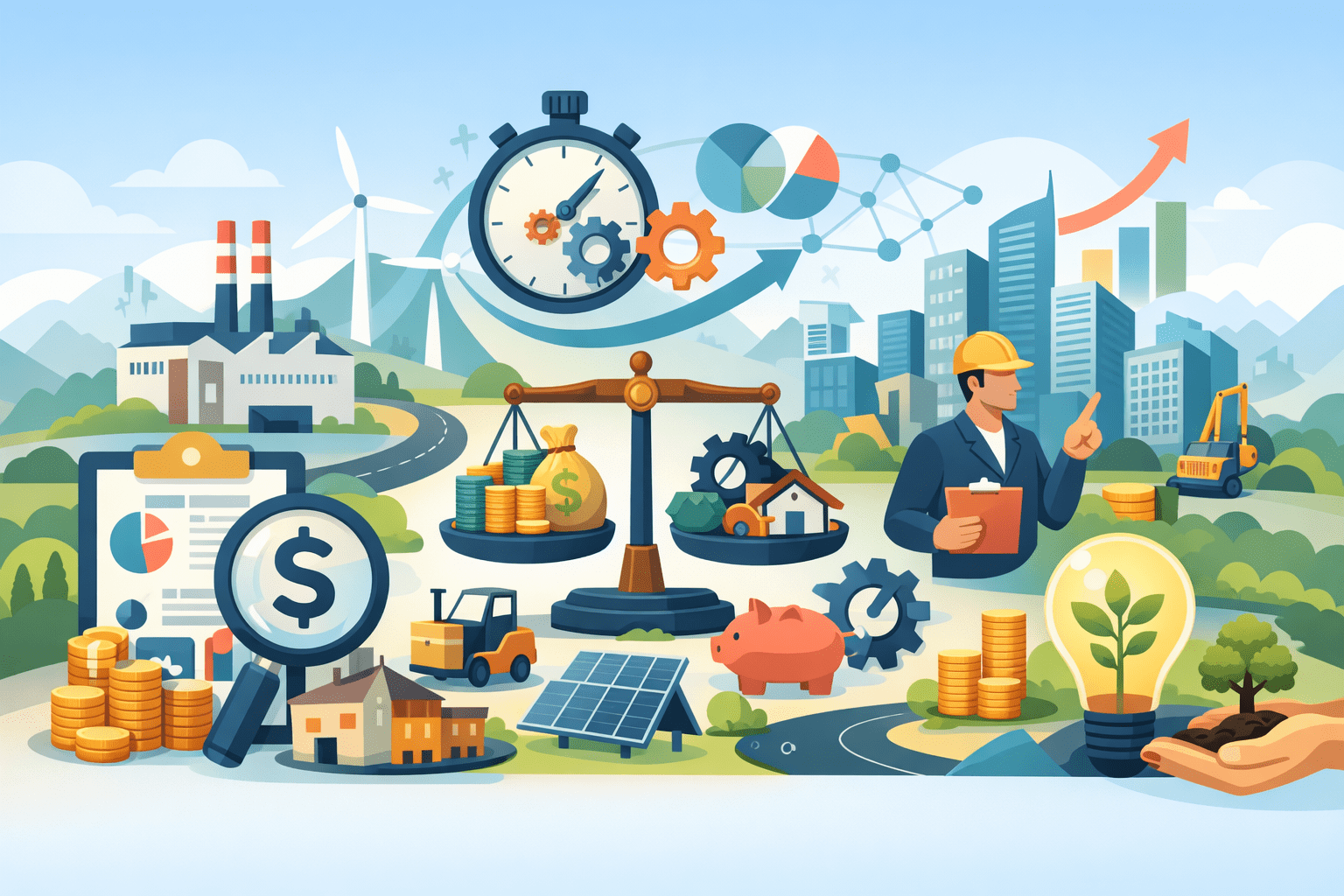
In asset-intensive industries, purchasing decisions extend far beyond the initial price of equipment. Organizations that focus solely on upfront costs often face unexpected maintenance expenses, operational inefficiencies, and premature replacements. To avoid these pitfalls, modern asset and equipment management relies heavily on the concept of total cost of ownership (TCO).
Total cost of ownership is a financial and operational framework that evaluates the complete cost of an asset over its entire lifecycle. It includes acquisition, operation, maintenance, downtime, and disposal costs. By adopting a TCO-based approach, organizations gain a more accurate understanding of asset value and make better long-term investment decisions.
This article provides a comprehensive and professional guide to total cost of ownership, explaining its importance, components, benefits, challenges, and best practices in asset and equipment management.
What Is Total Cost of Ownership?
Total cost of ownership (TCO) refers to the sum of all direct and indirect costs associated with acquiring, operating, maintaining, and disposing of an asset throughout its lifecycle.
Unlike traditional cost analysis, which focuses primarily on purchase price, TCO provides a holistic financial perspective. It enables organizations to answer critical questions such as:
- How much will this asset truly cost over ten years?
- Which equipment option delivers the best long-term value?
- At what point does replacement become more economical than repair?
TCO shifts asset management from short-term budgeting to long-term financial optimization.
Why Total Cost of Ownership Matters?
TCO plays a vital role in strategic decision-making across industries such as manufacturing, healthcare, logistics, construction, and utilities.
Key reasons why TCO matters include:
- Improved capital investment decisions
- Reduced lifecycle costs
- Enhanced asset performance and reliability
- Better budgeting and forecasting
- Lower operational and financial risk
Organizations that adopt TCO-based planning consistently outperform those that rely solely on initial purchase price.
Core Components of Total Cost of Ownership
TCO includes several cost categories that span the entire asset lifecycle.
1. Acquisition Costs
These are the upfront costs associated with obtaining the asset:
- Purchase price
- Shipping and logistics
- Installation and commissioning
- Training and documentation
- Taxes and regulatory fees
While highly visible, acquisition costs often represent only a small portion of total ownership cost.
2. Operating Costs
Operating costs include all expenses required to run the asset:
- Energy and utilities
- Labor and supervision
- Consumables and materials
- Software licenses
- Calibration and testing
In many industries, operating costs exceed acquisition costs over time.
3. Maintenance and Repair Costs
Maintenance is one of the most significant contributors to TCO:
- Preventive maintenance
- Corrective repairs
- Spare parts and inventory
- Contractor services
- Downtime-related costs
Poor maintenance strategies dramatically increase total cost of ownership.
4. Downtime and Productivity Loss
Unplanned downtime leads to:
- Lost production
- Delayed deliveries
- Customer dissatisfaction
- Emergency repair premiums
These indirect costs are often underestimated but can exceed direct maintenance expenses.
5. End-of-Life and Disposal Costs
Final lifecycle costs include:
- Decommissioning
- Environmental compliance
- Recycling or resale
- Data destruction (for IT assets)
Proper disposal planning minimizes regulatory risk and recovers residual value.
How TCO Supports Asset and Equipment Management?
Total cost of ownership provides a financial foundation for every major asset management decision.
Equipment Selection
TCO enables comparison between alternatives based on long-term value rather than price alone.
Maintenance Strategy
TCO highlights the economic impact of reactive, preventive, and predictive maintenance models.
Replacement Planning
TCO identifies the optimal time to replace assets based on lifecycle cost trends.
Budgeting and Forecasting
TCO supports accurate long-term financial planning and capital expenditure forecasting.
Methods for Calculating Total Cost of Ownership
Several analytical approaches are used to estimate TCO.
Lifecycle Cost Analysis (LCCA)
LCCA evaluates all costs over a defined asset lifespan and discounts future costs to present value.
Economic Life Modeling
Identifies the point where average annual cost is minimized.
Scenario-Based Modeling
Compares different operational or maintenance strategies.
Risk-Based Costing
Incorporates failure probability and impact into financial analysis.
Modern asset management software automates much of this analysis using real-time data.
Role of Technology in TCO Analysis
Digital tools play a critical role in modern TCO management.
CMMS and EAM systems enable:
- Tracking of maintenance and operating costs
- Real-time performance monitoring
- Failure pattern analysis
- Lifecycle cost reporting
IoT sensors and predictive analytics further enhance cost forecasting accuracy.
With centralized data, organizations can continuously refine TCO models.
Benefits of Using Total Cost of Ownership
Organizations that adopt TCO-based decision-making experience measurable benefits.
Financial Benefits
- Lower long-term asset costs
- Improved return on assets (ROA)
- Reduced emergency expenditures
Operational Benefits
- Increased asset reliability
- Reduced downtime
- Better maintenance planning
Strategic Benefits
- Smarter capital allocation
- Stronger competitive advantage
- Enhanced sustainability performance
Common Challenges in TCO Implementation
Despite its advantages, many organizations struggle to implement TCO effectively.
Incomplete Data
Poor record-keeping undermines analysis accuracy.
Solution: Standardize data collection in asset management systems.
Short-Term Budget Focus
Pressure to reduce capital spending leads to suboptimal choices.
Solution: Use TCO reports to demonstrate long-term savings.
Lack of Analytical Expertise
Teams may lack financial modeling skills.
Solution: Invest in training or external consultants.
Organizational Silos
Disconnected departments prevent holistic cost analysis.
Solution: Integrate finance, operations, and maintenance teams.
Best Practices for Managing TCO
To maximize the value of total cost of ownership analysis, organizations should:
- Maintain accurate asset and cost data
- Use lifecycle costing for all major investments
- Integrate TCO into procurement decisions
- Apply predictive maintenance strategies
- Review TCO assumptions regularly
- Align with ISO 55000 asset management standards
TCO should be embedded into organizational culture, not treated as a one-time exercise.
TCO and Sustainability
Total cost of ownership increasingly includes environmental and social costs.
Sustainable TCO models consider:
- Energy efficiency
- Carbon emissions
- Waste generation
- Regulatory compliance
- Corporate social responsibility
Assets with higher upfront cost but lower environmental impact often deliver superior long-term value.
Future Trends in Total Cost of Ownership
The future of TCO is data-driven and intelligent.
Key trends include:
- AI-based cost forecasting
- Digital twins for lifecycle simulation
- Sustainability-based asset valuation
- Autonomous maintenance optimization
- Real-time TCO dashboards
These technologies will transform TCO from a static calculation into a dynamic strategic tool.
Conclusion
Total cost of ownership is a cornerstone of modern asset and equipment management. It provides organizations with a realistic and comprehensive view of asset value, enabling smarter decisions across procurement, maintenance, and replacement.
By focusing on long-term performance rather than short-term savings, TCO-driven organizations achieve lower costs, higher reliability, and stronger financial resilience.
In an increasingly competitive and resource-constrained environment, total cost of ownership is not just a financial metric—it is a strategic advantage.