
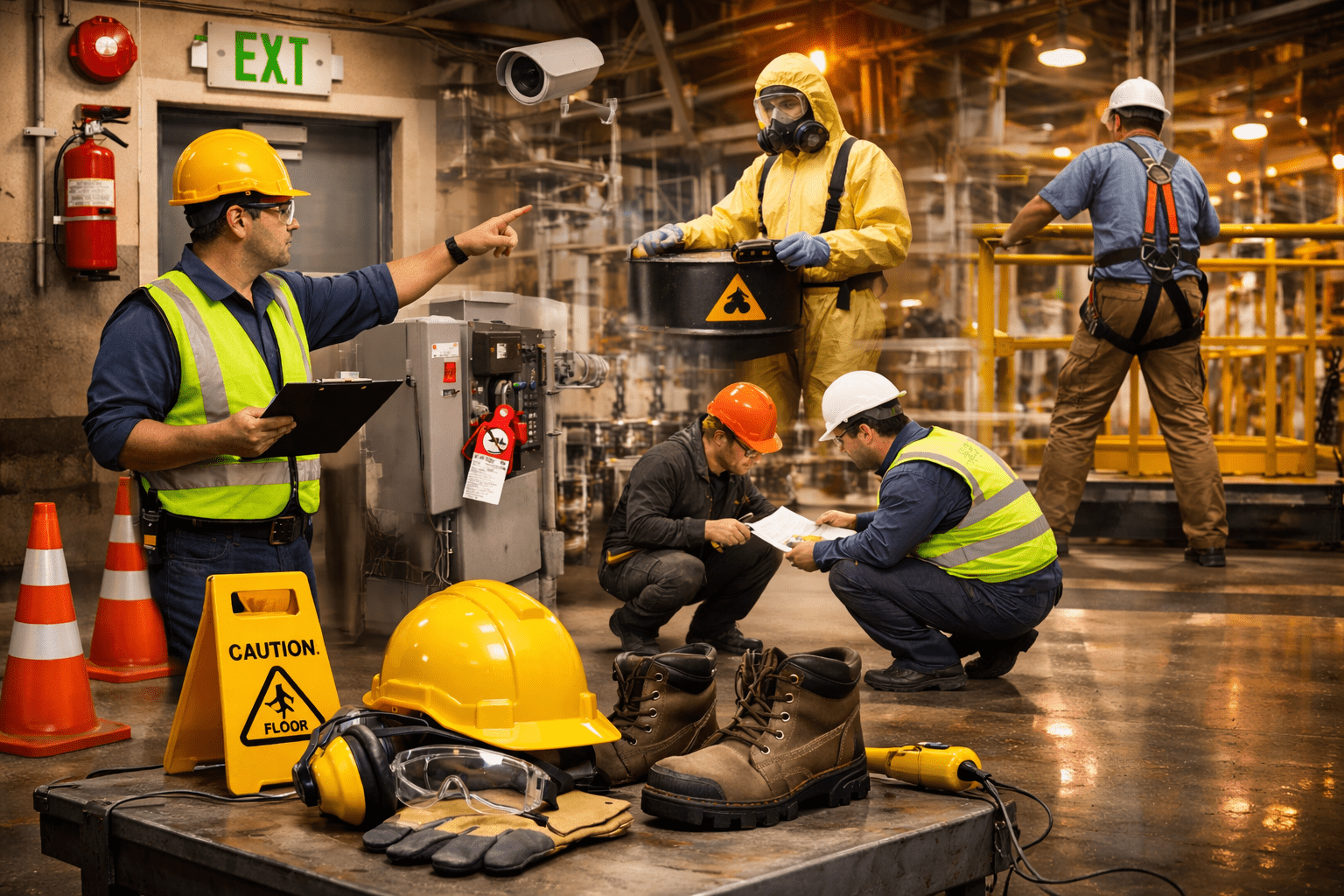
Workplace safety fundamentals are the backbone of effective facilities safety. Every organization, regardless of size or industry, has a responsibility to protect employees, visitors, and assets. A safe workplace reduces accidents, improves productivity, and supports long-term business stability. More importantly, it demonstrates a genuine commitment to people.
What Are Workplace Safety Fundamentals?
Workplace safety fundamentals are the essential principles and practices used to prevent injuries, illnesses, and accidents in the workplace. These fundamentals form the basis of facilities safety and guide how organizations design, manage, and operate their environments.
At their core, workplace safety fundamentals focus on:
- Identifying hazards early
- Reducing risk through proper controls
- Training employees to work safely
- Monitoring conditions continuously
Facilities safety is not a one-time effort. It is a structured system that must be maintained and improved over time.
Why Facilities Safety Is Critical?
Facilities safety plays a vital role in daily operations. Unsafe conditions can lead to injuries, property damage, downtime, and legal consequences. In contrast, strong workplace safety fundamentals create stability and confidence.
Organizations that prioritize facilities safety benefit from:
- Fewer workplace accidents and injuries
- Lower insurance and compensation costs
- Improved employee morale and retention
- Increased productivity and efficiency
- Stronger compliance with safety regulations
When safety is treated as a core value, it becomes part of how work is done every day.
Hazard Identification: The First Step in Workplace Safety
Hazard identification is one of the most important workplace safety fundamentals, and adopting proactive safety and health program practices, as recommended by OSHA, helps organizations find and fix hazards before they cause injury or illness.
Common Facility Hazards
- Slips, trips, and falls
- Electrical and mechanical hazards
- Fire and explosion risks
- Chemical exposure
- Poor ergonomics and repetitive motion
- Inadequate lighting or ventilation
Facilities should conduct regular safety inspections and risk assessments. These reviews must also take place whenever there are changes in equipment, layout, or work processes.
Once hazards are identified, risks should be evaluated based on how likely they are to occur and how severe the consequences could be.
Risk Control and Prevention Strategies
After identifying hazards, facilities must apply effective risk control measures. Workplace safety fundamentals follow a structured approach known as the hierarchy of controls.
Risk control methods include:
- Eliminating hazards where possible
- Substituting safer materials or processes
- Installing engineering controls such as guards or barriers
- Using administrative controls like procedures and schedules
- Providing personal protective equipment
Facilities safety improves most when risks are addressed at their source rather than relying only on employee behavior.
Safe Facility Design and Layout
Facility design has a direct impact on workplace safety fundamentals. A well-planned layout reduces congestion, confusion, and unnecessary exposure to hazards.
Key facilities safety design principles include:
- Clearly marked walkways and exits
- Adequate lighting in all work areas
- Proper spacing between workstations and equipment
- Secure storage for tools and hazardous materials
- Visible safety signage and floor markings
Safe design supports efficient movement and reduces the likelihood of accidents before they happen.
Equipment Safety and Maintenance
Unsafe equipment is a major contributor to workplace incidents. For this reason, equipment safety is a core part of facilities safety management.
Strong workplace safety fundamentals require:
- Regular equipment inspections
- Preventive maintenance programs
- Proper machine guarding
- Clear operating instructions
- Immediate repair or removal of faulty equipment
Only trained and authorized employees should operate machinery. Maintenance activities must follow lockout and tagout procedures to prevent accidental startup.
Fire Safety and Emergency Preparedness
Fire safety is a critical element of facilities safety. Even small lapses can lead to serious consequences.
Essential fire safety fundamentals include:
- Accessible and unobstructed emergency exits
- Functional fire alarms and detection systems
- Properly maintained fire extinguishers
- Safe storage of flammable materials
Emergency preparedness goes beyond fire response. Facilities should also plan for medical emergencies, natural disasters, power outages, and chemical incidents. Employees must know evacuation routes, assembly points, and emergency contacts.
Training as a Core Workplace Safety Fundamental
Training is one of the most effective ways to improve facilities safety. Policies and procedures only work when employees understand them.
Effective workplace safety training should:
- Be specific to job roles and risks
- Include practical demonstrations
- Be refreshed regularly
- Address new hazards and equipment
- Encourage questions and feedback
When employees are properly trained, they become active participants in maintaining a safe workplace.
Building a Strong Safety Culture
A positive safety culture strengthens all workplace safety fundamentals. Culture reflects how safety is valued in daily decisions and actions.
Leadership plays a key role by:
- Demonstrating commitment to safety
- Enforcing safety rules consistently
- Providing resources for safety improvements
- Encouraging hazard reporting
Employees should feel comfortable reporting unsafe conditions or near-misses. Open communication helps facilities identify risks early and prevent incidents.
Inspections, Audits, and Continuous Improvement
Facilities safety is an ongoing process. Regular inspections and audits ensure that workplace safety fundamentals remain effective.
Successful inspection programs:
- Use standardized checklists
- Involve supervisors and safety personnel
- Track corrective actions
- Verify that issues are resolved
Incident data and near-miss reports should be reviewed to identify patterns. Continuous improvement ensures safety systems adapt to changing conditions.
Compliance and Legal Responsibilities
Compliance with safety regulations is a fundamental requirement of facilities safety. Organizations must understand and meet all applicable legal obligations.
This includes:
- Following safety standards and guidelines
- Maintaining accurate safety records
- Addressing violations promptly
- Cooperating with inspections
While compliance is essential, true workplace safety fundamentals go beyond minimum legal requirements.
The Business Value of Workplace Safety Fundamentals
Facilities safety is not just about avoiding penalties. It is a strategic investment.
Strong workplace safety fundamentals:
- Reduce downtime and disruptions
- Improve employee engagement
- Protect company reputation
- Support sustainable growth
Organizations that integrate safety into operations consistently perform better over time.
Conclusion: Making Workplace Safety Fundamentals a Priority
Workplace safety fundamentals are essential to effective facilities safety. By identifying hazards, controlling risks, maintaining equipment, training employees, and fostering a strong safety culture, organizations can create safer and more productive environments.
Facilities safety should be viewed as a continuous commitment, not a one-time task. When workplace safety fundamentals are embedded into daily operations, safety becomes a shared responsibility and a key driver of long-term success.