
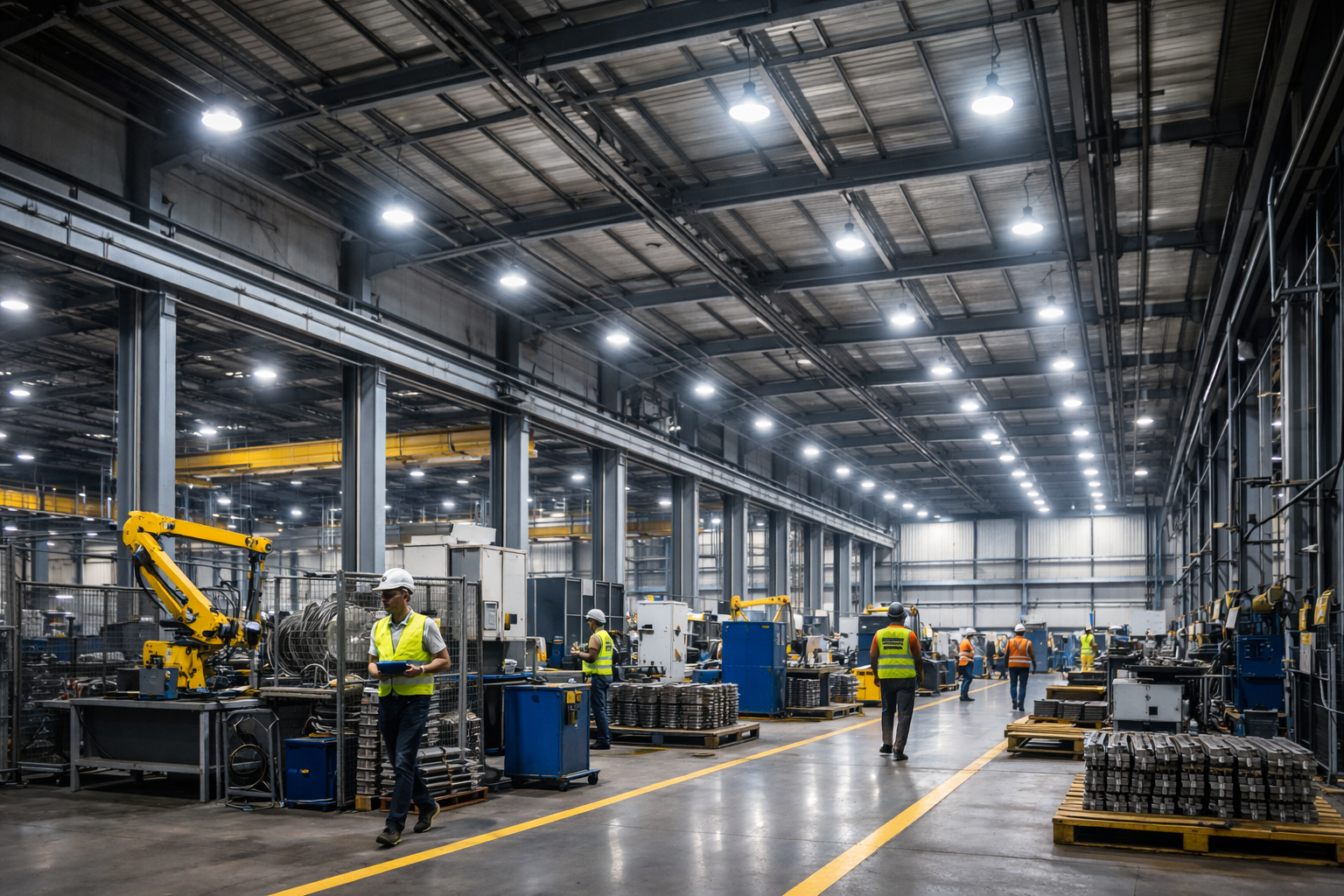
Modern industries rely on powerful lighting systems to maintain productivity, safety, and operational efficiency. Industrial lighting companies Total refers to the complete ecosystem of manufacturers, suppliers, and service providers that design and deliver lighting systems for factories, warehouses, refineries, and other large-scale industrial environments.
Unlike residential lighting, industrial lighting must withstand extreme operating conditions. Facilities often operate 24 hours a day; therefore, lighting systems must provide reliable illumination for long periods. Because of this, industrial lighting companies focus on creating durable fixtures that combine energy efficiency with advanced technology.
In recent years, LED technology, smart lighting controls, and automated systems have transformed industrial lighting. As a result, businesses increasingly depend on specialized lighting companies to design and manage efficient lighting infrastructures.
This guide explores the role of industrial lighting companies Total, the technologies they use, and how they support modern industrial facilities.
What Are Industrial Lighting Companies?
Industrial lighting companies Total represents the entire network of organizations that manufacture, distribute, and maintain lighting systems for industrial environments.
These companies design lighting solutions for environments such as:
- Manufacturing plants
- Warehouses and logistics centers
- Oil and gas facilities
- Mining operations
- Power generation plants
- Transportation infrastructure
Because these environments operate continuously, lighting systems must deliver stable performance under demanding conditions. Consequently, industrial lighting manufacturers prioritize durability, efficiency, and regulatory compliance.
Why Industrial Facilities Need Specialized Lighting
Standard lighting systems rarely perform well in heavy industrial environments. For this reason, companies install specialized lighting systems designed for demanding conditions.
Safety and Workplace Visibility
Proper illumination significantly improves workplace safety. When facilities maintain well-lit environments, employees can clearly see machinery, tools, and potential hazards.
For example, workers operating heavy equipment rely on consistent lighting to perform tasks safely. As a result, industrial facilities invest in high-performance lighting systems to reduce workplace accidents and improve productivity.
Furthermore, bright and uniform lighting helps reduce eye strain for employees performing detailed tasks.
Continuous Operations
Many industrial facilities operate around the clock. Therefore, lighting systems must maintain consistent brightness without frequent failures.
Manufacturers design industrial fixtures with long lifespans and minimal maintenance requirements. In addition, modern LED lighting systems can operate for tens of thousands of hours.
Consequently, businesses reduce maintenance costs while maintaining stable lighting conditions across large facilities.
Harsh Environmental Conditions
Industrial environments expose lighting equipment to challenging operating conditions. Dust, moisture, vibration, and extreme temperatures frequently affect lighting systems.
To address these issues, manufacturers construct industrial fixtures using durable materials such as aluminum housings and sealed electrical components.
As a result, lighting systems remain reliable even in harsh factory environments.
Technologies Used by Industrial Lighting Companies
Industrial lighting systems require careful planning to ensure proper brightness levels, energy efficiency, and workplace safety. Therefore, engineers and lighting specialists often follow best practices described in a guide to industrial lighting design to determine the correct fixture placement, beam angles, and illumination levels for factories and warehouses.
LED Lighting Systems
LED lighting has become the most widely used technology in industrial environments. Compared with traditional lighting, LED fixtures consume less energy while producing brighter illumination.
LED lighting offers several advantages:
- Lower electricity consumption
- Longer operational lifespan
- Reduced maintenance requirements
- Instant illumination
Because of these benefits, many facilities upgrade older lighting systems to LED technology.
High-Bay and Low-Bay Lighting
Large industrial spaces require specialized lighting fixtures that distribute light evenly.
High-bay lighting systems illuminate facilities with high ceilings, such as warehouses and factories. Meanwhile, low-bay lighting serves environments with lower ceiling heights.
Consequently, these lighting systems ensure consistent illumination across large working areas.
Smart Lighting Controls
Modern lighting systems increasingly include intelligent control technologies. For example, facility managers can monitor and adjust lighting remotely.
Smart lighting systems allow businesses to:
- Adjust brightness automatically
- Schedule lighting operations
- Monitor energy consumption
- Detect system failures
Therefore, companies can improve energy efficiency while also reducing operational costs.
Motion Sensor Lighting
Motion sensors help optimize energy usage in large industrial spaces. These sensors activate lights when workers or equipment enter an area.
When the area becomes empty, the system turns lights off automatically. As a result, facilities reduce unnecessary energy consumption.
Motion-controlled lighting works particularly well in warehouses where traffic varies throughout the day.
Types of Industrial Lighting Solutions
Industrial lighting companies provide several solutions designed for specific environments.
Warehouse Lighting
Warehouse operations require strong illumination to support logistics tasks. Workers must clearly see inventory labels, storage racks, and moving equipment.
High-bay LED lighting systems provide bright illumination across large storage spaces. Consequently, employees can move safely while handling inventory.
Factory Lighting
Factories often require lighting systems that support precision manufacturing tasks. Workers assembling products or operating machinery depend on reliable lighting.
Manufacturers design factory lighting with high brightness and minimal glare. As a result, workers perform tasks more accurately and comfortably.
Hazardous Area Lighting
Some industrial environments contain flammable gases or combustible dust. Because of these risks, lighting systems must meet strict safety certifications.
Explosion-proof lighting fixtures prevent sparks or excessive heat that could ignite hazardous materials. Therefore, industries such as oil and gas, chemical processing, and mining rely on specialized hazardous-area lighting systems.
Outdoor Industrial Lighting
Industrial facilities also require reliable outdoor lighting systems. Areas such as parking lots, loading docks, and storage yards must remain visible at night.
Outdoor fixtures must withstand weather conditions including rain, wind, and temperature fluctuations. Consequently, manufacturers design these fixtures with weather-resistant materials and sealed electrical components.
Leading Industrial Lighting Companies
The industrial lighting companies Total market includes several manufacturers known for producing advanced lighting solutions.
Eaton (Crouse-Hinds Series)
Eaton develops industrial lighting products designed for hazardous environments. Specifically, the Crouse-Hinds lighting series focuses on explosion-proof fixtures for demanding industrial locations.
Signify (Philips Lighting)
Signify produces energy-efficient LED lighting systems used in industrial facilities worldwide. Additionally, their smart lighting technologies help businesses reduce energy consumption.
Acuity Brands
Acuity Brands develops lighting technologies for commercial and industrial applications. As a result, their products are widely used in warehouses and manufacturing plants.
Hubbell Lighting
Hubbell Lighting manufactures durable fixtures designed for industrial environments. Therefore, many facilities choose these products for long-term reliability.
Cree Lighting
Cree Lighting focuses on high-performance LED lighting systems. Consequently, their products provide strong illumination while maintaining excellent energy efficiency.
Benefits of Working With Industrial Lighting Companies
Businesses that collaborate with specialized lighting providers gain several advantages.
Improved Energy Efficiency
Modern lighting systems significantly reduce electricity consumption. As a result, companies lower operational costs while improving sustainability.
Enhanced Workplace Safety
Proper lighting improves visibility across industrial workspaces. Therefore, employees can detect hazards more easily and operate machinery safely.
Reduced Maintenance Costs
Industrial lighting manufacturers design fixtures with long operational lifespans. Consequently, facilities experience fewer lighting failures and lower maintenance costs.
Compliance With Safety Standards
Industrial lighting companies design products that comply with strict safety regulations. Because of this, facilities maintain compliance while protecting employees.
The Future of Industrial Lighting
The future of industrial lighting companies Total continues evolving with new technologies.
Several trends are shaping the industry:
- Internet of Things (IoT) lighting networks
- Artificial intelligence lighting optimization
- Human-centric lighting systems
- Micro-LED lighting technology
Ultimately, these innovations will help industrial facilities improve efficiency while reducing energy consumption.
Conclusion
Industrial lighting companies Total play a vital role in modern industrial infrastructure. These companies design advanced lighting systems that help businesses maintain safe, productive, and energy-efficient work environments.
Furthermore, innovations such as LED lighting and smart control systems continue improving industrial lighting performance. Therefore, industries will increasingly rely on specialized lighting providers to support modern industrial operations.
Ultimately, reliable lighting systems ensure that workers can operate safely while businesses reduce operational costs and energy consumption.