
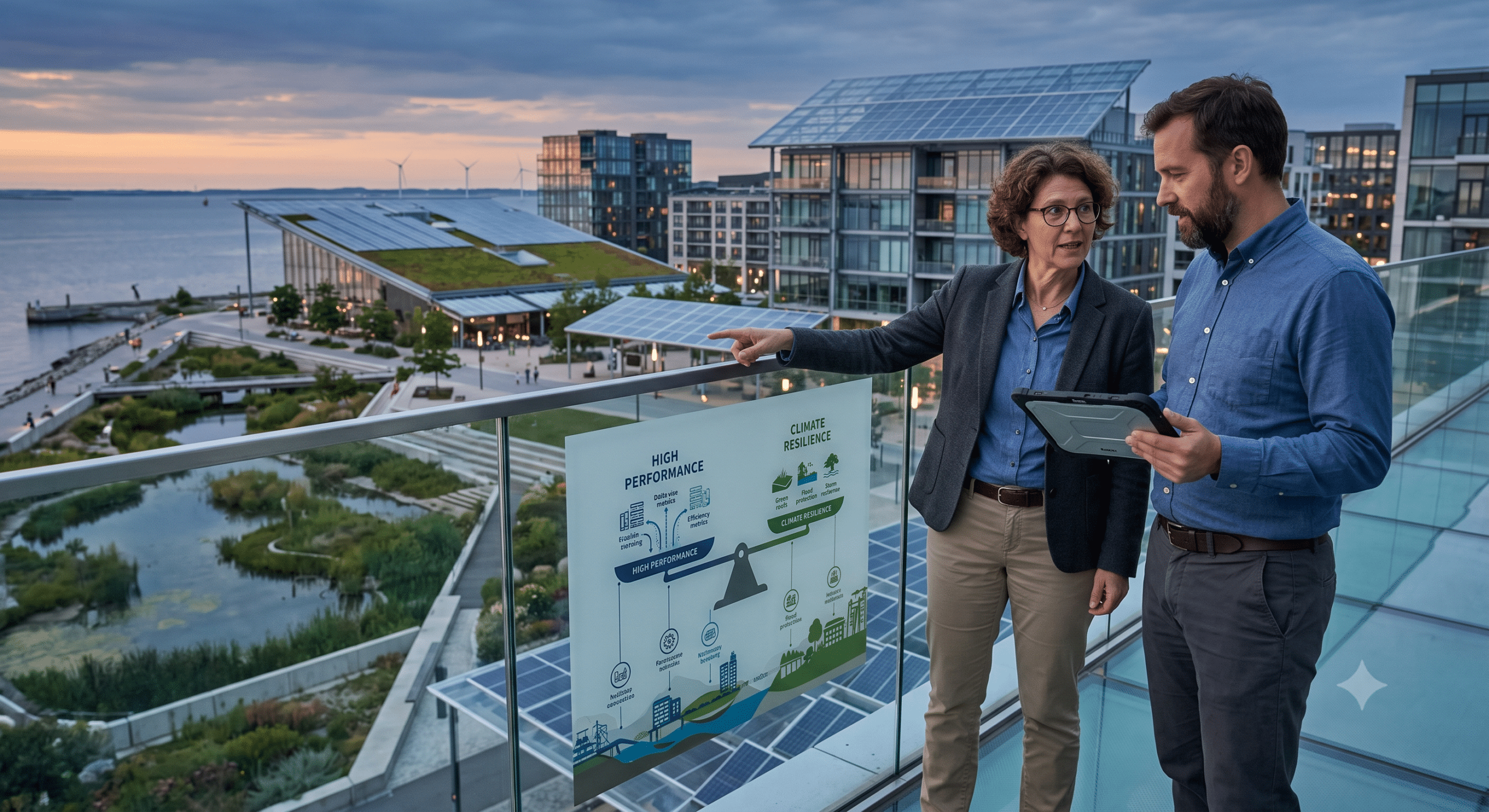
When designing modern systems, integrating key climate resilience considerations into your initial blueprint is the only way to protect long-term capacity. Imagine running a high-speed data hub or a large power grid. On paper, everything looks perfect. The screens show smooth operations, workers are fully coordinated, and output is steady. However, a massive heatwave can suddenly hit. Or, an unexpected flash flood might block a major supply route. Consequently, those smooth charts disappear. Machines overheat, parts break, and as a result, work backs up everywhere.
For capacity planners and data analysts, this is our daily reality. Therefore, we can no longer assume the weather will remain calm and predictable. Indeed, when making choices, we must include these vital safety variables into our long-term frameworks to protect our systems from failing.
When managing physical assets today, we must focus on weather wear. Specifically, harsh weather quickly degrades our equipment. If a facility cannot handle extreme heat or heavy storms, its internal efficiency falls apart. Fortunately, we can look at our systems through three simple goals. These are maximizing total output, cutting down waiting time, and minimizing wasted materials. By doing this, we make our infrastructure strong enough to survive any weather while keeping operations highly profitable.
1. Using Data Science to Keep Equipment Running Longer
In the past, planning for future capacity was simple. For example, we looked at thirty years of data, added room for growth, and finished the plan. Today, however, data scientists know this old method fails. This is because wild weather changes patterns completely.
When a facility gets too hot, the machines work twice as hard. Consequently, this extra strain slows down our total output. Machines must slow themselves down in order to prevent total failure. From an operational view, then, this creates a major traffic jam. Furthermore, it slows down every single step that follows.
Thankfully, smart data tracking changes this. Team members can feed live weather updates right into planning software. As a result, this ensures we include climate resilience considerations when buying or fixing equipment. Thus, we protect the machinery over its whole lifespan.
2. Keeping Total Output High in Wild Weather
Total output is the lifeblood of any system. In short, it represents the total amount of successfully completed work, data, or services each day. Extreme weather now happens more often. Therefore, keeping output high requires us to change how we use resources on the fly.
   [Incoming Resources]
            │
            ▼
┌───────────────────────┐
│ Flexible Capacity Pool│ ◄── [Live Weather Risk Alerts]
└───────────────────────┘
            │
            ▼
   [High, Steady Output]
When summer temperatures skyrocket, standard cooling systems lose efficiency. Hence, planners must design flexible networks to protect our total output. These networks quickly move heavy workloads away from regions experiencing extreme weather.
Data analysts solve this with digital mapping systems. In particular, these systems automatically reroute work based on local weather stress. Suppose a specific building faces a bad storm and potential power outages. Immediately, the system shifts digital tasks to a safer building in another state. In this way, the quick shift keeps the overall business running smoothly even when one physical spot struggles.
3. Cutting Down Waiting Times with Smart Routing
Waiting time measures the hours it takes for work to travel through our pipeline. In an unstable environment, however, waiting times usually go up. Typically, this is caused by domino-effect delays. For instance, a bad storm might hit a major shipping center or central data hub. When this happens, consequently, every connected location experiences a backup.
To keep waiting times short, we use tracking models to predict weather delays. That is why we do not wait for a machine to break down or slow to a crawl. Instead, smart algorithms watch shifting weather forecasts to see where delays are likely to happen next.
If a specific path looks risky, then the system changes the route ahead of time. Thus, it guides work through clearer, safer paths. Taking this step keeps the entire network moving forward. Ultimately, it prevents minor weather delays from turning into massive operational backups.
4. Reducing Wasted Materials and Broken Parts
In a factory, waste means defective parts that you throw in the trash. Similarly, in a data center or utility grid, waste looks different. It manifests as dropped data packets, lost power, or ruined parts that break prematurely. In fact, bad weather speeds up this expensive damage.
Physical equipment suffers under extreme conditions. For example, going from freezing cold to burning hot creates intense structural stress. Sudden moisture causes similar issues. As a consequence, tiny cracks form in the machinery, leading to sudden breakdowns that ruin active work in seconds.
                        ┌───► Early Machine Failure ──► High Material Waste
                        │
[Weather Stressors] ────┤
                        │
                        └───► Automatic Slowdowns   ──► Long Waiting Times
To fight this, capacity planners track weather changes against part failures. Therefore, we schedule maintenance right before a piece of equipment enters a high-risk weather zone. By doing so, we integrate key climate resilience considerations into maintenance cycles to stop unexpected breakdowns and save money.
5. Moving Away from Old Historical Guides to Live Testing
The days of relying only on old history books are gone. Previously, old planning models assumed future storms would look exactly like past storms. Now, however, operations analysts use advanced computer simulations. These tools test thousands of different weather scenarios at the exact same time.
Simulations let us view capacity as a flexible target. Hence, we no longer treat it as a rigid, unchangeable number. We can simulate week-long heatwaves, major coastal floods, and sudden power shortages. Then, this shows us exactly where our systems will break.
Crucially, this testing data allows our management teams to find the weakest links. We can then spend our budget on fixing those specific weak spots. In conclusion, applying these core climate resilience considerations ensures our daily output stays safe from major storms.
6. The Real Costs of Ignoring Weather Risks
Failing to include weather risks leads to massive, hidden financial losses. For example, imagine a piece of equipment breaks during a major storm. The cost to fix that single part is actually only a small fraction of the total bill.
The real financial damage instead comes from hours of empty runtime. Additionally, it comes from missed deadlines with clients. It also forces you to replace expensive systems way ahead of schedule. For instance, if a system built to last fifteen years breaks down in year seven due to overheating, your long-term budget is ruined.
┌────────────────────────────────────────────────────────┐
│             Real Cost Breakdown of Weather Damage      │
├────────────────────────────────────────────────────────┤
│  █ Cost to Fix the Broken Part (Smallest Cost)         │
│  █████ Lost Money from Empty Work Hours                │
│  ██████████ Cost to Replace Expensive Equipment Early  │
└────────────────────────────────────────────────┘
Furthermore, businesses that ignore climate resilience considerations face much higher insurance bills. As a result, they also find it harder to secure loans. Investors and banks look closely at weather preparation because they want to see how well a company protects its core business from climate events.
7. Increasing Safety Without Spending Too Much Money
A common mistake in infrastructure planning exists. Specifically, people think surviving bad weather requires doubling your equipment footprint. Consequently, they buy massive, duplicate systems. In reality, however, buying too much extra gear is a wasteful strategy. It quickly ruins your profit margins.
Data analysts solve this problem with mathematical optimization. Instead of building identical backup buildings everywhere, we calculate the exact minimum amount of backup support needed. Thus, this keeps operations steady during an emergency.
This strategy often means buying flexible, modular equipment. Then, workers can easily adjust or move these assets as the seasons change. Overall, we focus on smart flexibility instead of raw physical size. This builds strong, reliable networks without blowing our budget.
8. Putting Live Sensors to Work for Easy Management
You cannot manage or protect equipment without live data. Therefore, modern infrastructure management relies on small, internet-connected sensors. These devices send live updates directly to our main planning computers.
Sensors measure exact temperatures, humidity, shaking, and power quality right inside the machinery. Then, the moment a weather event causes stress, the sensor sends an immediate warning. Subsequently, our analytical software processes it right away.
This live view allows our systems to make instant micro-adjustments. For example, the system shifts heavy tasks away from overheating parts. Importantly, this happens long before a human worker notices a problem. This automated protection loop keeps waiting times low while protecting fragile hardware.
9. Changing How We Look at the Lifetime of Equipment
Planning for weather risks changes how we look at an asset’s life. Indeed, it affects every stage from the day we buy it to the day we throw it away. Consequently, we can no longer choose equipment based only on the lowest price tag.
Our buying teams must look at the total cost of ownership. Specifically, we must evaluate the machine over its whole life under real, stressful conditions. A machine might cost a bit more upfront. However, if it handles high heat well, it saves a lot of money over time by delivering steady output.
Moreover, management rules must also include faster, more frequent maintenance checks. This is especially true during seasons with harsh weather. In the end, taking a machine offline for a quick check-up prevents massive, unexpected failures later. It keeps operations predictable and saves valuable capital.
10. Building the Flexible Infrastructure of Tomorrow
The ultimate goal of modern capacity planning is clear. Namely, we want to build networks that treat bad weather as a normal part of the workday. By combining data science with smart management, we create systems that adapt to the world around them.
Keeping output high requires a continuous loop. First, we must gather data, test scenarios, and make quick changes. Simultaneously, this same loop keeps waiting times low and stops material waste. Therefore, the companies that build clear climate resilience considerations into their daily work will protect their profits. As a result, they will stay strong for years to come.
The world around us is becoming more unpredictable. Thus, blending data-driven planning with forward-looking asset management is no longer just a nice extra step. In summary, it is the absolute foundation of running a safe, high-performance business.
Frequently Asked Questions
What does climate resilience mean for everyday infrastructure planning?
Climate resilience means studying, predicting, and preparing our systems to survive weather changes. Essentially, this includes both long-term shifts and sudden, extreme events like floods or heatwaves. Thus, it means updating our engineering designs so our equipment can keep running smoothly under stress without breaking down.
How does bad weather make customers or systems wait longer?
Harsh weather reduces the efficiency of physical components. Consequently, machines must slow down automatically so they do not overheat or break entirely. As a result, this slowdown creates immediate bottlenecks, backs up processing lines, and increases the total waiting time for a project or service.
Why is old history data not enough to plan infrastructure today?
Old data assumes that future weather will look exactly like past weather. However, weather patterns have become much more volatile and unpredictable. Because of this shift, older records can no longer accurately predict how long a machine will last or when it will fail.
Can a company prepare for bad weather without spending a fortune?
Yes, good preparation focuses on smart planning and flexibility rather than buying twice as much gear. Specifically, by using smart data models, live sensors, and flexible routing, companies can keep their output steady. They achieve this without buying unneeded, expensive backup equipment.
References for Further Reading
-
Learn about global standards for protecting public systems under environmental stress in the United Nations Handbook on Infrastructure Asset Management.
-
Explore detailed economic data on building strong systems for the future via the OECD Report on Infrastructure for a Climate-Resilient Future.
-
Examine financial guidelines and life-cycle tips for large investments within the IMF Guidelines on Building Resilience in Infrastructure to Climate Change.