
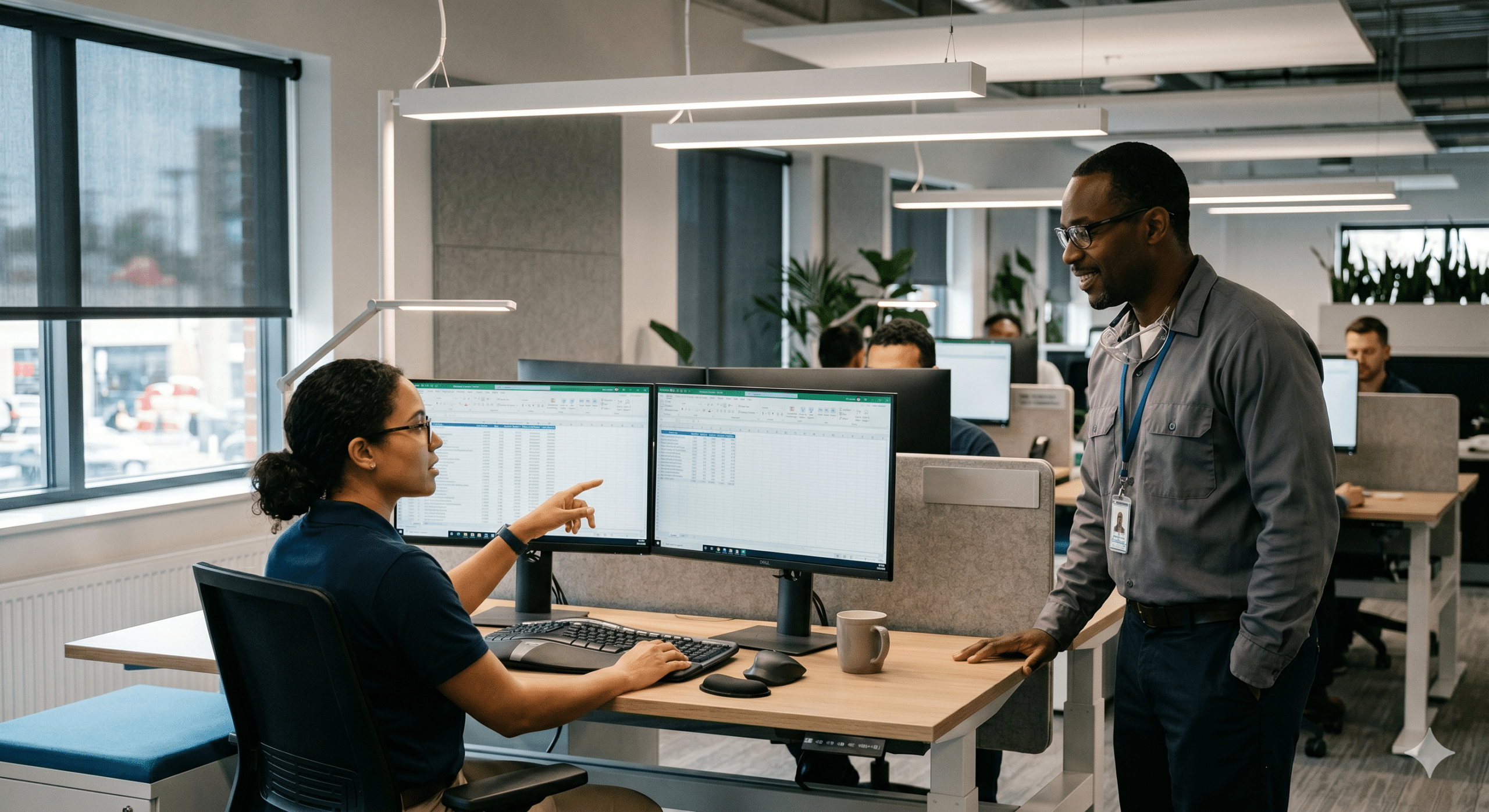
When people talk about lighting in workplaces, factories, warehouses, offices, and commercial buildings, the conversation usually revolves around brightness. Many assume that if a space is bright enough, the lighting system is doing its job. Throughout my experience observing industrial operations and workplace environments from an industrial engineering perspective, I have discovered that this assumption is often misleading. Brightness alone does not guarantee visibility, comfort, safety, or productivity.
In reality, some of the most poorly performing work environments are surprisingly well lit. Employees may have access to powerful LED fixtures, large windows, and abundant illumination, yet they still experience headaches, eye strain, fatigue, and difficulty focusing. In many cases, the root cause is not insufficient light but poor lighting design. More specifically, the problem often comes down to glare and visual ergonomics.
The relationship between lighting and human performance is far more complex than simply increasing illumination levels. Effective lighting and visibility systems must support the way people naturally see, process information, and interact with their surroundings. When lighting systems fail to account for human vision, even the brightest workplace can become uncomfortable and inefficient.
This is why the concept of glare and visual ergonomics has become increasingly important in modern facility design. Organizations today are recognizing that employee comfort, safety, and performance are directly connected to visual conditions. Whether a worker is assembling products, operating machinery, inspecting materials, reading documents, driving a forklift, or spending hours in front of a computer screen, the quality of the visual environment can significantly influence results.
Understanding how glare affects visibility and how visual ergonomics improves human performance allows organizations to create environments that are safer, healthier, and more productive. More importantly, it helps businesses maximize the value of their lighting investments while supporting the people who rely on those systems every day.
Understanding Lighting and Visibility Systems Beyond Brightness
Lighting and visibility systems encompass far more than ceiling fixtures and light bulbs. They involve the complete design and management of visual environments. This includes fixture placement, light distribution, daylight integration, surface reflectance, contrast levels, lighting controls, workstation positioning, and the interaction between lighting and human vision.
From an industrial engineering standpoint, every workplace is a system made up of interconnected components. Lighting is one of those components. Just as equipment layout, workflow design, and safety procedures influence performance, lighting conditions also affect how efficiently people can complete their tasks.
The purpose of a lighting and visibility system is not merely to illuminate a space. Its true purpose is to help people see clearly, comfortably, and accurately while minimizing physical and mental strain. When employees can easily identify details, read labels, distinguish colors, recognize hazards, and perform visual tasks without discomfort, the system is working effectively.
Unfortunately, many facilities still evaluate lighting primarily through brightness measurements. While illumination levels remain important, they represent only one piece of the larger visual environment. The human eye responds to contrast, reflections, shadows, brightness distribution, and adaptation demands. As a result, two spaces with identical illumination levels may provide dramatically different visual experiences.
This is why modern lighting design increasingly focuses on visual quality rather than simple brightness targets.
What Is Glare and Why Does It Matter?
Glare occurs when excessive brightness or significant brightness differences create visual discomfort or reduce visibility. In simple terms, glare happens when light becomes distracting rather than helpful.
Most people have experienced glare while driving at night. The headlights of an approaching vehicle may be so bright that seeing the road becomes difficult. Similarly, direct sunlight reflecting off a windshield can temporarily reduce visibility. These examples demonstrate how excessive brightness can interfere with normal vision.
The same principle applies in workplaces.
A warehouse worker may encounter glare from polished concrete floors. An office employee may struggle with reflections on a computer monitor. A manufacturing technician may experience discomfort from exposed LED fixtures positioned directly within their field of view. In each case, the lighting system provides illumination, but it simultaneously creates visual obstacles.
Glare is particularly problematic because its effects are often gradual. Employees may not immediately recognize that visual discomfort is affecting their concentration or productivity. Instead, they simply feel tired, distracted, or mentally drained by the end of the day.
Over time, these seemingly minor visual challenges can contribute to significant declines in performance and well-being.
The Difference Between Discomfort Glare and Disability Glare
To understand glare more fully, it is helpful to recognize that not all glare affects people in the same way.
Discomfort glare occurs when a bright light source causes irritation, annoyance, or visual fatigue. Although the individual can still see objects and perform tasks, the visual experience becomes uncomfortable. This type of glare often leads to squinting, eye strain, headaches, and reduced concentration.
For example, an employee working beneath an exposed LED fixture may experience discomfort throughout the day. While the light does not prevent task completion, it creates continuous visual stress.
Disability glare is more severe because it directly impairs visibility. Instead of merely causing discomfort, it reduces the ability to distinguish details and identify objects.
An example would be sunlight reflecting off a metal surface and obscuring a worker’s view of equipment controls. In this situation, visibility is physically reduced, increasing the likelihood of mistakes or accidents.
From a safety perspective, disability glare presents a greater risk because it directly interferes with visual performance. However, discomfort glare should not be underestimated. Continuous visual discomfort can gradually reduce attention, concentration, and productivity over time.
Why Visual Ergonomics Is Essential in Modern Workplaces
Visual ergonomics refers to the science of designing environments that support the natural capabilities and limitations of human vision.
Most people are familiar with physical ergonomics. Adjustable chairs, proper workstation heights, and ergonomic tools are designed to reduce physical strain. Visual ergonomics applies the same principles to eyesight.
The goal is to create visual environments where employees can perform tasks comfortably without excessive effort.
Human vision is incredibly adaptable, but adaptation requires energy. Every time the eyes adjust to changing brightness levels, focus on small details, compensate for reflections, or deal with glare, additional effort is required. While these adjustments may seem insignificant individually, they accumulate throughout the day.
As an industrial engineer, I often compare visual ergonomics to equipment efficiency. When a machine must constantly compensate for poor operating conditions, performance declines and wear increases. The same principle applies to human vision. When workers must continually overcome visual obstacles, fatigue increases and performance suffers.
Visual ergonomics seeks to eliminate these obstacles before they affect employees.
How Poor Lighting Impacts Productivity
One of the most overlooked costs in workplace operations is the productivity loss associated with poor visual conditions.
Organizations frequently investigate equipment failures, process inefficiencies, and staffing challenges while overlooking lighting issues. Yet lighting influences nearly every task employees perform.
When workers struggle to read labels, inspect products, interpret instructions, or identify details, tasks naturally require more time and effort. Even small reductions in efficiency can become significant when multiplied across hundreds of employees and thousands of work hours.
Poor lighting can also increase cognitive workload. When visibility is compromised, employees must devote additional mental resources to processing visual information. Instead of focusing entirely on the task itself, part of their attention is consumed by overcoming visual challenges.
This increased mental demand contributes to fatigue and can reduce overall productivity.
Well-designed lighting systems support concentration by allowing employees to process visual information effortlessly. When people can see clearly without strain, they work more confidently and efficiently.
The Connection Between Lighting and Workplace Safety
Safety is one of the strongest arguments for investing in high-quality lighting and visibility systems.
In industrial environments, visual information often serves as the first line of defense against hazards. Employees rely on visibility to identify moving equipment, read warning labels, recognize floor markings, detect defects, and navigate workspaces safely.
When glare interferes with visibility, these critical safety functions become compromised.
Consider a forklift operator moving through a warehouse aisle. If reflections from polished surfaces create visual distractions, reaction times may increase. If brightness differences make it difficult to identify obstacles, accident risks rise.
The same challenges exist in manufacturing facilities, healthcare settings, construction sites, laboratories, and transportation systems.
Many workplace incidents involve some degree of visual impairment, whether caused by inadequate illumination, excessive glare, poor contrast, or shadowing. Improving visual conditions therefore represents a proactive safety strategy.
From an engineering perspective, reducing hazards at their source is always preferable to relying solely on behavioral controls. Better lighting achieves exactly that.
The Importance of Contrast in Visibility Systems
While brightness often receives the most attention, contrast is equally important for visibility.
Contrast refers to the difference between an object and its background. The greater the contrast, the easier it becomes to distinguish details.
For example, black text on a white page provides excellent contrast and is easy to read. Gray text on a slightly darker gray background offers poor contrast and requires greater effort.
Industrial facilities depend heavily on contrast. Safety signs, warning labels, control panels, floor markings, and inspection tasks all rely on sufficient contrast to communicate information effectively.
Even a brightly illuminated space can suffer from poor visibility if contrast levels are inadequate.
Effective lighting systems enhance contrast without creating excessive brightness differences. This balance helps workers identify details quickly and accurately while maintaining visual comfort.
Natural Daylight and Visual Comfort
Daylight remains one of the most valuable sources of illumination available. Natural light supports mood, improves visual quality, and contributes to overall well-being.
Many modern buildings incorporate large windows, skylights, and open layouts to maximize daylight access. However, daylight presents both opportunities and challenges.
Direct sunlight can introduce significant glare. Large brightness differences between windows and interior spaces may create visual discomfort. Employees positioned near windows often struggle with screen reflections and adaptation issues.
Successful daylight integration requires careful planning. Window orientation, shading systems, blinds, glazing technologies, and workstation placement all influence visual comfort.
The goal is to capture the benefits of daylight while minimizing its potential drawbacks.
When managed effectively, daylight becomes a powerful component of a comprehensive lighting and visibility strategy.
LED Lighting and the Evolution of Modern Workspaces
The transition to LED technology has transformed lighting design across industries. Compared to traditional lighting systems, LEDs offer greater energy efficiency, longer service life, improved controllability, and reduced maintenance requirements.
However, energy efficiency alone does not guarantee visual comfort.
One of the most common mistakes organizations make is selecting LED fixtures based solely on energy savings. While reducing energy consumption is important, visual performance should remain a primary consideration.
Poorly designed LED systems can create significant glare due to high brightness concentrations. Exposed LED arrays may appear uncomfortably bright even when overall illumination levels meet recommended standards.
Modern lighting design increasingly emphasizes fixture optics, diffusion technologies, and glare control measures to address these concerns.
The most successful LED installations balance efficiency, performance, and visual comfort simultaneously.
Human-Centered Lighting and the Future of Workplace Design
The lighting industry is moving toward a human-centered approach that prioritizes the needs of occupants rather than focusing exclusively on illumination metrics.
Human-centered lighting recognizes that lighting influences more than visibility. It also affects comfort, alertness, mood, and overall well-being.
Advances in smart technology now allow lighting systems to adapt throughout the day. Sensors can monitor occupancy, daylight availability, and environmental conditions. Automated controls can adjust brightness levels to maintain optimal visual comfort while reducing energy consumption.
Some systems even modify color temperature throughout the day to align with natural circadian rhythms.
From an industrial engineering perspective, these innovations represent a logical evolution. Modern workplaces increasingly recognize that employee performance depends on environmental factors. Lighting is one of the most influential of those factors.
Organizations that invest in human-centered lighting often experience benefits that extend beyond energy savings. Improved comfort, enhanced productivity, reduced fatigue, and greater employee satisfaction all contribute to long-term operational success.
Creating Better Lighting and Visibility Systems
Designing effective lighting and visibility systems requires a comprehensive understanding of both technology and human behavior.
The best lighting systems are not necessarily the brightest systems. Instead, they are systems that support visual performance while minimizing discomfort.
Successful designs provide balanced illumination, reduce glare, maintain appropriate contrast, support task requirements, and accommodate human visual capabilities.
Every workplace is unique. A manufacturing plant has different visual demands than a healthcare facility. A warehouse differs from an office. Yet the underlying principles remain consistent.
People perform better when they can see clearly and comfortably.
Organizations that prioritize visual ergonomics often discover that relatively small improvements can produce meaningful results. Adjusting fixture placement, controlling reflections, managing daylight, improving contrast, and selecting glare-resistant fixtures can significantly enhance the workplace experience.
These improvements benefit both employees and employers.
Conclusion
Lighting has always been a critical component of workplace design, but modern organizations are beginning to understand that visibility involves much more than brightness alone. The true effectiveness of a lighting system depends on how well it supports human vision.
This is where glare and visual ergonomics become essential.
Excessive glare can reduce visibility, increase fatigue, and compromise safety. Poor visual ergonomics can create unnecessary strain that affects productivity and well-being. Conversely, well-designed lighting systems enhance comfort, improve concentration, support safety, and help employees perform at their highest level.
From an industrial engineering perspective, lighting should be viewed as an operational asset rather than a basic utility. Like any other system within a facility, it should be optimized to support efficiency, quality, and human performance.
As workplaces continue to evolve, organizations that prioritize glare control and visual ergonomics will be better positioned to create environments that are safer, healthier, and more productive. In the end, the most effective lighting and visibility systems are not those that simply provide light. They are the systems that help people see, think, and perform their best every day.
Frequently Asked Questions About Glare and Visual Ergonomics
What is glare in a lighting system?
Glare occurs when excessive brightness or large differences in brightness create visual discomfort or reduce visibility. It can come from direct light sources, reflections, windows, screens, or shiny surfaces.
Why are glare and visual ergonomics important in workplaces?
Glare and visual ergonomics help improve employee comfort, reduce eye strain, enhance visibility, increase productivity, and support workplace safety.
Can LED lights cause glare?
Yes. Although LED technology is highly efficient, improperly designed or poorly positioned LED fixtures can create significant glare and visual discomfort.
How does glare affect productivity?
Glare can reduce concentration, increase visual fatigue, cause headaches, and make it more difficult to perform detailed tasks accurately.
What is visual ergonomics?
Visual ergonomics is the practice of designing environments that support human vision by minimizing eye strain, reducing glare, improving contrast, and enhancing visual comfort.
How can organizations reduce glare?
Organizations can reduce glare by selecting appropriate fixtures, using diffusers, controlling daylight, minimizing reflective surfaces, improving workstation placement, and maintaining balanced lighting distribution.
Further Reading and References
For deeper insights into glare and visual ergonomics, explore these authoritative resources:
- Illuminating Engineering Society (IES)
- Canadian Centre for Occupational Health and Safety (CCOHS)
- International Labour Organization (ILO) Lighting Guidelines
- National Library of Medicine Research on Workplace Lighting
- Chartered Institution of Building Services Engineers (CIBSE)
- Lighting Research Center
- BenQ – How Lighting Ergonomics Boosts Productivity and Wellbeing