
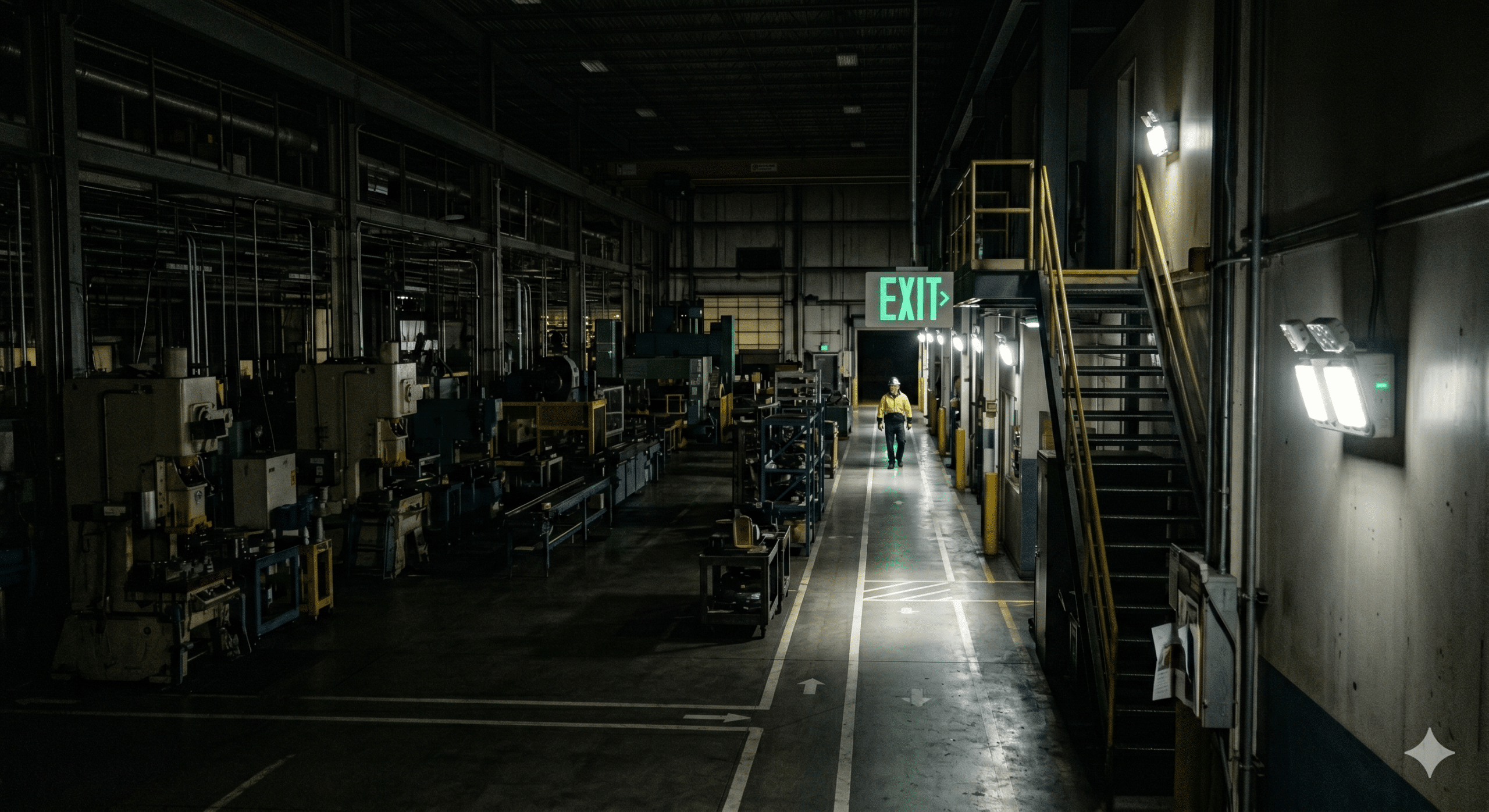
Power outages rarely happen at a convenient time. They can occur during a busy workday, in the middle of a hospital procedure, during severe weather, or while hundreds of people are shopping in a retail center. When normal lighting suddenly disappears, even familiar spaces can become confusing and dangerous. Hallways become difficult to navigate, staircases turn into hazards, and exits may no longer be visible. In those critical moments, Emergency and backup lighting systems become one of the most important safety features within a building.
From an Industrial Engineering perspective, every system within a facility should support efficiency, reliability, and safety. Lighting is often associated with productivity, comfort, and visibility, but emergency lighting serves a much deeper purpose. It exists to protect people when normal operations are disrupted. While occupants may never notice these systems during everyday activities, they become indispensable when electrical failures occur.
Emergency and backup lighting systems are designed to provide immediate illumination when the primary power source is interrupted. Their purpose is not merely to keep lights on. Their mission is to maintain visibility, guide occupants to safety, reduce confusion, support emergency responders, and help prevent injuries during unexpected situations.
As buildings become larger, more complex, and more dependent on electrical infrastructure, the importance of reliable emergency lighting continues to grow. Whether in commercial offices, manufacturing plants, warehouses, schools, healthcare facilities, hotels, or residential buildings, these systems play a vital role in ensuring safety and operational resilience.
Understanding Emergency and Backup Lighting Systems
Many people assume emergency lighting simply means having a few battery-powered lights mounted on walls. In reality, modern emergency lighting systems are sophisticated safety networks designed to activate automatically whenever normal electrical power is lost.
Emergency lighting refers to illumination that is powered by an alternative energy source when standard power fails. This backup source may be an internal battery, a centralized battery system, an emergency generator, or another dedicated power supply. The system continuously monitors the building’s electrical supply and automatically switches to emergency operation when necessary.
The transition from normal power to emergency power happens quickly, often within seconds. Occupants may notice a brief flicker, but emergency fixtures immediately begin providing illumination to critical areas throughout the building.
Backup lighting systems are often discussed alongside emergency lighting because the two serve complementary functions. Emergency lighting focuses primarily on life safety and evacuation. Backup lighting may also support continued operations in areas where visibility remains necessary after an outage. Together, they create a comprehensive safety solution that helps buildings remain functional and safe during power disruptions.
The goal is straightforward. People must be able to see clearly enough to move safely, locate exits, identify hazards, and respond appropriately during an emergency.
Why Emergency Lighting Matters More Than Ever
One of the biggest misconceptions about emergency lighting is that it exists solely to satisfy building codes. While regulatory compliance is certainly important, the true value of emergency lighting extends far beyond meeting legal requirements.
Human behavior changes dramatically during emergencies. When darkness suddenly replaces normal lighting, uncertainty increases. People become disoriented, stress levels rise, and decision-making often becomes more difficult. Even simple tasks such as locating a doorway or walking down a staircase can become challenging.
Emergency lighting helps restore a sense of order. It provides visual guidance when people need it most. By illuminating exits, corridors, stairwells, and assembly areas, these systems reduce panic and support safe evacuation.
From a risk management standpoint, emergency lighting can prevent injuries that may otherwise occur during power outages. Falls, collisions, and confusion-related accidents become far less likely when adequate illumination remains available.
As an Industrial Engineer, I often evaluate systems based on their ability to reduce risk while maintaining operational continuity. Emergency lighting excels in both areas. It protects people while also helping organizations minimize disruption during unexpected events.
What Happens When Emergency Lighting Is Not Available
To appreciate the value of emergency lighting, it helps to imagine a facility without it.
Consider a manufacturing plant during a sudden power failure. Workers may be operating machinery, moving materials, or navigating elevated platforms. Without emergency illumination, even a routine evacuation could become hazardous.
In a hospital, patients and healthcare providers depend on visibility for safety and care delivery. Darkness can create unnecessary risks in critical medical environments.
A hotel presents another challenge. Guests unfamiliar with the building layout may struggle to locate exits during a nighttime outage.
Schools, shopping centers, warehouses, and office buildings face similar concerns. In every case, visibility becomes a key factor in maintaining safety.
The consequences of inadequate emergency lighting can include injuries, delayed evacuations, increased liability exposure, operational disruptions, and reputational damage. These risks highlight why emergency lighting should be viewed as a strategic investment rather than a simple compliance requirement.
How Emergency and Backup Lighting Systems Work
The operation of emergency lighting systems is both simple and highly effective.
Under normal conditions, emergency fixtures remain connected to the building’s electrical supply. At the same time, backup batteries are continuously charged and monitored to ensure readiness.
When a power interruption occurs, automatic controls detect the loss of electricity and activate the emergency power source. Depending on the system design, this may involve switching to battery power, activating a generator, or transferring to a centralized emergency power network.
Once activated, emergency fixtures illuminate designated areas throughout the building. These areas typically include exits, corridors, stairwells, ramps, assembly points, and other locations essential for safe evacuation.
The system continues operating until normal power is restored or until the backup power source reaches its designated operating duration.
Modern systems often include advanced monitoring capabilities that continuously track battery health, charging status, and operational readiness. These features help facility managers identify potential issues before an actual emergency occurs.
The Different Types of Emergency Lighting
Emergency lighting is not a single solution. Different types of emergency lighting serve different purposes within a building.
Escape route lighting is perhaps the most familiar type. Its purpose is to illuminate pathways leading occupants toward exits. Corridors, stairwells, passageways, and exit access routes all benefit from this type of lighting.
Open area lighting, sometimes referred to as anti-panic lighting, provides general illumination in larger spaces where groups of people may gather. Conference rooms, shopping centers, gymnasiums, and open-plan offices often require this type of coverage. By maintaining visibility, open area lighting helps reduce confusion and promotes orderly movement during emergencies.
High-risk task lighting is especially important in industrial settings. Certain operations involve equipment or processes that cannot be abandoned immediately when power fails. Emergency illumination allows workers to safely complete critical shutdown procedures and avoid accidents.
Exit sign illumination is another essential component. Illuminated exit signs provide clear directional guidance during evacuations and remain visible even when the rest of the building loses power.
Each type of emergency lighting contributes to a broader safety strategy designed to protect occupants and support emergency response efforts.
Battery-Powered Systems Versus Generator-Based Systems
Choosing the right backup power source is one of the most important decisions when designing emergency lighting systems.
Battery-powered systems are widely used because they are relatively simple, affordable, and easy to install. Individual fixtures often contain their own rechargeable batteries, allowing them to operate independently when power is lost.
These systems work particularly well in smaller facilities or buildings where emergency lighting requirements are relatively straightforward.
Generator-based systems provide a different level of capability. Rather than powering only emergency lighting, generators can support multiple critical building systems simultaneously. This may include lighting, elevators, communication systems, security equipment, and essential operational functions.
Large hospitals, industrial facilities, airports, and commercial complexes frequently rely on generator-based emergency power systems.
Many facilities adopt a hybrid approach that combines battery backup and generator support. Batteries provide immediate illumination while generators start and assume larger electrical loads. This layered strategy enhances reliability and minimizes interruptions.
From an engineering perspective, redundancy often improves overall system resilience. Multiple backup solutions reduce the likelihood of complete failure during emergencies.
Emergency Lighting in Industrial Facilities
Industrial facilities present unique challenges when it comes to emergency lighting design.
Manufacturing plants often contain machinery, conveyor systems, storage racks, forklifts, elevated work platforms, and complex production equipment. During a power outage, these environments can quickly become hazardous.
Emergency lighting helps workers identify safe pathways, avoid obstacles, and evacuate efficiently. In facilities where certain processes require controlled shutdown procedures, emergency illumination also supports safe equipment management.
Warehouses face similar challenges. Large storage areas can become extremely difficult to navigate in darkness. Emergency lighting ensures employees can move safely through aisles and locate exits without unnecessary delays.
As industrial operations become increasingly automated, maintaining visibility during power interruptions remains a critical safety priority.
The Growing Role of LED Technology
The evolution of LED technology has significantly improved emergency lighting performance.
Traditional emergency lighting systems often relied on fluorescent or incandescent technology. While functional, these solutions consumed more energy and required more frequent maintenance.
LED fixtures offer several important advantages. They consume less power, generate less heat, provide longer service life, and deliver consistent illumination.
Because LEDs are highly energy-efficient, backup batteries can often support longer operating durations without increasing system size or complexity.
Facility owners also benefit from reduced maintenance costs. Longer fixture life means fewer replacements and less downtime.
From both operational and sustainability perspectives, LED emergency lighting has become the preferred solution for modern facilities.
Smart Emergency Lighting Systems
Technology continues to transform emergency lighting.
Smart emergency lighting systems use connected devices, sensors, and monitoring software to provide real-time visibility into system performance.
Instead of relying entirely on manual inspections, facility managers can monitor battery condition, charging status, fixture operation, and maintenance requirements from centralized dashboards.
If a battery begins to fail or a fixture experiences a malfunction, alerts can be generated automatically. This proactive approach allows maintenance teams to address issues before they become safety concerns.
Smart systems also support predictive maintenance strategies. By analyzing performance data, organizations can replace components before failures occur.
As buildings become smarter and more connected, emergency lighting is evolving from a passive safety system into an intelligent asset management tool.
Maintenance Is Just as Important as Installation
One of the most common mistakes organizations make is assuming that emergency lighting will continue working indefinitely after installation.
Like any critical system, emergency lighting requires regular maintenance.
Batteries gradually lose capacity over time. Electrical components can degrade. Fixtures may become damaged or obstructed. Without routine inspections, these issues may go unnoticed until an actual emergency occurs.
Regular testing helps verify that emergency lighting systems remain operational and compliant. Monthly inspections, scheduled functional tests, and periodic duration testing are all important components of an effective maintenance program.
Documentation also plays a critical role. Accurate maintenance records help demonstrate compliance, identify recurring issues, and support long-term asset management.
From an Industrial Engineering standpoint, preventive maintenance is almost always more effective than reactive maintenance. Identifying problems early reduces risk and improves system reliability.
Regulatory Requirements and Compliance
Emergency lighting requirements vary depending on location, occupancy type, and applicable building codes. However, most regulations share a common objective: ensuring safe evacuation during emergencies.
Building codes typically specify where emergency lighting must be installed, how long it must operate during outages, and how frequently it must be tested.
Stairwells, exit routes, corridors, assembly areas, and designated egress pathways are among the locations most commonly covered by emergency lighting requirements.
Compliance should never be viewed solely as an administrative obligation. These requirements are based on decades of safety research and real-world emergency experience.
Organizations that maintain compliance are ultimately investing in the protection of their employees, customers, visitors, and occupants.
The Financial Benefits of Emergency Lighting
Although emergency lighting is primarily a safety investment, it also offers important financial benefits.
Accidents that occur during power outages can result in medical costs, legal claims, regulatory penalties, insurance complications, and operational disruptions.
Reliable emergency lighting reduces the likelihood of these outcomes.
Organizations also benefit from improved business continuity. Employees can evacuate efficiently, emergency responders can navigate more effectively, and recovery efforts can begin sooner.
When viewed through a risk-management lens, emergency lighting often delivers substantial long-term value relative to its installation and maintenance costs.
In many cases, the cost of a properly maintained emergency lighting system is insignificant compared to the financial consequences of a major safety incident.
The Future of Emergency and Backup Lighting Systems
The future of Emergency and backup lighting systems will likely be shaped by advancements in connectivity, automation, battery technology, and data analytics.
Next-generation systems may integrate directly with building management platforms, fire protection systems, security networks, and emergency communication infrastructure.
Artificial intelligence may eventually help predict failures, optimize maintenance schedules, and improve emergency response planning.
Battery technology will continue evolving, offering longer operating durations, faster charging, and improved reliability.
Despite these technological advancements, the fundamental purpose of emergency lighting will remain unchanged. Its role is to provide visibility when normal lighting fails and to help people move safely through challenging situations.
Conclusion
Emergency and backup lighting systems are among the most important yet often overlooked safety features in modern buildings. While occupants rarely notice them during normal operations, these systems become essential when power outages occur.
They provide critical visibility, support safe evacuation, reduce panic, assist emergency responders, and help organizations maintain operational resilience during unexpected events.
From hospitals and schools to warehouses, manufacturing plants, office buildings, and commercial facilities, emergency lighting protects people when they are most vulnerable.
As someone with an Industrial Engineering background, I believe effective safety systems should be reliable, practical, and capable of performing under pressure. Emergency and backup lighting systems embody all of these qualities. They serve as a silent safety network that stands ready every moment of every day, ensuring that when darkness arrives unexpectedly, people can still find their way to safety.
Frequently Asked Questions
What are Emergency and backup lighting systems?
Emergency and backup lighting systems are lighting solutions that automatically provide illumination when normal electrical power is interrupted. They help occupants navigate safely during emergencies and power outages.
Why are emergency lighting systems important?
Emergency lighting systems maintain visibility during power failures, reduce confusion, support evacuation efforts, and help prevent accidents and injuries.
How long should emergency lighting operate during a power outage?
Many building standards require emergency lighting to remain operational for at least 90 minutes, although requirements may vary depending on local regulations and building occupancy types.
What is the difference between emergency lighting and backup lighting?
Emergency lighting primarily supports life safety and evacuation, while backup lighting may also support continued operations in critical areas after a power interruption.
Are LED fixtures suitable for emergency lighting?
Yes. LED fixtures are highly efficient, reliable, and widely used in modern emergency lighting systems because they provide long service life and lower energy consumption.
How often should emergency lighting be tested?
Regular testing is recommended to verify operational readiness. Testing schedules vary by jurisdiction, but monthly inspections and periodic full-duration tests are common practices.