
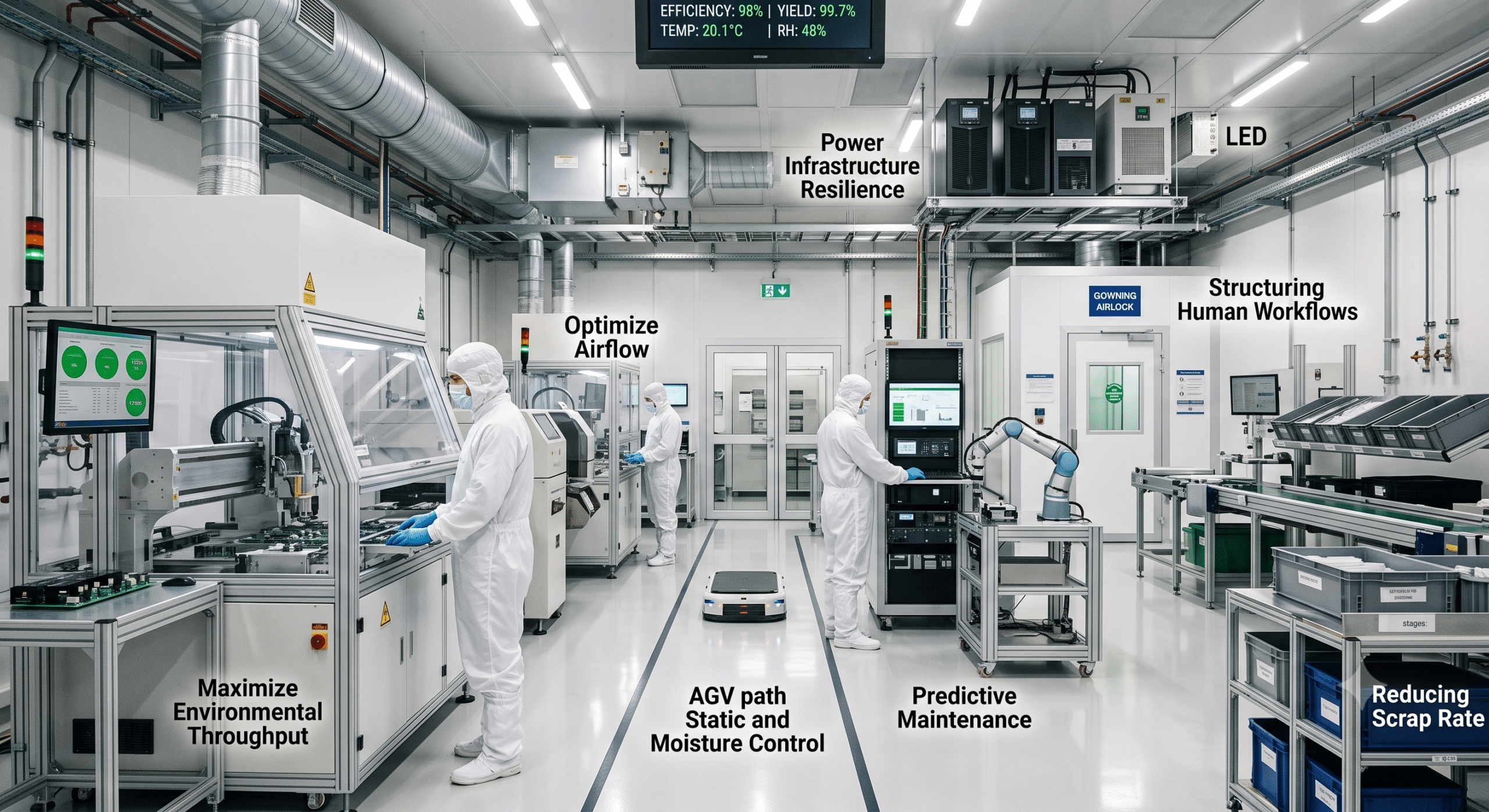
Walk into a traditional factory, and you can easily gauge its overall health in a few seconds by watching lines move and listening to machinery. But when you step into data-sensitive environments, the most destructive elements on your production floor are completely invisible. A single microscopic speck of airborne dust, a tiny shift in humidity, or a split-second power flicker can ruin a week of work. Managing operations within data-sensitive environments requires shifting your perspective from general maintenance to micro-environmental mastery.
Redefining the Infrastructure Envelope
Managing this kind of building requires moving far beyond basic maintenance checklists. As a facilities manager, you cannot view the building as a passive shell that merely keeps the rain off your gear. Instead, treat the entire physical infrastructure as an active tool. Every square foot of space must be intentionally engineered. This approach maximizes your daily production speed, eliminates frustrating process delays, and drives material waste down to zero.
+------------------------------------------------------------+
|             THE MODERN SENSITIVE FACILITY SHELL            |
|                                                            |
|  [Air Flow Control] -> [Static Shielding] -> [Clean Power] |
|           |                   |                  |         |
|           +-------------------+------------------+         |
|                               v                            |
|             Continuous, High-Speed Production              |
+------------------------------------------------------------+
When your facility operates in a data-sensitive context, environmental stability forms the foundation of your balance sheet. This applies directly to high-density server farms, semiconductor fabrication zones, and precision aerospace electronics lines. Infrastructure designed for data-sensitive environments must act as a reliable shield against unpredictable exterior variables.
If your cooling infrastructure falls behind on a hot summer afternoon, your primary processing gear will automatically slow down. It triggers this slowdown to prevent total thermal burnout. Similarly, if your static elimination systems drift out of calibration across different shifts, your product yield will drop without warning.
True operational excellence in data-sensitive environments means taking complete control of these invisible variables. Understand how the physical structure interacts with your core machinery. By doing so, you can build a resilient, high-output ecosystem. This setup protects your equipment and keeps your business ahead of the competition.
1. Keeping Production Moving at Top Speed
To maximize daily output, your machinery must run at peak design capacity all day long. In data-sensitive environments, heat stands out as the biggest bottleneck to achieving this performance.
High-density server racks and advanced electronic assembly tools generate a massive, concentrated thermal load when running at full speed. Traditional building air conditioners simply cannot handle these sudden, intense thermal spikes. When a standard system tries to cool a high-tech floor, it creates uneven air currents and localized hot spots.
Your equipment recognizes these hot spots instantly through internal safety sensors. The machinery automatically down-throttles its operating speed to protect its delicate circuits from melting or warping. Suddenly, your expensive production line runs at half-speed. This happens not because the machines are broken, but because the room cannot keep up with them.
Traditional Cooling:
[Hot Spots Form] ---> [Sensors Alert Machine] ---> [Machine Slows Down Automatically]

Advanced Containment:
[Targeted Cooling] ---> [Heat Swept Away Fast] ---> [Machine Runs at 100% Capacity]
To break through this barrier, change how air moves around your hot machinery. Do not simply blow cold air into the room and hope for the best. Instead, experienced teams working in data-sensitive environments install physical hot aisle and cold aisle containment systems.
This strategy uses clear solid barriers to isolate the hot exhaust air coming out of the back of the machines. The automated system routes this air directly into heavy-duty, closed-loop chilled water systems before it can mix with the rest of the room.
At the same time, a steady supply of precisely cooled air goes directly to the front intake vents of your gear. Keeping the incoming air temperature perfectly stable removes the environmental triggers that cause your machinery to slow down. Your equipment can run at its true maximum speed twenty-four hours a day. This transforms your facility into a highly predictable, high-output engine.
2. Cutting Down on Daily Delays
Shortening your production cycle requires looking closely at daily operations. You must ruthlessly eliminate every hidden roadblock that stalls the movement of materials or data. In data-sensitive environments, these costly delays rarely come from lazy workers or slow conveyor belts. Instead, system calibration lag, manual testing routines, and awkward physical access barriers usually cause them.
For example, your production team might have to manually verify air purity before starting a new batch. They might also need to check moisture levels or balance room pressure. While they perform these checks, your assembly line sits completely idle. Every minute spent staring at a handheld meter or waiting for a room to stabilize is a minute of lost production time. You can never recover that time.
Manual Approach:
[Shift Starts] -> [Manual Air Checks] -> [Adjust Valves] -> [Wait for Room] -> [Delayed Production]

Automated Approach:
[BMS Schedules Room] -> [System Prefiles Air Overnight] -> [Shift Starts] -> [Immediate Production]
To eliminate these structural delays, fully integrate your production schedules with an automated building management system. The building controls and the production lines must communicate constantly rather than treating them as two separate worlds.
Suppose your schedule shows that a highly sensitive assembly process begins in Room B at eight o’clock on Tuesday morning. The facility infrastructure should automatically take action hours in advance. The central building system will proactively adjust fan speeds, tune dehumidifiers, and stabilize room pressure overnight.
When your morning shift workers walk through the door, the environment already sits at its perfect baseline. Your team can skip setup delays entirely. They can transition seamlessly from one high-value batch run directly into the next, significantly compressing your overall cycle times.
3. Stopping Material Waste and Scrap
In a standard automotive plant or machine shop, material waste is easy to spot. You see twisted metal shavings on the floor, misaligned plastic molds in the corner, or sparks flying from a bad weld.
In data-sensitive environments, material waste remains quiet, invisible, and incredibly expensive. Scrap in these spaces looks like a pallet of microprocessors that fail their final programming test. It often takes the form of solid-state storage drives with corrupted sectors, or silicon wafers with microscopic structural cracks.
Environmental instability serves as the primary driver behind this high-value waste. If your facility allows even a minor fluctuation in electricity, air cleanliness, or static control, your product yield suffers immediate drops.
+--------------------------------------------------------+
|               THE SCRAP REDUCTION TRIAD                |
+--------------------------------------------------------+
| 1. Particle Contamination Control                      |
|    - Multi-stage HEPA filtration eliminates fine dust.  |
|                                                        |
| 2. Electrostatic Dissipation Architecture               |
|    - Grounded conductive floors bleed off static.      |
|                                                        |
| 3. Clean Power Conditioning                            |
|    - Double-conversion UPS filters electrical noise.   |
+--------------------------------------------------------+
To drive your scrap rate down to zero, build an unyielding defensive envelope around your production zone. Start by installing continuous, real-time laser particle counters at key points along your assembly line. These smart sensors track the exact number of microscopic airborne particles in the room every second.
If a filtration seal begins to fail, the system alerts your team immediately. It does the same if an exterior door stays open too long. This prompt alert allows you to pause production before drifting dust lands on sensitive components and ruins them.
Additionally, install dedicated power conditioning equipment. This specialized gear actively scrubs incoming utility electricity, clearing out minor surges or electrical noise before it reaches your tools. Removing these environmental surprises gives your machinery the perfectly stable foundation it needs. Your team can build products correctly on the very first pass.
4. Getting the Air Flowing the Right Way
The way air circulates through your clean workspace plays a massive role in dust control. It determines whether dust stays away from your critical components or settles directly on them. In a standard office building or basic warehouse, the ventilation system swirls air around in circles. This turbulent mixing action keeps human beings comfortable, but it proves disastrous for data-sensitive environments.
Swirling air currents pick up tiny particles of skin flakes, clothing lint, and mechanical grease. They keep these pollutants suspended in mid-air right where your delicate equipment stands exposed. To keep your environment truly pristine, replace this chaotic, swirling air pattern with a strict, top-to-bottom laminar airflow design.
Turbulent Airflow (Bad):     Laminar Airflow (Good):
   O    o   X   o               |   |   |   |   |
  / \  / \ / \ / \              v   v   v   v   v
  \ /  \ / \ / \ /              |   |   |   |   |
  (Dust Swirls Around)        (Dust Pushed Straight Down)
A proper laminar setup uses an entire ceiling packed with high-efficiency particulate air filters. This setup pushes a uniform, unbroken sheet of clean air straight down toward the floor. The downward air movement acts like an invisible broom, constantly sweeping the air column clean.
Any tiny piece of dust generated by a worker or a machine is instantly caught in this downward current. The systematic airflow pushes it away from the work surface. From there, the system forces the air straight out through specialized ventilation grilles built into the bottom of the walls or the floor tiles.
To make this system even more effective, maintain a strict positive pressure cascade between your rooms. Ensure that the cleanest rooms have higher air pressure than the surrounding hallways. This pressure difference means that whenever a worker opens an access door, clean air actively rushes out of the room. This positive outward breeze acts as a physical wall, preventing dirty hallway air from drifting into your sensitive production zones.
5. Fighting Static Shock and Moisture Shifts
Managing moisture levels in a data-sensitive facility is a demanding, high-stakes balancing act. If your relative humidity levels climb too high, you will quickly face condensation issues. In an electronic environment, even a tiny layer of airborne moisture causes rapid corrosion on raw copper traces. It can also lead to microscopic short circuits that ruin an entire batch of boards.
On the flip side, an overcorrection that lets the air become too dry creates an equally dangerous enemy. In an overly dry room, static electricity builds up fast. Every human movement or mechanical slide generates an immense electrostatic charge that builds up silently on surfaces.
Air Moisture Level:
[Too High] ---------> Causes Metal Corrosion and Micro-Shorts
[Perfect Range] ----> Safe Production Environment (No Rust, No Static)
[Too Low] ----------> Causes Massive Static Build-Up and Friction Shocks
When an unprotected worker reaches out to touch a metal component, that stored static electricity discharges instantly in a massive, high-voltage arc. While this spark might be too small for a human to feel, it acts like a lightning bolt to a microchip. It instantly melts internal circuits and creates a piece of costly, invisible scrap.
To win this fight, your facility must utilize commercial steam humidifiers and industrial desiccant dehumidifiers. These advanced systems can adjust the room’s moisture levels down to a single percentage point.
Beyond managing the air, turn the physical floor into an electrical shield. Tear up standard flooring and install specialized ESD-safe conductive floors. This high-tech material features millions of tiny conductive fibers physically bonded to a heavy copper grounding grid buried beneath the slab.
When workers walk across the room, the floor instantly pulls down any static charge their bodies generate. It routes this electricity through their shoes, into the floor, and safely into the earth. This setup prevents random static shocks from ever arcing into your sensitive products.
6. Building a Reliable Power System
Your facility can have the best air filtration and static protection in the world. However, if the electricity drops out for even a single millisecond, your entire operation will instantly grind to a halt. Sensitive computing systems, high-density server arrays, and advanced robotic arms have zero tolerance for dirty or interrupted electrical power.
A sudden voltage sag caused by a storm miles away can cause an automated tool to lose its place mid-job. This line glitch instantly ruins the expensive materials inside the machine. It also forces your team to spend hours resetting and recalibrating the equipment.
Utility Power (Messy Grid)
       v
[Double-Conversion UPS] ---> Battery Bank (Instant Backup Power)
       v
Clean, Steady Sine Wave AC
       v
[Sensitive Production Machinery]
To protect your equipment from the utility grid, build your electrical backbone around an online double-conversion uninterruptible power supply system. This system runs continuously rather than waiting for the power to fail before turning on. It takes the messy, unpredictable AC electricity from the power company and converts it completely into DC power. It uses this electrical current to keep a massive battery bank topped off, then inverts it back into a perfectly clean, rock-steady AC sine wave.
Your sensitive production machinery runs entirely on this purified, locally generated electricity. This constant filtering isolates your gear from any external grid problems.
To back this up over long periods, use heavy-duty diesel generators with rapid-starting motors and dual redundant fuel pumps. Your facilities team must run these generators under full operational loads on a strict monthly schedule. Regular testing ensures that if the main power grid goes down, the generators will start up immediately. They take over the full electrical load in less than ten seconds, keeping your facility running smoothly without missing a beat.
7. Fixing Equipment Before it Breaks
Waiting for a critical facility asset to break down before fixing it damages your production goals. This risky approach applies to chilled-water pumps, compressors, and main air-handling fans. In data-sensitive environments, a sudden equipment failure does not just mean a minor repair bill. It means your entire multi-million dollar production floor comes to an immediate stop.
To protect your production speed and keep your machines running, transition to a predictive maintenance model. This advanced strategy relies on smart sensor arrays.
[Vibration Monitors]  ---+
[Thermal Cameras]     ---|---> [Real-Time AI Dashboard] ---> [Fix Asset During Planned Break]
[Pressure Sensors]    ---+
Mount industrial IoT sensors directly onto your most critical pieces of infrastructure to listen to the health of your building in real time. Vibration monitors attached to heavy pump shafts spot tiny misalignments completely invisible to a human mechanic. Thermal imaging cameras trained on your main electrical switchgear watch for unexpected hot spots that point to a loose, dangerous connection. Pressure sensors installed across your massive air filter banks track dust levels, warning you when the airflow starts to drop.
This steady stream of live data allows your maintenance team to move away from guesswork. Instead of shutting down a line for an emergency repair on a busy afternoon, your dashboard will warn you weeks in advance. It alerts your crew that a bearing is starting to wear out.
This warning gives you plenty of time to order replacement parts. You can then schedule a quick, targeted maintenance window during a weekend or a planned shift break. Your facility stays reliably online during peak production hours, and your machinery never sits idle due to an unexpected building breakdown.
8. Designing Rooms to Guide Your Team
Human beings remain the single largest source of dust, dirt, and operational disruption on your floor. Every time a worker walks into a room, they shed thousands of tiny skin cells. They drop microscopic fibers from their clothing and track in invisible road dust on the bottoms of their shoes.
If your facility layout allows workers to stroll directly from a standard break room to the production floor, your air filters will quickly clog. Your material waste will skyrocket as a direct result. Managing human presence is always a core challenge when organizing data-sensitive environments. Managing this human risk means using the physical architecture of the building to actively shape and control how your team moves.
+------------------------------------------------------------------------+
|                      HUMAN CONTAINMENT PATHWAY                         |
+------------------------------------------------------------------------+
|  [Main Hallway] -> [Gowning Airlock] -> [Air Shower] -> [Clean Floor]  |
|                           ^                                            |
|                  (Put on Sticky Suits)                                 |
+------------------------------------------------------------------------+
An expertly designed sensitive facility utilizes a multi-stage gowning airlock system that acts as a physical security buffer. Workers pass through a series of distinct rooms. They step on sticky mats to clean their shoes and put on specialized low-lint protective suits. Finally, they step into an automated air shower that uses high-velocity jets of clean air to blast away loose dirt before the inner cleanroom doors unlock.
Furthermore, design your building layout so that major mechanical access panels, electrical breakers, and valve clusters sit in exterior service corridors. Keep these maintenance zones completely separate from the production floor.
This smart layout choice allows your facilities technicians to perform routine maintenance without ever entering the clean zone. They can swap out air filters and fix plumbing lines from the hallway. Keeping maintenance work separate from production preserves the absolute purity of your environment. It also safeguards your products from accidental damage.
Frequently Asked Questions
How does bad power quality cause material waste?
Unstable power from the utility company often has small voltage drops and surges. While you might not notice them at home, these quick changes can overheat sensitive power supplies and confuse automated machinery. This causes tools to glitch mid-job, ruining the materials they are working on and forcing you to throw them away.
Why do clean rooms need higher air pressure?
Higher air pressure inside a clean room acts like an invisible shield. Because the air inside is pushing out harder than the air in the hallways, it creates a constant outward breeze whenever a door is opened. This stops ambient dust, dirt, and outside moisture from drifting into your clean workspace.
What makes predictive maintenance different from basic preventive maintenance?
Preventive maintenance uses a strict calendar schedule, like changing an air filter every three months whether it needs it or not. Predictive maintenance uses real-time data from smart sensors to watch for actual wear and tear. This lets you fix a machine exactly when it starts to struggle, saving time and preventing unexpected breakdowns.
What is the purpose of hot aisle containment?
Hot aisle containment uses physical barriers to isolate the hot exhaust air produced by high-performance servers or electronics from the cool air coming into the room. By keeping the hot and cold air separate, the cooling system works much more efficiently, eliminating hot spots that would otherwise cause machinery to overheat and slow down.
How do anti-static floors protect delicate electronics?
Anti-static floors are made with conductive materials connected to a grounding wire. This setup safely pulls static electricity away from workers as they walk across the room, discharging it into the ground. Without this floor, static would build up on workers and spark when they touch electronic components, frying the internal circuits.
What defines the unique nature of data-sensitive environments?
These spaces are distinct because physical contamination and power issues degrade electronic outputs directly. Unlike traditional assembly lines, minor atmospheric shifts cause catastrophic yield failures.
References for Further Reading
-
To learn more about how to organize, track, and protect valuable assets in sensitive environments, read the guide on CREATEQ Sensitive Data Management.
-
To see how smart sensors and data analytics keep modern facility equipment running without unexpected breaks, check out Intellis Data-Driven Facilities Management.
-
For a deeper look at keeping critical systems online, managing airflow, and protecting hardware uptime, look through the Matterport Data Center Facility Management Guide.