
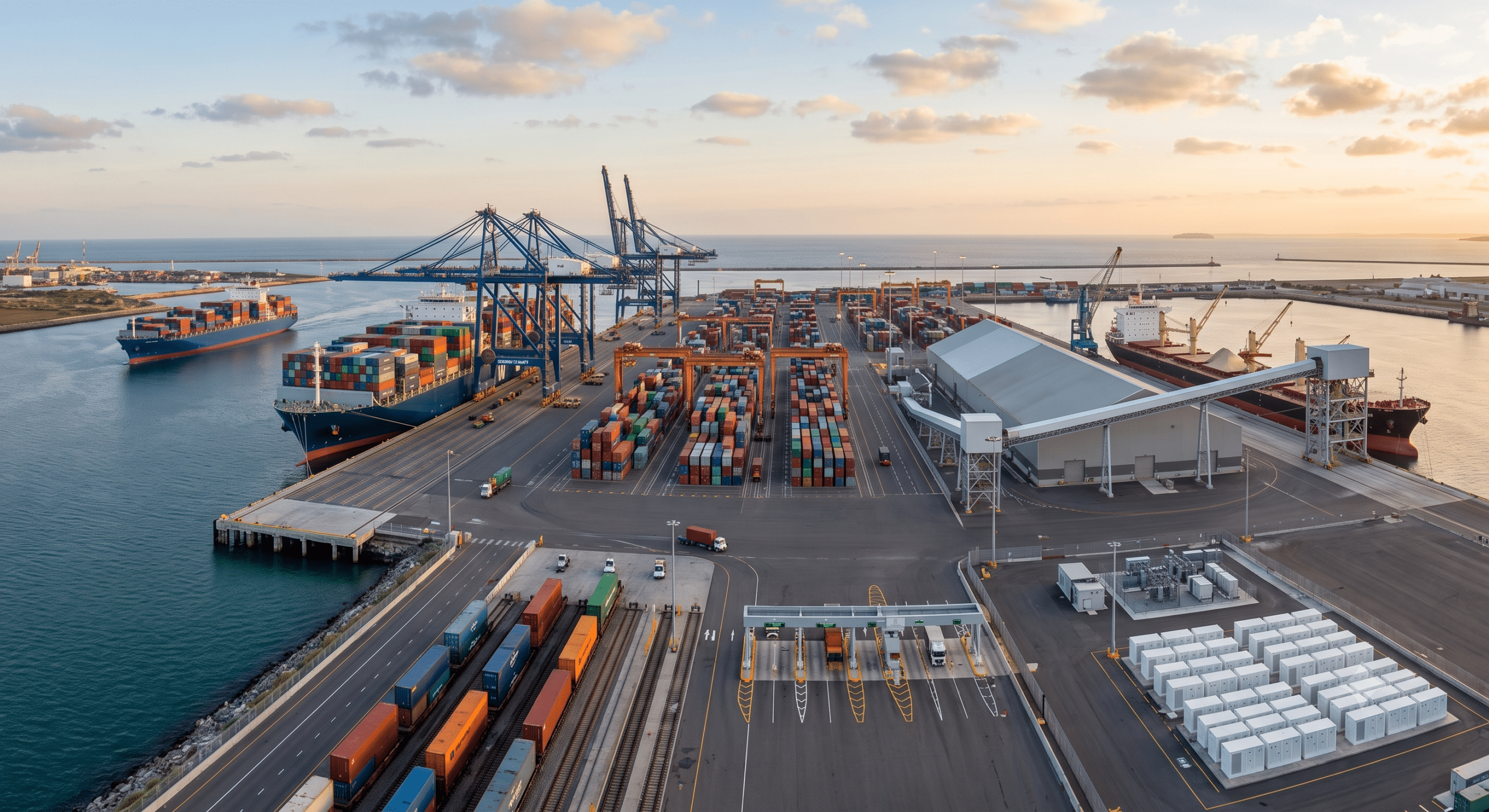
Running a busy shipping terminal is a constant battle against the elements. Unlike a standard indoor warehouse where everything is climate-controlled and predictable, marine and port facilities operate right out in the open. For instance, you are dealing with heavy ocean air, shifting tides, unpredictable weather, and massive cargo loads arriving around the clock.
To keep everything running smoothly, a manager at modern marine and port facilities must focus on three simple goals. Specifically, these include keeping cargo moving out fast, cutting down waiting times, and protecting expensive equipment from breaking down early.
Consequently, when you focus on these three goals, you can spot the hidden bottlenecks that slow down your yard and cost you money. Therefore, let us take a look at fourteen practical, real-world strategies that can help protect your port infrastructure, speed up truck and ship turn times, and make your entire operation much more efficient.
The Three Big Goals of Port Management
To make a port successful, you have to look past high-level supply chain jargon and focus instead on what is actually happening on the ground every day.
1. Getting More Cargo Through the Gate
At any of the world’s busy marine and port facilities, your primary job is to move as much cargo as possible between ships and land transportation in the shortest time. Therefore, to boost this volume, you need to clear out bottlenecks, keep your shipping lanes deep, and ensure your massive cranes are always ready to work.
2. Speeding Up Turn Around Times
This metric tracks how long it takes to complete a specific job from start to finish. For example, it includes the seconds it takes a crane to lift a single container, the hours a ship spends tied up at the dock, or the minutes a truck spends picking up a load. Ultimately, shorter turn times mean happier customers and higher profits.
3. Cutting Down on Equipment Breakdowns and Waste
In a marine environment, waste is not just about trash. Instead, it refers to structural damage from rust, broken crane cables, or spilled materials along a conveyor line. Because of this, keeping your equipment running longer saves your budget and prevents unexpected shutdowns that bring operations to a halt.
14 Ways to Build a Faster, Smarter Port
Naturally, making a port run better requires making smart upgrades to your physical facility. These fourteen steps focus on strengthening your equipment, speeding up daily workflows, and protecting your most valuable assets.
1. Guarding Your Steel Cranes Against Salty Air
Salty ocean air and constant humidity are a terrible combination for steel. Indeed, if you let rust take hold of your ship-to-shore cranes or building frames, the steel weakens quickly. As a result, this creates a serious safety risk and leads to expensive repairs across marine and port facilities.
To prevent this, maintenance teams should use high-grade protective coatings. For instance, you can start with zinc-rich primers followed by thick epoxy layers and tough urethane topcoats. Furthermore, taking the time to paint and seal your cranes properly keeps them in great shape for years, thereby preventing the unexpected shutdowns that stall operations.
2. Watching Crane Stress with Automated Sensors
Giant container cranes face incredible physical stress every time they lift heavy cargo or handle high winds. Over time, this constant twisting and pulling can cause tiny, hidden cracks in the metal joints. However, you cannot see these microscopic fractures with the naked eye.
By installing small electronic sensors and strain gauges along the most stressed parts of the crane frame, you can track its structural health in real time. Consequently, these smart sensors warn your maintenance team about tiny structural shifts long before a part actually fails. Therefore, you can fix the issue safely during normal downtime.
3. Using Lasers and Vacuums for Safer Mooring
Bringing a massive container ship safely up to a concrete dock is a delicate process. After all, a hard bump can crush expensive rubber fenders and damage the ship’s hull. Furthermore, traditional nylon mooring lines can stretch and allow the ship to drift, which subsequently slows down the crane operators trying to grab containers.
Fortunately, upgrading to laser-guided docking systems and automated vacuum mooring units solves both problems. First, lasers tell the ship’s pilot exactly how fast they are approaching the dock so they can land softly. Second, heavy-duty vacuum pads hold the ship perfectly still against the berth without using traditional ropes, thereby cutting down your setup times significantly.
4. Catching Crane Motor Issues Before They Break
If a main hoist motor or a heavy gearbox on a primary crane burns out unexpectedly, your entire dock grinds to a halt. As a result, ships are left stranded and trucks are left waiting. Meanwhile, relying on basic calendar schedules for maintenance means you might miss early warning signs of internal engine wear.
Transitioning to a modern predictive maintenance setup takes the guesswork out of repairs. For example, by using oil-quality sensors in gearboxes and heat cameras on electrical panels, you can see exactly how hard the machinery is working. Consequently, catching a worn bearing or an overheating wire early lets you schedule quick repairs when the dock is quiet, which ultimately keeps your operation moving.
5. Keeping Loose Material in Place with Enclosed Conveyors
Moving loose materials like grain, coal, or wood chips on standard roller conveyors often results in a lot of spilled product, dust, and friction. Therefore, this spilled material is pure waste, creates a messy environment, and requires constant cleanup crews.
To solve this, upgrading to fully enclosed, air-supported conveyor belts keeps your cargo exactly where it belongs. Instead of riding on noisy mechanical rollers, the belt glides smoothly on a thin cushion of air inside a sealed tube. Consequently, this design eliminates spillage, cuts down on friction, and keeps your bulk cargo clean and dry from origin to destination.
6. Organizing Your Container Yard with Smart Software
A disorganized container yard slows everything down. Specifically, stacking containers randomly forces your yard cranes to play a frustrating game of musical chairs just to reach a box at the bottom of a pile. Obviously, this extra handling delays truck drivers and lengthens ship turn times.
In contrast, connecting your yard cranes to intelligent tracking software keeps the entire layout organized. The software looks at incoming cargo lists, truck arrival times, and ship schedules to find the perfect home for every container. By doing this, putting high-priority boxes where they are easy to reach minimizes double-handling and gets trucks back on the road quickly.
7. Measuring Water Depth to Avoid Shipping Delays
As commercial cargo ships get larger, they require deeper water to travel safely. However, natural sand and mud constantly wash into port channels, making the water shallower. Because of this, heavy ships are often forced to wait out in the ocean for high tide.
Using small automated survey boats equipped with sonar sensors lets you map the seafloor continuously. Therefore, this real-time map shows your engineering team exactly where sand is building up. As a result, you can send dredging equipment to clear it out immediately, which ensures big ships can come and go whenever they need to.
8. Speeding Up Truck Gates with Automatic Cameras
The main entrance gate is a common bottleneck at many older ports. For instance, making truck drivers stop to check physical paperwork, type in codes, or wait for guards to inspect container numbers manually creates massive traffic jams. Consequently, these lines quickly backup onto the highway.
However, installing automated gate systems with high-speed cameras and digital scanners clears those lines instantly. As a truck rolls through the gate, the cameras scan the license plate, read the container numbers, and verify the driver’s security badge in seconds. Thus, this digital check allows trucks to drive through without stopping, getting cargo into the yard much faster.
9. Providing Shore Power to Reduce Dockside Engine Wear
When a massive ship sits at a dock for days, it usually keeps its diesel backup engines running to power its lights and refrigeration systems. Unfortunately, this uses a lot of fuel and subjects the ship’s machinery to continuous wear.
To address this, installing high-voltage shore power connections, often called cold ironing, lets ships plug directly into the local electrical grid on land. Naturally, setting this up requires weather-proof outlets and automated heavy cables that can handle high electrical loads. Ultimately, giving ships clean land-based power allows them to turn off their diesel engines, thereby saving fuel and reducing wear and tear.
10. Strengthening Your Pavement to Handle Heavy Loads
The massive rubber-tired vehicles that carry containers around your yard put immense pressure on the ground. As a result, standard asphalt and thin concrete can quickly crack and develop deep potholes. This structural damage shakes up your equipment and forces drivers to slow down to a crawl.
To fix this, you should rebuild your highest-traffic lanes using high-strength polymer-modified asphalt or thick, fiber-reinforced concrete slabs. Because a tough, durable ground surface handles heavy wheel weights easily, your yard vehicles get a smooth road to drive on. Consequently, they can move safely at a steady, efficient speed.
11. Controlling the Air inside Bulk Storage Barns
Stored bulk goods like grains, fertilizers, and minerals are highly sensitive to moisture and heat. For example, if moisture gets inside a storage silo, it can ruin the product completely. On the other hand, excessive heat buildup in a coal pile can actually cause it to catch fire on its own.
Fortunately, equipping your storage barns and silos with automated temperature probes and humidity sensors keeps your cargo safe. If the air inside a building gets too damp or too hot, the system automatically turns on fans and ventilation systems to correct it. Therefore, you protect your inventory and prevent costly product spoilage.
12. Installing Bright Adaptive LED Lights for Night Work
To run a safe and profitable port, your teams need to work right through the night with clear visibility across the entire yard and along the docks. However, old-style high-pressure yellow lights use massive amounts of electricity and burn out frequently. Because of this, maintenance crews must block off sections of the yard for bulb changes.
In response, upgrading to smart LED high-mast lights provides bright, clear light across your entire facility. These modern fixtures can be programmed to dim down when a section of the yard is empty and brighten up automatically when a ship arrives. Consequently, this saves money on utility bills while keeping your workspace completely safe.
13. Using Low-Voltage Currents to Stop Underwater Rust
The steel sheets and concrete pilings that hold up your docks are constantly attacked by saltwater. Indeed, this harsh underwater environment can rust out thick steel supports surprisingly fast, thereby threatening the structural safety of your berths.
To counteract this, installing an active cathodic protection system stops underwater rust completely. By running a tiny, harmless, low-voltage electrical current through underwater nodes attached to your steel pilings, you alter the chemical reaction that causes rust. As a result, this electrical shield stops underwater decay, saving you from costly underwater structural repairs.
14. Balancing Your Power Grid with Large Batteries
Operating modern marine and port facilities with electric cranes, automated yard vehicles, and shore-power plugins requires massive spikes of electricity. For instance, when multiple heavy cranes lift large loads at the exact same moment, it creates a huge surge in power demand. Consequently, this strains the local grid and triggers expensive peak-power fees from your electric company.
Fortunately, building a local microgrid with a large bank of industrial batteries solves this problem. The batteries store power when the yard is quiet and release that extra energy during busy peak hours. Therefore, this battery backup stabilizes your power supply, protects your equipment from sudden voltage drops, and lowers your monthly electric bills.
Technical Performance Matrix
This simple chart shows exactly how these facility upgrades directly improve your everyday operational goals across global marine and port facilities.
| Facility Management Intervention | Primary Throughput Driver | Cycle Time Reduction Mechanism | Scrap and Material Waste Mitigation Method |
| Protective Coatings | Keeps cranes ready to work by stopping unexpected rust repairs. | Eliminates sudden stops for emergency structural checks. | Stops steel from weakening, extending the lifespan of your cranes. |
| Automated Mooring | Allows ships to tie up quickly so loading can start sooner. | Eliminates manual ropes, cutting down docking time. | Protects concrete docks and ship hulls from hard impacts. |
| Air-Supported Conveyors | Enables continuous, high-speed movement of bulk goods. | Eliminates belt jams and tedious cleanup delays. | Prevents product from blowing away or spilling on the ground. |
| Smart Yard Slotting | Fits more cargo containers into every acre of yard space. | Puts boxes in smart spots so cranes do fewer moves. | Reduces accidental damage from constantly shifting containers. |
| Cathodic Protection | Keeps deep-water docks safe and open for business. | Prevents closures for emergency underwater welding. | Stops saltwater rust from ruining underwater steel supports. |
Frequently Asked Questions
How does rust on a crane affect daily port volume?
When rust weakens the steel on a giant crane, you must shut it down immediately for safety checks and structural welding. Consequently, taking a primary crane out of service creates a major bottleneck on the dock. Because the remaining cranes have to work twice as hard, ship loading slows down, which ultimately reduces the total amount of cargo handled by marine and port facilities.
Why do frequent equipment breakdowns hurt a terminal’s budget?
When parts like crane cables, heavy bearings, or yard pavement wear out too quickly, you have to spend a lot of money on replacement parts and emergency labor. Furthermore, the hours your equipment spends broken down means cargo stops moving entirely. As a result, this creates logistical backlogs and delays shipping schedules, costing you money every minute across marine and port facilities.
How do automated gate systems speed up truck turn times?
Automated gates use smart cameras to read license plates and scan container numbers while the truck is rolling through the entry lane. Therefore, this digital process replaces slow manual checks. As a result, it cuts gate check-in times from several minutes down to just a few seconds, which successfully keeps truck lines short and moving.