
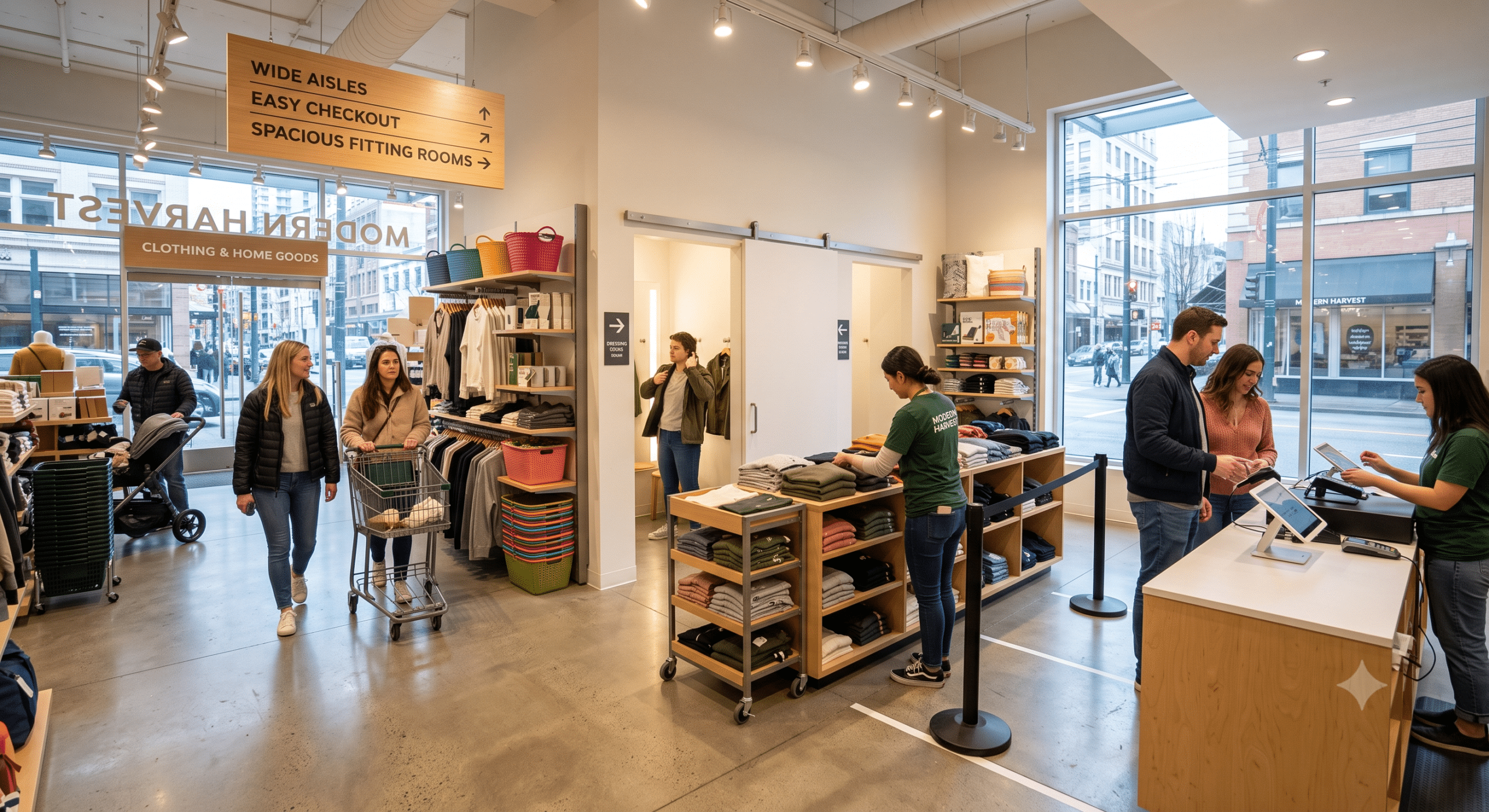
If you walk into busy retail storefronts, you probably look at the products, the bright signs, and the displays. But from my seat as a facilities manager, I see the space as a moving sidewalk. Customers, store employees, and products are all moving parts in a busy system. When a dressing room door gets stuck, when an aisle narrows too much for two people to pass, or when a checkout register freezes up, those retail storefronts slow down across your entire fleet.
In my line of work, we borrow a few basic ideas from manufacturing plants because physical retail storefronts share the exact same goals. We always tweak our spaces to do three things: get more people through the store comfortably (throughput), speed up the time it takes to find an item and check out (cycle time), and stop products from getting damaged or abandoned on shelves (scrap rate).
Running retail storefronts means balancing these efficiencies while keeping everything looking clean and welcoming. If your building’s infrastructure lets you down, customers will leave. Let’s look at how smart store design and quick, proactive maintenance keep your retail storefronts running smoothly.
1. Viewing Your Store Floor as a Moving Sidewalk
To get the most out of your retail storefronts, you have to look at the space differently. A storefront isn’t just a box to hold clothes or electronics; it functions as an active engine. Throughput means the number of customers who make a purchase every hour. Cycle time measures how long a person stays in your store from the moment they walk in until they leave with a receipt. Scrap rate tracks abandoned shopping carts, broken items, or wasted employee hours spent fixing avoidable mistakes inside busy retail storefronts.
When a store suffers from poor layouts, bad lighting, or broken air conditioning, things slow down fast. Shoppers crowd around the few comfortable spots, blocking the pathways for everyone else. If people get confused about where to go, their cycle time goes up because they spend too much time wandering around looking for help. When the checkout area feels cramped or has bad electrical wiring, long lines form. Customers get tired of waiting, drop their items on random shelves, and walk out. Every maintenance choice you make directly changes these three numbers across your retail storefronts.
2. Opening Up Wide Aisles to Keep People Moving
The physical layout of your sales floor decides how fast people can shop. In a factory, engineers place machines in a straight line so materials move quickly. In retail storefronts, we must arrange tables, shelves, and service desks so customers can walk through the space without thinking about it. Main paths need to stay completely clear so you don’t experience traffic jams on busy weekends.
Think about your main aisles. When you place product tables too close to support pillars or walls, you create tight squeeze points. This immediately hurts your store’s capacity. If two people with shopping carts cannot pass each other without stopping, you need to change the layout. By keeping main paths wide and putting help desks or return kiosks in obvious spots, we keep the traffic moving. This steady flow lets your retail storefronts handle more shoppers per hour without feeling packed.
3. Designing a Better Checkout Line to Cut Down Wait Times
The register area tests your store’s speed. If a customer hits a wall here, their entire shopping trip feels long, and you end up handling fewer transactions overall. Fixing this area requires focusing on three things: reliable power, neat data wires, and comfortable counter setups.
[Store Entrance] ---> [Wide, Clear Aisles] ---> [Comfortable Cash Wrap] ---> [Quick Exit]
       |                      |                         |                      |
  (Trip Begins)        (Easy Movement)           (No Frozen Screens)     (No Leftover Carts)
From a building standpoint, every single register needs a rock-solid foundation. We use dedicated electrical circuits so that registers or card readers do not reboot when other equipment turns on. Data cables must run cleanly through floor tracks or ceiling poles so the store internet never drops out.
On top of that, the counter height should make it easy for employees and shoppers to hand over items. If a cashier has to twist their back or stretch too far to scan a barcode, those lost seconds add up over hundreds of customers a day. A comfortable, well-powered checkout station shaves seconds off every transaction, clears lines fast, and keeps sales moving inside all your retail storefronts.
4. Keeping Air and Lighting Right to Protect Your Inventory
Lost products in retail mean broken items, stained clothes, or smashed boxes that you can no longer sell. While security guards watch out for theft, a facilities manager stops product loss by keeping the indoor climate stable. Delicate items can easily ruin if the air inside your retail storefronts changes too much.
Broken or old air conditioners cause humidity to rise, which warps cardboard boxes and spoils beauty products. Leaky roofs or drafty windows let water inside, which can destroy a whole shelf of inventory overnight. Bad light bulbs cause trouble too. If your store uses old, hot halogen bulbs right above clothing or cosmetic displays, the heat and light will fade fabrics and ruin liquids. Upgrading to cool LED lights and using commercial dehumidifiers keeps products safe on the shelves, bringing your inventory losses down to zero.
5. Fixing Equipment Before It Breaks to Avoid Downtime
Waiting for a machine to break before you fix it is a recipe for trouble. Waiting until the last minute causes unexpected breakdowns that stop your store in its tracks. If the automatic front doors break on a busy holiday weekend, your customer flow drops, lines get backed up as people struggle with heavy manual doors, and your retail storefronts look unprofessional.
                    [Smart Maintenance Check]
                                |
         +----------------------+----------------------+
         |                                             |
         v                                             v
[Check AC Filters Regularly]                  [Monitor Fan Motor Vibrations]
         |                                             |
         v                                             v
[Clean Airflow / No Overheating]              [No Sudden Summer Breakdowns]
         |                                             |
         +----------------------+----------------------+
                                |
                                v
                    [Comfortable Store Temperature]
                                |
                                v
                    [Doors Stay Open for Business]
To stop this from happening, our maintenance plan relies on smart, early tracking. We place small sensors on our rooftop AC units and watch the power usage on our main electrical panels. By looking at this data, we can spot a wearing part weeks before the machine actually stops working. Fixing a noisy fan motor or a weak electrical switch at six o’clock on a quiet Tuesday morning means your customers always walk into bright, comfortable, and fully working retail storefronts.
6. Using Climate and Sound to Create a Relaxing Space
The temperature and sound of your store change how people shop. Human beings react quickly when they feel uncomfortable. If a store feels freezing cold, drafty, or stuffy and hot, shoppers will naturally speed up just to leave the building. While this makes their trip shorter, they buy far less because they didn’t take time to look around.
Good AC systems need to balance the temperature across the whole building. Large front windows let in a ton of sun and heat, while the back storage rooms stay cold and dark. By using smart air systems, we can keep the temperature even across every single aisle.
Sound matters just as much. If your ceiling vents whistle or the rooftop units rattle, it stresses shoppers out. Putting insulation around air ducts and rubber pads under heavy rooftop equipment keeps the store quiet. A peaceful environment encourages customers to stay longer, browse more, and helps your team work without a headache inside busy retail storefronts.
7. Organizing the Backroom for Fast Shelf Restocking
A retail store cannot sell products quickly if the back stockroom looks like a mess. The stockroom serves as the engine room for the sales floor. When an item sells out out front, employees need to grab a replacement from the back in just a couple of minutes. If you have a cramped, dark, or disorganized backroom, restocking takes twice as long.
[Delivery Truck Arrives]
         |
         v
[Smooth Dock Ramp Engaged]   ---> (No Strained Backs / No Dropped Boxes)
         |
         v
[Wide, Clear Back Hallway]   ---> (Fast Moving / No Tight Squeezes)
         |
         v
[Bright LED-Lit Storage Racks] ---> (Employees Find Items Instantly)
         |
         v
[Products Put on Sales Floor]  ---> (Keeps Shelves Full for Customers)
From a manager’s point of view, the backroom needs a simple, clean setup. We install tall, sturdy storage racks that use vertical wall space, leaving the floor paths wide open. The lights back there should match the brightness of the sales floor so employees can read labels and scan barcodes instantly without making mistakes. Also, loading dock doors must work perfectly. A sticky garage door slows down the morning delivery truck, which delays stocking the shelves and leaves customers looking at empty displays inside your retail storefronts.
8. Putting Lights in the Right Spots to Guide Shoppers
Lighting is a great tool for guiding people through a store without using ugly signs. Human eyes naturally look toward brighter areas. By setting up a clear contrast between bright and soft lights, you can lead customers down specific paths, preventing crowds and making shopping a breeze.
General overhead lights should feel comfortable, but you want brighter spotlighting on your best products and main display walls. This contrast draws shoppers into the deep corners of the store, utilizing all your available space and keeping the front entrance from getting clogged up.
We also use automatic sensors near the front windows. These sensors measure the daylight coming inside and dim the nearby indoor lights when the sun shines brightly. This saves money on your electric bill while keeping your retail storefronts looking evenly lit from the front glass all the way back to the dressing rooms.
9. Setting Up Great Dressing Rooms to Help Close the Sale
The fitting room is where shoppers make their final decisions. A customer who takes clothes into a dressing room is highly likely to buy something, making this area a huge driver for your sales. Yet, from a maintenance perspective, store managers often ignore dressing rooms, leading to messy piles of clothes and walked-away sales.
To keep this area working well, you must build the stalls with tough, easy-to-clean materials that handle constant use. Heavy-duty door hinges and smooth latches stop doors from sagging or jamming, which would take a dressing room out of service.
The mirrors inside need smart lighting that gets rid of ugly overhead shadows. Using soft light strips on both sides of the mirror works best. If a customer thinks the lighting looks bad, they will leave the clothes behind and walk out. Providing a clean, bright, and working private space directly helps your retail storefronts close the deal.
10. Upgrading Your Front Doors to Welcome More Shoppers
Your front entrance is the first thing people see, and it serves as the main gateway for your entire store. If the entrance presents navigational challenges, it ruins your whole store flow before the customer even grabs a basket. This area needs to handle heavy foot traffic while keeping outside weather from ruining the indoor climate.
Busy retail storefronts should use automatic sliding doors instead of doors that swing open. Sliding doors let multiple groups of people walk in and out at the same time without bumping into each other, which speeds up entry times.
You also want to install heavy-duty floor grates or long rugs right inside the door to trap mud, rain, and dirt from shoes. This simple fix keeps your main sales floor clean and stops it from getting slippery. If a polished floor gets slick on a rainy day, shoppers walk slowly and nervously, ruining the easy flow of your retail storefronts.
11. Connecting Multiple Stores to One Central Control System
Managing one store is all about watching the daily details, but managing five, ten, or twenty retail storefronts requires a system that scales. You cannot manually check every single thermostat or light switch across different towns and cities. To keep things running smoothly everywhere and keep repair costs low, you need a unified Building Automation System.
This secure, cloud-based platform connects all your different store locations into one simple computer dashboard. A centralized system lets you set standard store hours, update lighting schedules instantly, and find equipment issues across all locations at the exact same time.
If a store three towns over starts using too much electricity or shows a drop in AC airflow, your main team gets an email alert. We can often diagnose and fix the issue remotely, or send out a local repairman before the store staff even realizes something is wrong. This data-driven setup keeps every store in your network running perfectly, protecting your business and keeping customers happy.
Tracking Performance: The Store Maintenance Chart
To keep these eleven rules working every day, our teams use a simple chart to see how building maintenance connects directly to our business goals:
| Part of the Store | What We Measure | How It Helps Customer Flow | How It Saves Time | How It Cuts Down Waste |
| Aisle Layouts | Walking Speed in Aisles | Stops crowd logjams; lets more people shop. | Helps people find what they need faster. | Stops products from getting knocked off shelves. |
| Register Power | Register Computer Uptime % | Lets the store handle more sales per hour. | Eliminates long lines from frozen card readers. | Stops shoppers from leaving baskets behind. |
| AC & Humidity | Indoor Air Humidity Level | Keeps people comfortable so they stay longer. | Keeps traffic moving evenly through every zone. | Stops boxes from warping and makeup from spoiling. |
| Early Repairs | Time Between Breakdowns | Prevents unexpected store closures. | Ensures front doors open smoothly every time. | Cuts down on expensive emergency repair fees. |
| Backroom Setup | Restocking Speed | Keeps sales shelves full of products. | Lets employees find items in just a few minutes. | Stops stock from getting lost or buried in the back. |
Frequently Asked Questions
How does changing to LED lights actually help get more customers through retail storefronts?
LED lights do a lot more than just save money on your power bill. They let you create bright spots that naturally pull people toward your best items and back walls, which spreads crowds out evenly so the front of the store doesn’t get jammed. Also, modern LEDs do not get hot like old bulbs. This keeps the sales floor cooler, takes a load off your AC units, and stops product packaging or clothes from fading under hot display lights.
What is the fastest way to fix long checkout lines through store maintenance?
The best way is to run separate, clean electrical lines and neat data cables straight to your cash registers. When registers share power lines with heavy vacuums or breakroom microwaves, they experience electrical blips that can freeze up payment screens or slow down card processing. Giving your registers their own clean power lines keeps the hardware running fast, clears lines out quickly, and cuts wait times.
Why should a store manager look at retail storefronts like a manufacturing plant?
Looking at your store through the lens of traffic flow, customer wait times, and product waste shifts your focus from basic looks to real efficiency. It forces you to realize that every table, door, wall layout, and AC motor is either helping you make a sale or getting in the way. By treating your store like a smooth moving sidewalk, you remove small daily hassles for your staff and shoppers, which automatically boosts your sales.
How do good front door mats stop products from becoming waste?
A great front mat system serves as your main shield against bad weather. It cleans water, mud, and rough dirt off shoes the second people step inside. Without these mats, that wet mess gets tracked onto your clean floors, creating dangerous slip hazards and making the store look dirty. Dust also gets kicked up into the air and settles onto your inventory. Stopping dirt at the front door keeps your products clean and salable, saving you money.