
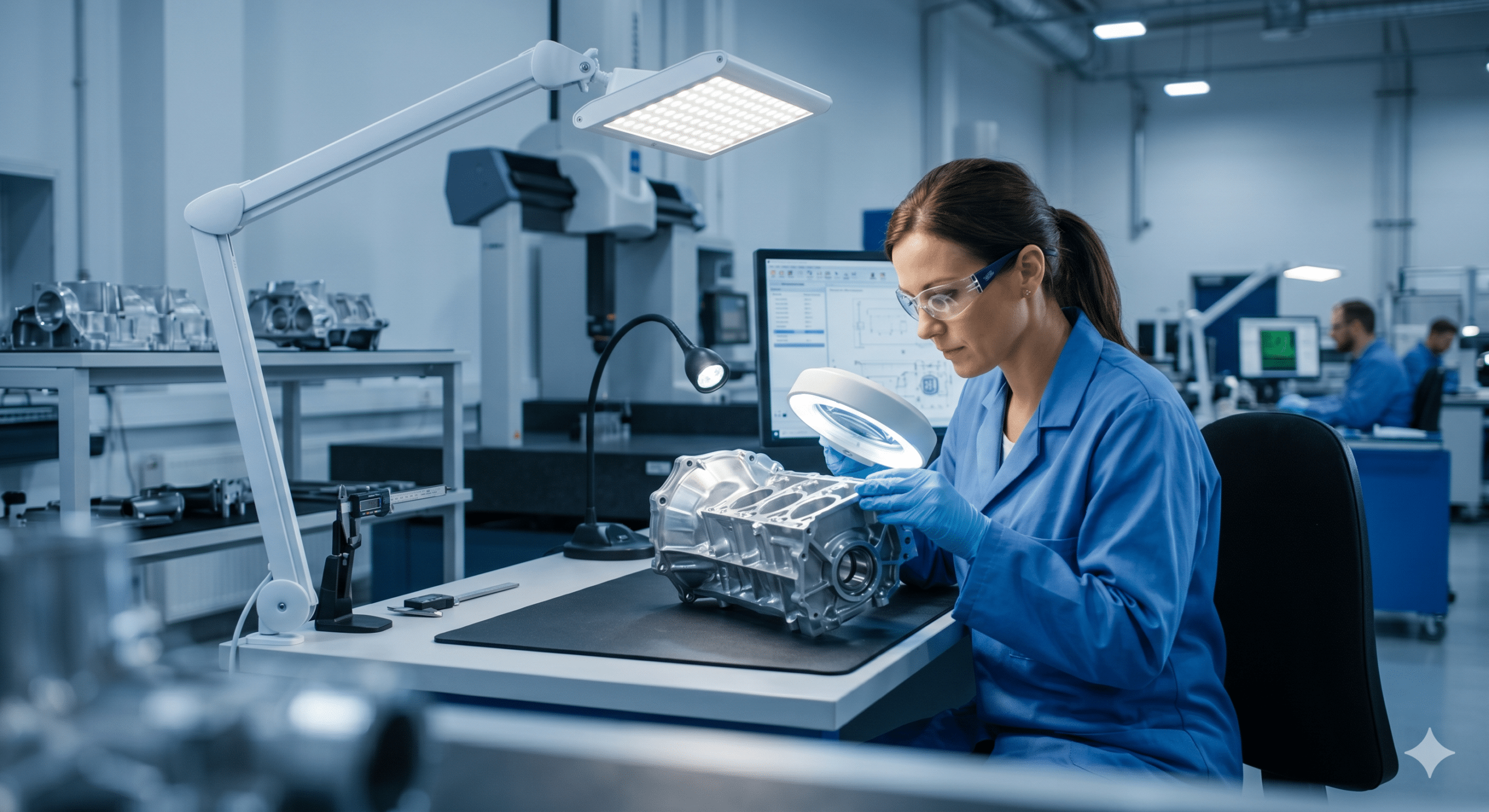
Walk into any manufacturing plant, quality control laboratory, automotive assembly facility, electronics production line, pharmaceutical processing area, or food packaging center, and you will quickly notice one common factor behind every successful inspection process: visibility.
No matter how advanced the equipment may be, how experienced the inspectors are, or how sophisticated the quality management system becomes, every inspection ultimately depends on one basic requirement. The person performing the inspection must be able to see clearly.
This is why lighting for inspection-heavy environments is far more important than many organizations realize. In industrial facilities, lighting is often viewed as a utility that simply allows employees to work. However, from an industrial engineering perspective, lighting should be considered a critical productivity tool, a quality assurance asset, and a key component of workplace safety.
Over the years, I have seen companies invest hundreds of thousands of dollars in automation, robotics, production upgrades, and employee training while overlooking one of the simplest opportunities for improvement. Poor lighting can undermine quality control efforts, reduce productivity, increase inspection errors, contribute to worker fatigue, and ultimately impact customer satisfaction.
On the other hand, a properly designed lighting system can dramatically improve inspection accuracy, reduce defects, enhance worker comfort, and support operational excellence. When workers can clearly identify imperfections, verify measurements, and distinguish subtle differences in materials or colors, the entire production process becomes more reliable.
In today’s competitive manufacturing and industrial landscape, organizations cannot afford to leave inspection performance to chance. Effective lighting design is no longer a luxury. It is a necessity.
Why Visibility Is the Foundation of Quality Control
Every inspection process begins with observation.
Whether an employee is examining a machined metal component, inspecting a printed circuit board, evaluating a pharmaceutical package, or checking food products for contamination, the ability to detect issues depends heavily on what can be seen.
Many quality defects are surprisingly small. A tiny crack, a slight discoloration, a missing component, an uneven weld, or a subtle scratch can determine whether a product passes inspection or is rejected.
When visibility is compromised, inspectors must work harder to identify these issues. They may need to reposition products repeatedly, lean closer to their workstations, squint to see details, or spend extra time verifying observations. While these actions may seem insignificant individually, they create inefficiencies that accumulate throughout the workday.
Poor visibility also increases the risk of human error. Even highly skilled inspectors can miss defects when lighting conditions are inadequate. As a result, defective products may move further down the production line, leading to rework, customer complaints, warranty claims, or regulatory issues.
This is why lighting should be viewed as an integral part of the inspection process rather than an afterthought. Good visibility allows workers to focus on identifying problems rather than struggling to see them.
Understanding the Unique Demands of Inspection-Heavy Environments
Not all workplaces require the same lighting conditions.
A warehouse used primarily for storage and material handling can operate effectively with moderate lighting levels. In contrast, an inspection station responsible for evaluating fine product details requires significantly different visual conditions.
Inspection-heavy environments place greater demands on the human eye because workers must consistently identify small variations and subtle imperfections.
These environments commonly include:
Manufacturing quality control stations where finished products are evaluated before shipment.
Electronics assembly lines where inspectors verify component placement and solder quality.
Automotive production facilities where workers examine paint finishes and mechanical assemblies.
Food processing plants where contamination, discoloration, and packaging integrity must be monitored.
Pharmaceutical facilities where labels, seals, and packaging accuracy are critical.
Maintenance workshops where technicians inspect equipment for wear, cracks, and damage.
In each of these situations, visual accuracy directly affects operational performance. Lighting systems must therefore be designed to support detailed observation rather than simply illuminate the workspace.
Lighting for Inspection-Heavy Environments Is More Than Brightness
One of the most common misconceptions in industrial lighting is the belief that brighter lighting automatically creates better visibility.
In reality, visibility is influenced by several factors working together.
While sufficient illumination is certainly important, simply increasing brightness does not guarantee better inspection performance.
Excessively bright lighting can actually create discomfort and reduce visibility if glare becomes a problem. Likewise, uneven lighting can cause shadows that hide defects despite high overall illumination levels.
Effective lighting for inspection-heavy environments requires a balanced approach that considers illumination intensity, uniformity, color quality, glare control, and fixture placement.
The ultimate objective is not to create the brightest possible environment but to create one where workers can identify details quickly, comfortably, and accurately.
When lighting design focuses on visibility rather than brightness alone, inspection quality improves naturally.
The Importance of Uniform Lighting Distribution
One of the most overlooked aspects of industrial lighting is uniformity.
Uniform lighting means maintaining consistent illumination levels across the inspection area without significant bright spots or dark zones.
When lighting is uneven, workers constantly move between areas of varying brightness. This forces their eyes to repeatedly adjust, increasing visual fatigue and reducing concentration.
Imagine inspecting a product under a brightly illuminated area and then shifting it slightly into a shadowed section of the workstation. Important details that were visible moments earlier may suddenly disappear.
This inconsistency creates frustration and increases the likelihood of inspection errors.
Uniform illumination creates a stable visual environment where workers can focus entirely on the inspection task. Products remain clearly visible regardless of their position within the workspace, allowing inspections to proceed smoothly and efficiently.
Modern LED lighting systems have significantly improved the ability to achieve consistent illumination throughout industrial facilities, making uniform lighting one of the most effective ways to enhance inspection accuracy.
Why Color Rendering Is Critical for Accurate Inspections
Color plays a major role in many inspection processes.
Workers often rely on color differences to identify defects, verify materials, detect contamination, and confirm product consistency.
Unfortunately, not all lighting sources reproduce colors accurately.
This is where Color Rendering Index, commonly known as CRI, becomes important.
CRI measures how accurately a light source displays colors compared to natural daylight. Higher CRI values provide more realistic color representation.
In inspection-heavy environments, poor color rendering can make products appear different from their actual appearance. Small color variations that indicate defects may become difficult to detect.
For example, food inspectors may rely on color to assess freshness. Automotive inspectors often evaluate paint consistency. Pharmaceutical personnel may verify color-coded packaging. Electronics manufacturers frequently use color markings to identify components.
If lighting distorts these colors, inspection reliability decreases.
High-CRI LED lighting allows workers to see colors more accurately, supporting better decision-making and reducing the likelihood of inspection errors.
The Hidden Impact of Shadows on Inspection Accuracy
Shadows are among the most common visibility challenges in industrial environments.
A shadow may seem harmless, but during an inspection process it can conceal defects, distort surface features, and reduce visibility.
When light comes from only one direction, objects naturally create shadows that interfere with observation. Surface scratches, cracks, dents, and irregularities may become hidden depending on the viewing angle.
In many facilities, inspectors compensate by rotating products or repositioning themselves repeatedly throughout the workday.
This additional effort slows productivity and increases fatigue.
A well-designed lighting system minimizes problematic shadows by using multiple light sources and carefully planned fixture placement. In some situations, task lighting is added to supplement overhead illumination and provide additional viewing angles.
The goal is to ensure that inspectors can clearly observe all surfaces without constantly adjusting products or changing positions.
How Glare Reduces Productivity and Inspection Quality
While insufficient lighting creates visibility problems, excessive brightness can create a different issue known as glare.
Glare occurs when bright light sources interfere with normal vision. It often originates from exposed LED fixtures, reflective surfaces, polished materials, windows, or improperly aimed lighting equipment.
Glare can be particularly problematic in inspection-heavy environments because it reduces contrast and obscures details.
Workers exposed to glare frequently experience eye strain, headaches, discomfort, and reduced concentration. Over time, these effects can lower productivity and increase inspection errors.
Reflective products such as metal components, glass surfaces, electronic displays, and glossy packaging are especially susceptible to glare-related visibility issues.
Effective lighting design addresses glare through proper fixture selection, diffuser technologies, strategic placement, and controlled light distribution.
When glare is minimized, workers can maintain focus for longer periods and perform inspections more efficiently.
The Role of Task Lighting in Detailed Inspection Work
General overhead lighting provides overall illumination, but many inspection activities require additional lighting support.
This is where task lighting becomes valuable.
Task lighting is designed to illuminate specific work areas where detailed visual activities occur. Unlike general lighting, task lighting can be directed precisely where it is needed.
Inspection stations often involve examining small components, reading measurements, verifying labels, or identifying subtle defects. These activities benefit significantly from localized illumination.
Adjustable LED task lights allow workers to customize lighting based on the product being inspected and the specific visual requirements of the task.
This flexibility improves visibility while reducing unnecessary energy consumption.
From an industrial engineering standpoint, task lighting represents one of the most cost-effective investments for improving inspection performance because it directly supports the work being performed.
Reducing Eye Strain and Worker Fatigue
Inspection work places considerable demands on the visual system.
Employees performing detailed visual tasks for extended periods often experience eye fatigue, particularly when lighting conditions are poor.
Symptoms may include dry eyes, headaches, blurred vision, difficulty concentrating, and reduced alertness.
These issues not only affect worker comfort but also influence inspection quality and productivity.
When employees become visually fatigued, their ability to identify defects decreases. Inspection times may increase, and error rates can rise.
Proper lighting helps reduce these challenges by providing comfortable viewing conditions that support sustained concentration.
Workers can maintain focus longer, perform inspections more accurately, and complete tasks with less physical and mental strain.
This relationship between lighting quality and employee well-being is one reason leading manufacturers continue investing in visibility improvements throughout their facilities.
Why LED Technology Has Become the Industry Standard
The transition from traditional lighting technologies to LED systems has transformed industrial environments worldwide.
Older technologies such as fluorescent, metal halide, and high-pressure sodium lighting often struggled to meet the demanding visibility requirements of inspection-heavy environments.
LED lighting offers several significant advantages.
It provides consistent illumination, excellent color rendering, reduced maintenance requirements, lower energy consumption, and longer operating life.
Unlike some traditional light sources, LEDs reach full brightness immediately and maintain more stable light output over time.
This consistency is particularly important for inspection activities where reliable visibility directly affects quality outcomes.
Additionally, LEDs can be integrated with advanced control systems that allow facilities to adjust brightness levels, optimize energy use, and support changing operational requirements.
As a result, LED technology has become the preferred choice for modern inspection environments.
Smart Lighting Systems and the Future of Visibility
Industrial facilities are increasingly adopting smart technologies to improve efficiency and performance.
Lighting systems are part of this transformation.
Modern smart lighting solutions can automatically adjust illumination levels based on occupancy, daylight availability, production schedules, and task requirements.
These systems provide consistent visibility while reducing unnecessary energy consumption.
Some advanced systems can even monitor fixture performance and alert maintenance teams when service is needed.
This proactive approach helps maintain optimal lighting conditions and prevents visibility problems before they affect operations.
As Industry 4.0 initiatives continue expanding across manufacturing sectors, lighting systems will become increasingly integrated with quality control, maintenance, and facility management platforms.
The Importance of Ongoing Lighting Maintenance
Even the most advanced lighting system requires regular maintenance.
Over time, dust accumulation, environmental contamination, damaged lenses, and aging components can reduce light output.
These gradual changes often go unnoticed until inspection quality begins to suffer.
Facilities should establish routine maintenance programs that include fixture cleaning, illumination testing, and periodic lighting audits.
Regular inspections help identify performance issues before they impact productivity or quality control efforts.
Maintaining lighting systems at their intended performance levels ensures that visibility remains consistent throughout the facility.
From an operational perspective, lighting maintenance should be viewed as preventive quality assurance rather than a reactive repair activity.
Creating an Effective Lighting Strategy for Inspection Areas
Developing a successful lighting strategy requires understanding the specific visual demands of the inspection process.
There is no universal solution because every facility has unique requirements.
Factors such as product size, inspection distance, surface characteristics, environmental conditions, worker age, and quality standards all influence lighting needs.
However, the most successful inspection lighting systems typically share several characteristics.
They provide consistent illumination, minimize shadows, reduce glare, support accurate color perception, and include supplemental task lighting where necessary.
Most importantly, they are designed around the needs of the worker rather than the convenience of the installation.
When visibility becomes a design priority, inspection performance improves naturally.
Conclusion
In industrial operations, quality begins with visibility.
No inspection process can consistently deliver accurate results if workers struggle to see the products they are evaluating.
Lighting for inspection-heavy environments is not simply about making a facility brighter. It is about creating visual conditions that allow inspectors to detect defects, verify quality standards, and perform their responsibilities with confidence.
From an industrial engineering perspective, lighting should be considered a strategic operational investment. Proper lighting improves product quality, enhances workplace safety, reduces fatigue, increases productivity, and supports long-term business success.
Organizations often focus on machinery, software, and automation when seeking operational improvements. Yet one of the most powerful opportunities frequently remains overhead.
When workers can clearly see every detail, they can make better decisions, identify problems earlier, and contribute to higher levels of quality throughout the production process.
Ultimately, effective lighting does more than illuminate a workspace. It reveals opportunities for excellence.
Frequently Asked Questions (FAQ)
What is lighting for inspection-heavy environments?
Lighting for inspection-heavy environments refers to specialized lighting systems designed to support detailed visual tasks such as quality inspections, defect detection, product verification, laboratory analysis, and precision manufacturing operations.
Why is lighting important in quality control areas?
Proper lighting improves visibility, reduces inspection errors, helps workers identify defects more accurately, minimizes eye strain, and enhances overall productivity.
What lighting technology is best for inspection areas?
LED lighting is generally considered the best option because it offers excellent color rendering, energy efficiency, consistent illumination, long operating life, and flexible control capabilities.
How does poor lighting affect inspection accuracy?
Poor lighting can hide defects, create shadows, distort colors, increase worker fatigue, and reduce concentration, all of which can negatively impact inspection quality.
What is the ideal color rendering index for inspection work?
Most inspection-heavy environments benefit from high-CRI lighting, typically 80 CRI or higher, while highly detailed inspections may require 90 CRI or greater.
Can lighting reduce worker fatigue?
Yes. Proper lighting reduces eye strain, improves visual comfort, and helps employees maintain concentration during long inspection tasks.
How often should lighting systems be evaluated?
Facilities should conduct regular lighting inspections and periodic audits to ensure illumination levels remain consistent and continue supporting operational requirements.
References and Further Reading
1. Canadian Centre for Occupational Health and Safety (CCOHS) – Lighting Ergonomics Survey
2. Illuminating Engineering Society (IES) – Lighting Standards and Guidance
3. Health and Safety Executive (HSE UK) – Lighting at Work
5. WorkSafe Queensland – Workplace Lighting Guidance
6. Workplace Safety & Prevention Services (WSPS) – Lighting and Workplace Safety
7. Federal Institute for Occupational Safety and Health (BAuA) – Workplace Lighting Resources