
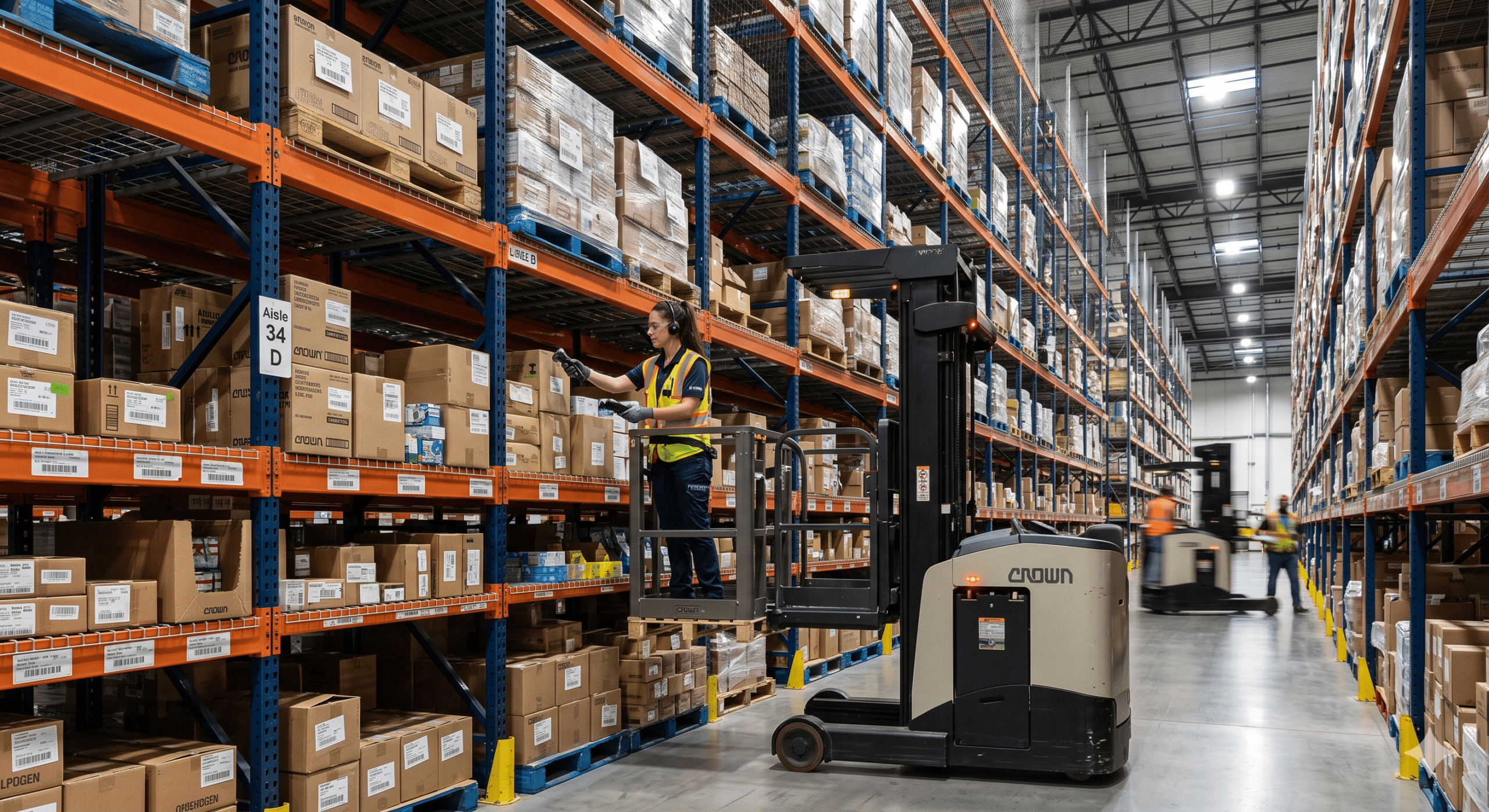
Warehouses have evolved far beyond simple storage buildings. Today’s facilities are larger, taller, and more complex than ever before. Modern warehouse operations rely on high-density storage systems, narrow aisles, sophisticated inventory management software, automated equipment, and rapid order fulfillment processes. While businesses often focus on technology upgrades, storage capacity, and operational efficiency, one critical element is frequently overlooked: lighting.
As an industrial engineer who has spent years observing how facilities operate, I have seen firsthand how proper lighting can transform warehouse performance. Good lighting is not simply about making a building brighter. It directly affects employee safety, inventory accuracy, productivity, equipment operation, and overall operational efficiency. On the other hand, poor lighting creates hidden costs that can quietly impact daily operations through errors, accidents, damaged products, and reduced worker performance.
When discussing lighting for warehouse racking systems, it is important to understand that warehouse lighting presents unique challenges compared to office buildings, retail stores, or manufacturing facilities. Warehouse environments contain tall storage racks, narrow aisles, constantly changing inventory levels, and employees who must accurately identify products stored at multiple heights. These conditions require a carefully planned lighting strategy designed specifically around visibility, safety, and operational performance.
In many ways, lighting functions as an invisible productivity tool. Employees rarely notice excellent lighting because it allows them to work comfortably and efficiently. However, they immediately notice poor lighting because it slows down tasks, increases eye strain, and makes routine work more difficult. A properly designed lighting system supports every activity within the warehouse, from receiving and storage to picking, packing, shipping, and inventory management.
Why Lighting for Warehouse Racking Systems Matters More Than Most People Realize
Many warehouse operators view lighting as a basic utility expense rather than a strategic investment. This mindset often leads to lighting systems that meet only minimum requirements rather than supporting operational excellence.
The reality is that warehouse employees rely heavily on visual information throughout their workday. They read product labels, scan barcodes, verify inventory locations, inspect packaging conditions, operate forklifts, identify aisle markers, and navigate around equipment. Every one of these activities depends on clear visibility.
When visibility is poor, even simple tasks take longer to complete. Workers may need additional time to confirm product numbers, locate inventory, or safely position pallets. These small delays accumulate throughout the day and can significantly reduce overall productivity.
Lighting also affects employee confidence. Workers who can clearly see their environment perform tasks more efficiently because they spend less time second-guessing decisions. Whether placing inventory on a high rack level or selecting products for shipment, clear visibility supports faster and more accurate work.
Warehouses operating twenty-four hours a day face even greater challenges. Employees working during evening and overnight shifts rely entirely on artificial lighting. In these environments, lighting quality directly influences performance, comfort, and safety throughout every shift.
Understanding the Unique Lighting Challenges Created by Warehouse Racking Systems
Warehouse racking systems create conditions that differ significantly from open floor environments. Unlike office spaces where lighting can be distributed evenly across a relatively unobstructed area, warehouse storage racks create vertical barriers that influence how light travels throughout the facility.
Tall pallet racks can block light from reaching lower storage levels. Inventory stored within the racks creates additional shadows and dark zones. As products are added or removed, lighting conditions may change throughout different sections of the warehouse.
One common mistake involves evaluating lighting solely from floor level. A warehouse may appear bright when viewed from an open area, yet workers inside storage aisles may experience poor visibility due to shadows created by shelving and inventory.
Another challenge involves vertical storage. Employees often need to identify products located twenty, thirty, or even forty feet above the floor. Standard lighting layouts designed primarily for floor illumination may not provide sufficient light on rack faces where labels and product information are located.
Narrow aisles create another obstacle. Light fixtures positioned incorrectly may illuminate aisle entrances while leaving deeper sections poorly lit. This issue becomes especially noticeable in facilities with high-density storage systems where racks are positioned closely together.
Because warehouse environments are dynamic, lighting systems must be designed to maintain visibility despite changing inventory configurations and operational demands.
The Direct Relationship Between Lighting and Warehouse Safety
Safety is one of the most important reasons to invest in quality warehouse lighting.
Every warehouse contains potential hazards. Forklifts move continuously throughout storage aisles. Pallets are lifted to elevated locations. Employees walk through busy work areas while handling products and equipment. In such environments, visibility plays a critical role in accident prevention.
Consider a forklift operator placing a pallet on an upper rack level. Accurate positioning requires clear visibility of the storage location, surrounding structures, and pallet condition. Poor lighting can make depth perception more difficult, increasing the risk of collisions, damaged inventory, or rack impacts.
Similarly, warehouse employees need to identify obstacles, spills, damaged flooring, and other hazards before accidents occur. Poorly illuminated areas increase the likelihood of slips, trips, and falls, which remain among the most common workplace injuries.
Emergency situations further highlight the importance of visibility. In the event of equipment failure, fire alarms, or evacuation procedures, employees must be able to navigate the facility safely and efficiently. Well-designed lighting systems support emergency response efforts by maintaining visibility and reducing confusion during critical situations.
From an industrial engineering perspective, safety improvements often deliver some of the highest returns on investment because they help reduce injury-related costs, equipment damage, downtime, and operational disruptions.
Why Vertical Illumination Is Essential for Warehouse Success
One of the most overlooked concepts in warehouse lighting design is vertical illumination.
Many facilities focus primarily on horizontal illumination, which measures the amount of light reaching the floor. While floor visibility is important, warehouse employees spend much of their time looking at storage racks rather than the floor itself.
Workers need to read rack labels, identify product packaging, verify inventory locations, and scan barcodes positioned vertically throughout the storage system. If rack faces are poorly illuminated, productivity and accuracy suffer even when floor lighting appears adequate.
Vertical illumination ensures that light reaches the front surfaces of storage racks where critical visual information is located. This approach improves visibility throughout multiple rack levels and helps employees perform inventory-related tasks more efficiently.
In warehouses with very tall storage systems, vertical illumination becomes even more important. Products stored near the ceiling may otherwise remain difficult to identify, forcing workers to spend additional time verifying locations or repositioning equipment.
By improving visibility across the entire height of the storage system, warehouses create a more efficient and user-friendly working environment.
The Importance of Uniform Lighting Throughout Storage Areas
Brightness alone does not guarantee good visibility.
In fact, excessive brightness combined with poor lighting uniformity can create significant operational challenges. Warehouses frequently experience visibility problems when certain areas are extremely bright while adjacent locations remain relatively dark.
Human eyes continuously adjust when moving between different lighting levels. This adaptation process may seem insignificant, but repeated adjustments throughout the day contribute to eye strain, fatigue, and reduced visual comfort.
Uniform lighting creates a consistent visual environment that supports employee performance. Workers can move between aisles, storage zones, and workstations without experiencing dramatic changes in visibility.
Uniform lighting also improves depth perception and reduces shadows. When employees can clearly distinguish objects, surfaces, and inventory locations, tasks become easier and safer to perform.
From an engineering standpoint, lighting uniformity often provides greater operational benefits than simply increasing overall light levels. A well-balanced lighting system supports efficiency without creating unnecessary glare or discomfort.
How LED Technology Has Changed Warehouse Lighting
The adoption of LED technology has revolutionized warehouse lighting over the past decade.
Older lighting systems such as metal halide and fluorescent fixtures were once common in industrial facilities. While these technologies served their purpose, they presented several limitations including high energy consumption, frequent maintenance requirements, inconsistent light output, and long warm-up times.
LED fixtures address many of these challenges.
One of the most significant advantages is energy efficiency. Warehouses often operate for extended hours, making lighting one of the largest contributors to electricity consumption. LED systems provide high-quality illumination while using substantially less energy than traditional technologies.
Another advantage is longevity. High-quality LED fixtures can operate for many years before requiring replacement. This extended lifespan reduces maintenance costs and minimizes disruptions associated with fixture replacement.
LED technology also provides better light quality. Employees benefit from improved color rendering, clearer visibility, and more consistent illumination throughout the facility. Unlike older systems that may dim significantly over time, LED fixtures maintain more stable performance throughout their operating life.
For warehouses with high ceilings, reduced maintenance is particularly valuable because replacing fixtures at elevated heights can be costly and time-consuming.
Optimizing Aisle Lighting for Better Warehouse Performance
Warehouse aisles represent the primary work zones within most storage facilities.
Employees spend much of their time traveling through aisles, retrieving products, stocking inventory, and operating equipment. Consequently, aisle lighting deserves special attention during the design process.
Effective aisle lighting focuses illumination where work occurs rather than distributing light uniformly across unused ceiling space. Proper fixture placement directs light deep into storage aisles, helping reduce shadows and improve visibility throughout the entire aisle length.
When aisle lighting is inadequate, workers may struggle to identify inventory locations quickly. Forklift operators may require additional time to position loads accurately. These delays may seem minor individually, but collectively they reduce operational efficiency.
Well-designed aisle lighting improves navigation, inventory identification, and overall productivity. It also creates a more comfortable working environment by reducing visual strain during repetitive tasks.
In facilities with narrow aisle configurations, specialized lighting layouts can significantly improve visibility while maximizing energy efficiency.
Reducing Shadows and Dark Zones Within Racking Systems
Shadows are among the most common visibility challenges in warehouse environments.
Storage racks naturally block light from reaching certain areas. As inventory levels fluctuate, shadow patterns may change dramatically. Fully stocked racks often create darker conditions than partially filled storage systems.
Dark zones make it difficult for employees to identify products, read labels, and inspect inventory accurately. They can also increase safety risks by obscuring obstacles or equipment.
Reducing shadows requires a thoughtful combination of fixture placement, beam distribution, mounting height, and lighting intensity. Modern warehouse lighting systems frequently incorporate optics designed specifically for aisle applications. These optics direct light where it is needed most rather than wasting illumination on areas that do not contribute to productivity.
By minimizing shadows throughout storage areas, warehouses can improve visibility, increase efficiency, and create safer working conditions.
The Role of Color Temperature in Warehouse Visibility
Color temperature influences how light appears and how employees perceive their environment.
In warehouse settings, neutral white and cool white lighting are generally preferred because they enhance contrast and improve visibility. These lighting conditions make it easier to distinguish labels, packaging colors, floor markings, and inventory details.
Color temperature also affects worker comfort. Lighting that appears excessively yellow may reduce perceived brightness, while lighting that is overly harsh can contribute to discomfort and fatigue.
Selecting the appropriate color temperature requires balancing visibility, comfort, and operational requirements. The goal is to create an environment where employees can work efficiently for extended periods without experiencing unnecessary visual strain.
When combined with proper light distribution and quality fixtures, appropriate color temperature contributes significantly to overall warehouse performance.
How Better Lighting Improves Inventory Accuracy
Inventory accuracy is critical to warehouse success.
Even small picking errors can create costly consequences including shipment delays, returns, customer dissatisfaction, and increased labor requirements. While software systems help manage inventory information, employees still rely on visual confirmation during many warehouse tasks.
Poor lighting increases the likelihood of mistakes. Employees may misread labels, select incorrect products, or scan the wrong barcode. These errors become more common in areas with shadows, glare, or insufficient illumination.
Improved lighting helps workers verify information quickly and accurately. Clear visibility reduces uncertainty and supports faster decision-making throughout the fulfillment process.
For warehouses managing thousands of stock keeping units, lighting becomes an important contributor to inventory control and customer satisfaction.
Energy Savings and Long-Term Cost Benefits
Warehouse lighting should be viewed as a long-term investment rather than a short-term expense.
Modern LED systems provide substantial energy savings compared to older technologies. Lower electricity consumption translates directly into reduced operating costs, especially in facilities that operate continuously.
Maintenance savings represent another significant benefit. Longer fixture life means fewer replacements, lower labor expenses, and reduced equipment rental costs associated with servicing elevated fixtures.
Additionally, improved visibility contributes to indirect savings through enhanced productivity, reduced errors, fewer accidents, and lower product damage rates.
When all these factors are considered together, the financial benefits of upgrading warehouse lighting often extend far beyond utility savings alone.
Smart Lighting Systems and the Future of Warehousing
Technology continues to transform warehouse operations, and lighting systems are evolving alongside other industrial innovations.
Smart lighting controls allow facilities to adjust illumination based on occupancy, daylight availability, and operational schedules. Motion sensors can activate lighting only when aisles are occupied, reducing unnecessary energy consumption.
Daylight harvesting systems automatically adjust artificial lighting levels when natural sunlight enters the building. This approach helps maintain consistent illumination while minimizing electricity use.
Advanced monitoring systems can also provide maintenance alerts, performance data, and energy consumption information that supports continuous improvement initiatives.
As warehouses become increasingly automated, intelligent lighting systems will play an even greater role in supporting operational efficiency and sustainability goals.
Conclusion
Lighting is one of the most influential yet underestimated components of warehouse performance. While it may not receive the same attention as automation systems, forklifts, or warehouse management software, lighting directly affects nearly every aspect of daily operations.
Proper lighting for warehouse racking systems improves safety, supports inventory accuracy, enhances worker productivity, reduces errors, minimizes fatigue, and creates a more efficient working environment. By focusing on vertical illumination, uniform light distribution, shadow reduction, energy efficiency, and modern LED technology, warehouses can significantly improve operational performance.
As storage facilities continue to grow taller and more complex, the importance of effective lighting will only increase. Organizations that invest in well-designed visibility systems are investing in safer workplaces, more accurate operations, and stronger long-term business performance.
Frequently Asked Questions
What is the ideal lighting for warehouse racking systems?
The best solution typically involves LED high-bay fixtures designed specifically for warehouse applications. These systems provide strong visibility, excellent energy efficiency, long operating life, and improved illumination throughout storage aisles.
Why is vertical illumination important in warehouses?
Vertical illumination ensures that rack faces, labels, barcodes, and inventory locations remain visible. Since warehouse employees spend much of their time viewing products stored vertically, this type of lighting directly supports productivity and accuracy.
Can poor lighting affect warehouse safety?
Yes. Poor lighting can increase the risk of forklift accidents, product damage, slips, trips, falls, and other workplace incidents. Good visibility helps employees identify hazards and operate equipment safely.
How does warehouse lighting impact productivity?
Better visibility allows workers to locate products faster, verify inventory more accurately, and complete tasks with fewer errors. These improvements help increase overall operational efficiency.
Are LED lights worth the investment for warehouses?
In most cases, yes. LED systems offer lower energy costs, longer lifespan, reduced maintenance requirements, improved visibility, and better overall performance compared to older lighting technologies.
References and Further Reading
- LEDVANCE – Warehouse Lighting Guide
- TCP Lighting – A Guide to Warehouse and Industrial Lighting
- FSG – Industrial Lighting Standards Guide
- Mecalux – Warehouse Lighting and Productivity
- ELEDLights – Warehouse Aisle Lighting Design
- LED Light Expert – Selecting Warehouse Lighting
- Teamsters Safety and Health Department – Warehouse Illumination
- Supply & Demand Chain Executive – Warehouse Lighting Design Best Practices