
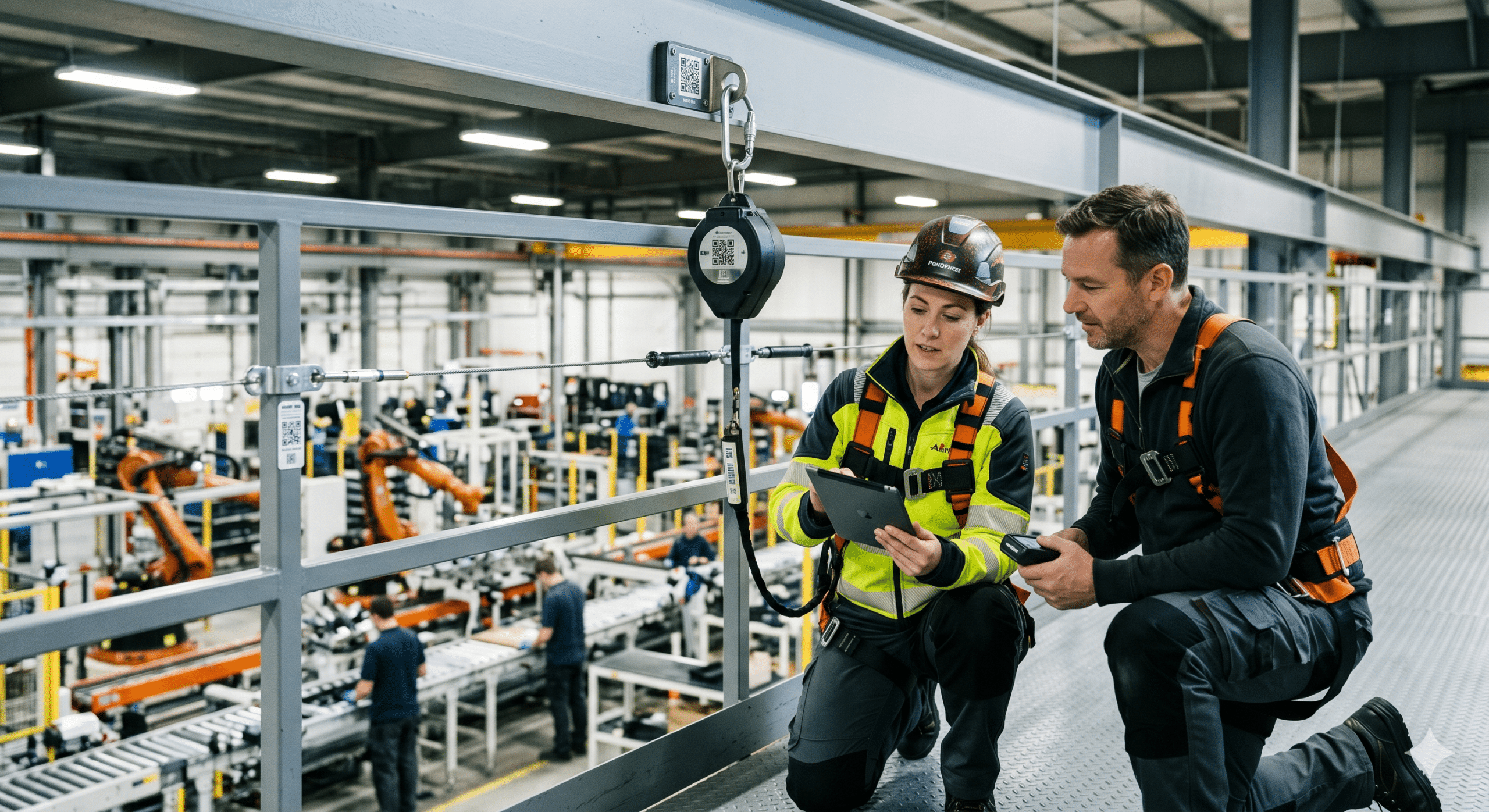
When people hear the phrase safety compliance, they often think about inspections, regulations, permits, and documentation. While those elements certainly matter, they represent only part of the picture. In today’s facilities environment, effective safety programs must do much more than satisfy regulatory requirements. Instead, they must support productivity, reduce operational disruptions, and help organizations manage risk more effectively.
Among all workplace safety concerns, working at height remains one of the most significant challenges. Whether employees perform maintenance on rooftops, inspect equipment on elevated platforms, access mezzanines, or complete repairs on scaffolding, the risk of falls continues to be present. Consequently, organizations cannot afford to treat safety planning as an afterthought.
This is where fall protection planning becomes essential.
From a Governance, Risk, and Compliance (GRC) perspective, strong fall protection planning serves as both a safety initiative and a business strategy. On one hand, it helps prevent injuries and fatalities. On the other hand, it reduces downtime, minimizes operational delays, and protects organizational resources.
Moreover, organizations that invest in proactive safety planning often discover that safety and productivity support one another. Rather than slowing work down, well-designed safety processes create consistency, predictability, and efficiency. As a result, projects move forward with fewer interruptions, fewer incidents, and fewer costly surprises.
In modern facilities, where operational demands continue to increase, leaders must view fall protection planning as a critical component of risk governance rather than simply a compliance requirement.
Why Fall Protection Planning Deserves Executive Attention
Historically, many organizations have focused their attention on safety after an incident occurs. Although corrective actions remain important, reactive approaches often create unnecessary costs and operational challenges.
For example, a single fall-related incident can trigger investigations, equipment shutdowns, project delays, insurance claims, and reputational damage. Furthermore, management teams may need to divert resources from strategic initiatives to address emergency concerns.
Consequently, the true cost of a fall incident often extends far beyond medical expenses.
In facilities operations, every interruption affects throughput. Every delay extends project timelines. Likewise, every incident introduces waste into operational processes. Therefore, organizations that prioritize fall protection planning often experience measurable improvements in both safety performance and operational reliability.
From a risk management perspective, the objective is straightforward. Organizations should identify hazards before they create incidents. Similarly, they should implement controls before workers encounter dangerous situations.
When this proactive mindset becomes part of organizational culture, safety programs begin delivering value far beyond regulatory compliance.
The Business Impact of Poor Fall Protection Planning
Many organizations underestimate the operational consequences of inadequate planning. However, the effects can be substantial.
For instance, workers may arrive at a job site only to discover that appropriate fall protection equipment is unavailable. Consequently, work must stop while supervisors locate the required equipment.
Likewise, contractors may encounter hazards that were not identified during project planning. As a result, schedules become disrupted and costs begin to rise.
In addition, poorly documented procedures often create confusion among employees. Because expectations are unclear, workers may spend valuable time seeking clarification before beginning tasks.
Over time, these seemingly minor delays accumulate. Eventually, productivity declines, project timelines expand, and operational efficiency suffers.
By contrast, effective fall protection planning removes many of these obstacles before work begins. Therefore, employees can focus on completing tasks safely and efficiently rather than solving preventable problems.
Understanding Fall Hazards in Modern Facilities
Before organizations can develop effective strategies, they must first understand where fall hazards exist.
Traditionally, many people associate fall risks with construction projects. However, fall hazards appear in virtually every type of facility.
For example, maintenance technicians may access rooftop HVAC systems. Meanwhile, warehouse personnel may work on elevated storage platforms. Similarly, electricians may perform inspections above suspended ceilings.
In manufacturing environments, workers frequently access elevated machinery. Likewise, facilities teams may need to inspect lighting systems, piping networks, or structural components located above ground level.
Furthermore, temporary work activities often introduce additional risks. Although these activities may occur infrequently, they can create significant hazards if organizations fail to plan appropriately.
Because fall hazards can emerge in many different situations, organizations must adopt a comprehensive approach to fall protection planning.
Building a Foundation Through Hazard Identification
Every successful safety program begins with hazard identification.
However, many organizations make the mistake of conducting assessments only once each year. While annual reviews provide value, they rarely capture every operational change that occurs throughout the year.
For example, facility expansions may create new access points. Similarly, equipment upgrades may introduce previously unidentified hazards.
Moreover, contractor activities often alter work environments temporarily. Consequently, risk assessments must remain dynamic rather than static.
Effective fall protection planning requires organizations to evaluate every area where employees may encounter elevation-related hazards.
This process should include roof edges, ladders, catwalks, elevated platforms, loading docks, mezzanines, maintenance access routes, scaffolding systems, and temporary workspaces.
Furthermore, organizations should involve frontline employees during assessments. After all, workers often possess firsthand knowledge of hazards that management may overlook.
By gathering input from employees, safety leaders gain a more accurate understanding of operational realities. As a result, they can implement controls that address actual workplace conditions rather than theoretical concerns.
Why Generic Safety Plans Often Fail
Many facilities maintain fall protection plans because regulations require them. Unfortunately, not all plans provide meaningful protection.
In many cases, organizations rely on generic templates downloaded from external sources. While these documents may appear comprehensive, they often fail to address site-specific conditions.
Consequently, employees may struggle to apply generic guidance to real-world situations.
For example, a template may reference anchor points that do not exist within a facility. Similarly, rescue procedures may assume equipment that is unavailable onsite.
As a result, workers encounter confusion when attempting to follow documented procedures.
Strong fall protection planning requires customization. Specifically, organizations should tailor plans to their facilities, equipment, workforce, and operational activities.
Furthermore, plans should clearly identify hazards, required controls, responsible personnel, inspection requirements, training expectations, and emergency response procedures.
Because every facility presents unique challenges, customized planning consistently delivers stronger outcomes than generic documentation.
Integrating Safety into Project Design
One of the most effective ways to reduce fall-related risk involves addressing hazards during project design.
Unfortunately, safety considerations are often introduced after construction begins. Consequently, organizations may spend significant resources implementing controls that could have been incorporated earlier.
By comparison, integrating fall protection planning during design phases creates long-term advantages.
For instance, engineers can specify permanent anchor systems during construction. Likewise, architects can design safer roof access pathways.
Additionally, facility managers can recommend guardrail installations that eliminate recurring hazards.
Because these solutions become part of the facility itself, they often provide greater reliability than temporary controls.
Furthermore, design-based solutions typically reduce future maintenance costs. As a result, organizations benefit from both improved safety and stronger financial performance.
From a GRC perspective, this approach aligns perfectly with proactive risk management principles. Rather than reacting to hazards later, organizations eliminate or reduce risks before operations begin.
The Importance of Contractor Risk Management
In many facilities, contractors perform a substantial portion of elevated work. Therefore, contractor management represents a critical component of fall protection planning.
Unfortunately, organizations sometimes assume that contractors will manage their own safety requirements. While contractors certainly maintain responsibilities, facility owners also have obligations to ensure safe work conditions.
Consequently, organizations should establish clear contractor governance processes.
Before work begins, safety leaders should review contractor qualifications, training records, certifications, and equipment inspection practices.
Likewise, organizations should verify that contractors understand facility-specific hazards.
Furthermore, pre-job meetings provide opportunities to clarify expectations and discuss potential risks.
Because contractors often work in unfamiliar environments, effective communication becomes especially important.
When organizations strengthen contractor oversight, they reduce uncertainty and improve overall safety performance. Moreover, they create consistent standards across all work activities.
Strengthening Competency Through Meaningful Training
Even the best procedures can fail if employees do not fully understand how to apply them. Therefore, training remains one of the most important investments organizations can make when developing a successful fall protection planning program.
Unfortunately, many companies still treat training as a one-time event. Employees attend a classroom session, sign a training record, and then return to work. While this approach may satisfy minimum requirements, it rarely creates lasting competency.
Instead, organizations should focus on continuous learning.
For example, workers should regularly practice equipment inspections, hazard identification, and proper harness use. Likewise, supervisors should conduct field observations to verify that procedures are being followed correctly.
Furthermore, training should reflect actual workplace conditions. After all, employees learn more effectively when examples relate directly to their daily responsibilities.
In addition, organizations should incorporate lessons learned from incidents, near misses, and audits into future training sessions. Consequently, employees gain practical knowledge that helps them recognize and avoid hazards before problems occur.
From a GRC standpoint, effective training serves another important purpose. It demonstrates due diligence. Therefore, if regulators, auditors, or insurance providers review safety programs, organizations can show evidence that employees received appropriate instruction and ongoing support.
Creating Effective Rescue and Emergency Response Plans
While preventing falls remains the primary objective, organizations must also prepare for situations where incidents occur despite preventive measures.
Unfortunately, rescue planning is frequently overlooked.
Many facilities invest considerable resources in personal fall arrest systems. However, they sometimes assume that emergency responders will handle rescue operations if a fall occurs.
In reality, delays in rescue can create additional risks.
For example, a worker suspended in a harness may experience serious medical complications if rescue efforts take too long. Consequently, organizations should develop clear and practical rescue procedures.
Effective fall protection planning includes detailed emergency response guidance that employees can follow quickly and confidently.
Specifically, organizations should identify available rescue equipment, define response responsibilities, establish communication protocols, and conduct rescue drills.
Furthermore, rescue procedures should reflect actual facility conditions. Otherwise, teams may discover during an emergency that their plans are unrealistic or incomplete.
Likewise, organizations should review rescue plans regularly to ensure they remain current.
Because emergency situations rarely unfold exactly as expected, preparation and practice become essential components of risk management.
Leveraging Technology to Improve Fall Protection Planning
Technology continues to transform how organizations manage safety programs. Consequently, facilities leaders now have access to tools that improve visibility, accountability, and operational performance.
Modern software platforms provide significant advantages for fall protection planning.
For instance, digital inspection systems allow employees to document equipment conditions using mobile devices. As a result, organizations can identify issues faster and reduce the likelihood of equipment-related failures.
Similarly, electronic permit systems streamline approval workflows. Therefore, supervisors can review and authorize work activities more efficiently.
Furthermore, centralized dashboards provide real-time visibility into inspections, corrective actions, training completion rates, and compliance status.
Because information becomes easier to access, decision-makers can respond more quickly to emerging risks.
In addition, incident reporting platforms help organizations identify trends. For example, repeated near misses in a particular area may indicate the need for additional controls.
Likewise, asset management systems can track inspection schedules for harnesses, lanyards, anchor points, and other critical equipment.
From a GRC perspective, software solutions offer another important benefit. Specifically, they strengthen documentation and audit readiness.
Instead of searching through paper records, organizations can quickly retrieve evidence demonstrating compliance efforts. Consequently, audits become less stressful and more efficient.
Moreover, digital systems support continuous improvement by providing data that helps organizations make informed decisions.
Measuring Success Beyond Compliance
Traditionally, organizations have measured safety performance using incident rates and regulatory citations. While those metrics remain important, they do not provide a complete picture.
Therefore, modern facilities should evaluate fall protection planning using a broader set of indicators.
For example, organizations can track the percentage of completed inspections, training participation rates, and corrective action closure times.
Likewise, they can monitor contractor compliance, permit processing efficiency, and equipment inspection completion rates.
Furthermore, operational metrics often provide valuable insights.
If projects consistently experience delays because safety requirements were not identified early, this may indicate weaknesses in planning processes.
Similarly, recurring work stoppages may suggest that hazard assessments need improvement.
By monitoring both safety and operational performance, organizations gain a clearer understanding of how their programs affect overall business outcomes.
Consequently, leadership teams can make better decisions regarding resource allocation and process improvements.
Common Challenges That Undermine Fall Protection Planning
Although most organizations recognize the importance of safety, several common challenges continue to undermine effectiveness.
First, some companies focus exclusively on compliance.
While regulatory compliance remains necessary, it should represent the starting point rather than the ultimate goal.
After all, regulations establish minimum standards. By contrast, high-performing organizations strive to exceed those standards whenever practical.
Second, some facilities fail to update plans when conditions change.
For example, facility expansions, equipment upgrades, and operational modifications often introduce new hazards. Nevertheless, organizations sometimes continue using outdated procedures.
As a result, employees may rely on information that no longer reflects workplace realities.
Third, communication gaps frequently create unnecessary risk.
Even when procedures are well written, workers must understand how to apply them. Therefore, organizations should prioritize clear communication and regular engagement with employees.
Finally, some organizations underestimate the importance of leadership involvement.
When leaders actively support safety initiatives, employees are more likely to embrace safe work practices. Conversely, when leadership attention is inconsistent, safety efforts often lose momentum.
Because culture influences behavior, leadership commitment plays a critical role in long-term success.
Building a Culture That Supports Safety and Performance
Culture remains one of the most influential factors in workplace safety.
Although policies and procedures matter, employee attitudes ultimately determine how those procedures are implemented.
Therefore, organizations should strive to create environments where employees feel comfortable reporting hazards, raising concerns, and suggesting improvements.
For example, workers should be encouraged to stop work if unsafe conditions exist.
Likewise, supervisors should recognize employees who identify potential risks before incidents occur.
Furthermore, organizations should view near-miss reporting as a learning opportunity rather than a disciplinary event.
As a result, employees become more willing to share valuable information.
Over time, this openness strengthens hazard awareness and supports continuous improvement.
Additionally, strong safety cultures often improve operational performance.
Because employees trust established processes, they spend less time dealing with uncertainty and more time focusing on productive work.
Consequently, organizations benefit from both enhanced safety outcomes and improved operational efficiency.
Aligning Fall Protection Planning With Risk Governance
From a Governance, Risk, and Compliance perspective, fall protection planning should align with broader organizational objectives.
Rather than operating as an isolated safety activity, it should connect directly to risk management frameworks, compliance programs, operational goals, and business continuity strategies.
For example, risk assessments should inform project planning decisions.
Similarly, audit findings should drive corrective actions and process improvements.
Furthermore, safety performance data should support executive decision-making.
When organizations integrate safety into governance structures, they create greater accountability and transparency.
As a result, leaders gain a clearer understanding of risk exposure and organizational resilience.
Moreover, this alignment helps organizations move beyond reactive compliance toward proactive risk management.
That shift often represents the difference between average performance and operational excellence.
The Future of Fall Protection Planning
As facilities continue to evolve, expectations surrounding workplace safety will also change.
For instance, organizations are increasingly adopting digital technologies, predictive analytics, and connected safety systems.
Consequently, safety leaders will gain access to more data than ever before.
However, technology alone will not eliminate risk.
Instead, organizations must combine technology with strong leadership, effective training, comprehensive planning, and continuous improvement.
Furthermore, workforce expectations are changing. Employees increasingly expect employers to provide safe and supportive work environments.
Therefore, organizations that prioritize fall protection planning will likely strengthen both employee engagement and operational performance.
Looking ahead, the most successful facilities will view safety as a strategic advantage rather than a regulatory burden.
Because of this mindset, they will be better positioned to manage risk, protect workers, and achieve long-term success.
Final Thoughts
Effective fall protection planning is about much more than meeting regulatory requirements. Instead, it represents a proactive approach to protecting people, supporting operational efficiency, and strengthening organizational resilience.
Throughout modern facilities, fall hazards remain one of the most significant workplace risks. However, organizations that identify hazards early, integrate safety into project design, strengthen contractor oversight, provide meaningful training, and leverage technology can dramatically reduce their exposure.
Moreover, these organizations often experience benefits that extend beyond safety performance. They reduce downtime, minimize disruptions, improve project execution, and strengthen compliance outcomes.
Ultimately, the goal of fall protection planning is not simply to prevent accidents. Rather, it is to create an environment where employees can perform their work confidently, safely, and efficiently.
When safety becomes an integral part of operations, organizations achieve something much greater than compliance. They build a foundation for sustainable growth, operational excellence, and long-term success.
Frequently Asked Questions
What is fall protection planning?
Fall protection planning is the process of identifying fall hazards, assessing risks, selecting appropriate controls, establishing procedures, and preparing workers to safely perform tasks at elevated locations.
Why is fall protection planning important?
It is important because it helps prevent injuries, reduces operational disruptions, improves regulatory compliance, and supports efficient facility operations.
Who is responsible for fall protection planning?
While safety professionals often lead the process, responsibility is shared among facility managers, supervisors, contractors, employees, and organizational leadership.
How often should a fall protection plan be reviewed?
Organizations should review plans annually and whenever significant changes occur, including renovations, equipment installations, process modifications, or changes in work activities.
Can software improve fall protection planning?
Yes. Modern software platforms can improve inspections, training management, permit processes, corrective action tracking, reporting, and audit readiness.
What is the biggest mistake organizations make with fall protection planning?
One of the most common mistakes is treating compliance as the end goal rather than focusing on continuous risk reduction and operational improvement.
References and Further Reading
- OSHA – Fall Protection Overview – explains key requirements for preventing workplace falls, including hazard identification, guardrails, harnesses, training, and compliance standards.
- FallTech – The Ultimate Guide to Fall Protection – covers fall hazards, safety systems, equipment selection, inspections, anchor points, rescue planning, and best practices.
- Safety Evolution – Fall Protection Plan Guide – explains how to create site-specific fall protection plans, assess hazards, choose controls, document procedures, and improve compliance.
- Vector Solutions – Fall Protection Best Practices – covers hazard recognition, worker training, equipment use, risk assessments, and practical strategies to prevent falls in the workplace.
- SafetyCulture – Understanding Fall Protection Systems – explains the different types of fall protection, including prevention, restraint, arrest, and administrative controls for safer work at height.
- KattSafe – Importance of Having a Fall Protection Plan – highlights how proactive planning reduces fall risks, improves compliance, protects workers, and supports safer, more efficient operations.
- AME Equity – Designing an Effective Fall Protection Program – explains how to build a comprehensive safety program through hazard assessments, training, equipment selection, supervision, and continuous improvement.