
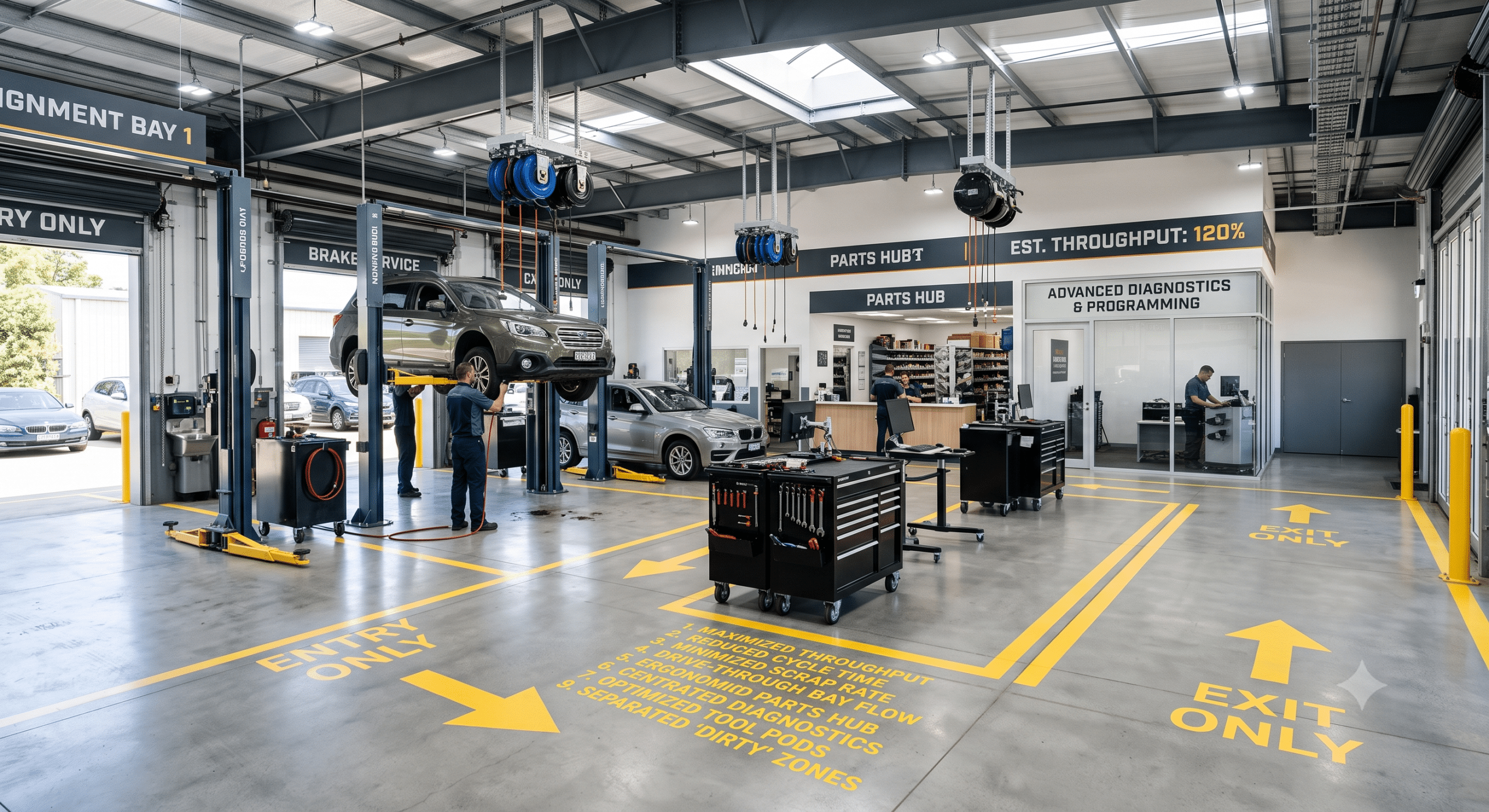
If you walk into typical automotive repair shops on a busy Tuesday morning, you will probably see a lot of chaos. For example, you might see a mechanic searching for a misplaced scan tool. In another corner, a car sits stuck on a lift while waiting for a late oil filter. Meanwhile, you might even notice a puddle of fluid slowly spreading across the floor. To most people, that just looks like a normal part of working in a gritty shop. However, as a facilities operations manager, I see something else entirely. Consequently, I see lost profits, wasted time, and a ton of unnecessary stress inside these service centers.
Therefore, managing automotive repair shops means looking at the big picture. Specifically, you must treat every square foot of your concrete floor like a high-stakes production line. When you strip away the noise and the grease, success comes down to three basic metrics. First, you must get more cars through the bays each day. Second, you need to cut down the time it takes to finish a job. Finally, you must keep broken parts or wasted materials as close to zero as possible. Of course, making this happen isn’t about paperwork. Instead, it depends entirely on how you arrange your physical space.
1. Getting Cars In and Out of Service Bays Without the Traffic Jams
Ultimately, a good shop relies on how fast a car moves from the parking lot into a service bay. In addition, it depends on how fast that car returns to the customer. When you arrange automotive repair shops based on the daily work environment, distance matters a lot. For this reason, you must carefully measure the space between your parking slots and your lifts. In poorly planned automotive repair shops, mechanics spend hours just shuffling cars around like a giant puzzle. As a result, they constantly back vehicles out of tight corners just to let another car squeeze past.
To get more cars through your shop, you definitely need a smooth assembly line setup. For instance, the best method involves setting up service bays with a straight drive-through path. When a mechanic finishes a brake job or an alignment, they can then drive straight forward into a back lot. Consequently, this setup clears out the lift instantly for the next car. Conversely, every single time a mechanic backs a vehicle out, your shop loses money. They waste time turning around blind corners or waiting for a coworker to move a parked truck. Therefore, this layout failure forces your customers to wait much longer.
2. Stopping the Hidden Time Wasted on Walking
If you watch a mechanic work during an eight-hour shift, you will quickly notice a major pattern. Specifically, the biggest time-killer isn’t the actual mechanical repair. Instead, it is the time they spend walking across the room. We call this shadow work. For example, the problem includes the minutes spent walking across the shop floor to find a torque wrench. Furthermore, it covers the daily trek to the main office to check a computer screen. Finally, the lost time includes heading to the back corner just to grab an oil drain pan.
Naturally, stopping this waste requires changing the geometry of your workspace. To achieve this, you should put small tool pods and fluid lines right next to every single lift. This choice keeps your mechanics working right at the vehicle where they actually earn revenue. If an employee walks more than five steps to grab a common tool, then your layout has failed. On the other hand, even a small reduction in foot travel saves serious time. Across a team of ten mechanics, you can therefore reclaim dozens of hours every single week.
3. Creating Smart Areas for Storing and Handling Fluids
Modern automotive repair shops handle a massive amount of liquids every day. This inventory includes motor oil, transmission fluid, coolant, and brake fluid. Because of this, managing these liquids properly is a huge deal. Spills and waste directly eat into your profit margins. For instance, when you store bulk fluids in one far corner of the building, you invite trouble. Mechanics must carry open oil pans or jugs across the shop floor. Inevitably, this practice almost always leads to messy spills and wasted product.
To fix this, modern shops build fluid lines directly into the individual service bays. By doing so, you can run overhead reels for air, oil, and coolant straight to each workspace. This setup completely eliminates the need to carry heavy jugs. At the same time, you should place fluid drain stations right in the middle of your busiest bays. By making it incredibly easy for a mechanic to drain and trap used fluids without moving the car, you protect your floors. As a result, you make sure every drop of fresh oil counts.
4. Giving Mechanics Enough Space to Prevent Costly Mistakes
When a mechanic is tired and works in a cramped, dark bay, mistakes happen easily. Consequently, the chances of an accident go way up. For example, a slipped wrench can instantly scratch a brand-new brake rotor. Similarly, a tight fit can cause a mechanic to bump a customer’s car doors against a steel post. Unfortunately, these mistakes turn a profitable afternoon into an expensive headache. You end up buying a replacement part out of your own pocket.
Fortunately, you can protect your parts and your customers’ cars quite easily. Just make sure every lift has plenty of open space around it. Mechanics need to move completely around the vehicle without squeezing or twisting. In addition, you also need to install bright LED lights. Good lighting eliminates shadows under the hood and beneath the chassis. When an employee can see clearly and move naturally, they do better work. Therefore, this keeps your mistakes low and ensures they install new parts perfectly on the first try.
5. Keeping the Parts Room Close to the Mechanics
The distance between the shop floor and the parts room sets your repair speed. However, in many old layouts for automotive repair shops, managers hid the parts department away. They placed it in the back of the building or up a flight of stairs. Because of this, diagnostics create a major bottleneck. Every time a mechanic finds a bad water pump, they must drop their tools. Then, they stop working and take a long walk to the parts window just to wait in line.
A smart shop layout fixes this by placing the parts area right in the center of the building. Additionally, you can use a simple two-bin system for common items. This works great for oil filters, spark plugs, and washers. When a bin gets empty, it automatically triggers an order for more. By keeping these fast-moving parts close by, mechanics can grab what they need in seconds. Consequently, this prevents cars from sitting idle on lifts with their engines torn apart, keeping the work moving smoothly.
6. Keeping Dirty Mechanical Work Away From Delicate Electronics
Modern cars are basically computers on wheels. Because of this, automotive repair shops have had to change how they use their space. Imagine programming a delicate vehicle computer right next to a heavy mechanical bay. If someone uses an angle grinder nearby, sparks and rust particles fly through the air. Obviously, this environment creates a terrible risk. Metallic dust and heavy vibrations can easily ruin sensitive electronic modules. In the end, this error leads to broken parts and major delays.
Therefore, the best solution requires you to completely separate these two worlds. For example, you need a clean, quiet, and enclosed room just for advanced diagnostic work. Then, you can use this space for computer programming and calibrations. This room should run its own air filtration to keep dust out. Furthermore, it needs stable electrical outlets so power surges don’t interrupt a computer update. By shielding high-tech work from the rough side of the shop, you protect expensive parts. At the same time, you avoid the massive headaches that come with fried electronics.
7. Using Wall Space to Clear Off the Shop Floor
Floor space is undoubtedly the most valuable asset in your shop. When rolling toolboxes, battery chargers, jacks, and tire machines clutter the floor, your overall speed drops. A messy floor makes it hard for people and cars to move around safely. Therefore, to keep a shop agile, you have to stop looking only at the floor. Instead, you must start looking at the walls and the ceiling.
By using heavy-duty wall hooks, shelves, and overhead cords, you can lift equipment completely off the ground. For instance, you can mount computer monitors and diagnostic screens on swinging metal arms. Attach these arms directly to the building’s steel pillars. This design keeps the concrete floor wide open for moving cars and walking mechanics. Consequently, when your bulky equipment has a designated home off the floor, the whole shop runs better. As a result, work moves through the pipeline much faster.
8. Using Clear Floor Markings to Guide Shop Traffic
The doorways where cars enter and leave your building create major bottlenecks. If you let traffic block the area between your parking lot and your inside lifts, your entire day stalls. Tow trucks need a clear place to drop off broken cars without blocking the main driveway. Likewise, you must also move finished cars out immediately. Otherwise, they block the road for mechanics trying to do test drives.
To keep traffic moving, paint bright, clear lines right on the pavement. Mark the shop floor clearly too. This means marking one lane just for customers dropping off cars. Next, create a specific spot for tow trucks. Then, set aside a clear holding zone for finished cars that are ready for pickup. Inside the shop, use floor arrows to show which way traffic should roll. When everyone knows exactly where to drive and park, you eliminate the daily parking lot scrambles that waste valuable time.
9. Setting Up a Great Final Inspection Spot to Stop Return Visits
The very last step of any repair happens at the inspection and wash station. Yet, automotive repair shops often cram or ignore this spot entirely. If you maintain a messy or crowded inspection area, it creates a massive backup at the end of the day. Even worse, you might rush a car through the final check because another vehicle blocks the bay. As a result, you will miss small problems like a loose trim piece or a greasy smudge. Ultimately, this error forces the customer to bring the car back.
To keep your shop running smoothly, you should design a dedicated inspection station. Place this brightly lit area right before the exit door. This spot needs good floor drains, a quality vacuum, and great overhead lights. Good visibility makes it easy to spot fluid leaks or body scratches. When an inspector checks a finished car in a clean, quiet space, they verify the job easily. Therefore, this process ensures you fix the car right the first time. In conclusion, it keeps your customers happy and prevents old jobs from coming back to disrupt your workflow.
Quick Reference Guide: Layout vs. Performance
This simple chart shows how changing your physical shop space directly improves your everyday shop metrics.
| Layout Change | Cars Through the Door | Speed of the Job | Reducing Waste & Damages |
| Straight Drive-Through Bays | Clears out bottlenecks so more cars fit in a day. | Cuts down on wait times by eliminating backing up. | Stops accidental bumper scrapes in tight corners. |
| Tool Pods Near the Lifts | Keeps mechanics working instead of walking. | Speeds up repairs with tools right at arm’s reach. | Reduces lost tools and misplaced small parts. |
| Central Parts Counter | Keeps a steady flow of parts moving to the lifts. | Eliminates long wait times at a distant parts room. | Prevents part damage by using clean staging bins. |
| Separate Electronics Room | Allows uninterrupted computer programming. | Avoids digital mistakes by using clean power lines. | Stops dust and sparks from ruining expensive modules. |
| Dedicated Inspection Bay | Makes final car handoffs quick and clean. | Drastically cuts down on angry customer comebacks. | Catches installation mistakes before the car leaves. |
Frequently Asked Questions
What is the biggest layout mistake auto repair shops make?
The most common mistake involves creating dead-end bays. Mechanics must back cars out of these areas through tight spaces. Consequently, this layout defect wastes time, slows down the next job, and increases the risk of vehicle damage.
How does a better shop layout reduce my waste and broken parts?
A good layout gives mechanics plenty of room to work comfortably. Furthermore, it keeps delicate electronics away from dirty work areas. It also places tools close by so employees don’t drop, scratch, or break parts during installation.
Can an old shop building be changed to use these layout ideas?
Absolutely. You can optimize an older shop by changing how you use certain bays. For example, you can make specific garage doors “entry-only” or “exit-only.” You can also move your fast-moving parts closer to the center of the action.
How far should a mechanic have to walk to get air or oil?
Ideally, they shouldn’t have to walk at all. Instead, overhead drops or reels should deliver utilities directly to the bay. This strategy keeps compressed air, electrical power, and basic fluids right inside the active workspace of that specific lift.
Helpful Industry Articles for Further Reading
If you want to learn more about how to design a great shop layout, these high-quality industry websites offer excellent tips:
- Motor Age — “Optimizing the shop floor for maximum throughput“: Motor Age is a top authority for automotive service professionals. Their deep dives into shop management explain how to map out a building’s footprint to improve mechanic speed, eliminate tool hoarding, and streamline standard repair processes.
- Ratchet+Wrench — “How a workflow-conscious shop layout slashes cycle times“: This publication focuses entirely on the business and physical efficiency of automotive service facilities. It regularly features real-world case studies of shop owners who eliminated dead-end bays and reorganized their parts rooms to boost their daily revenue.