
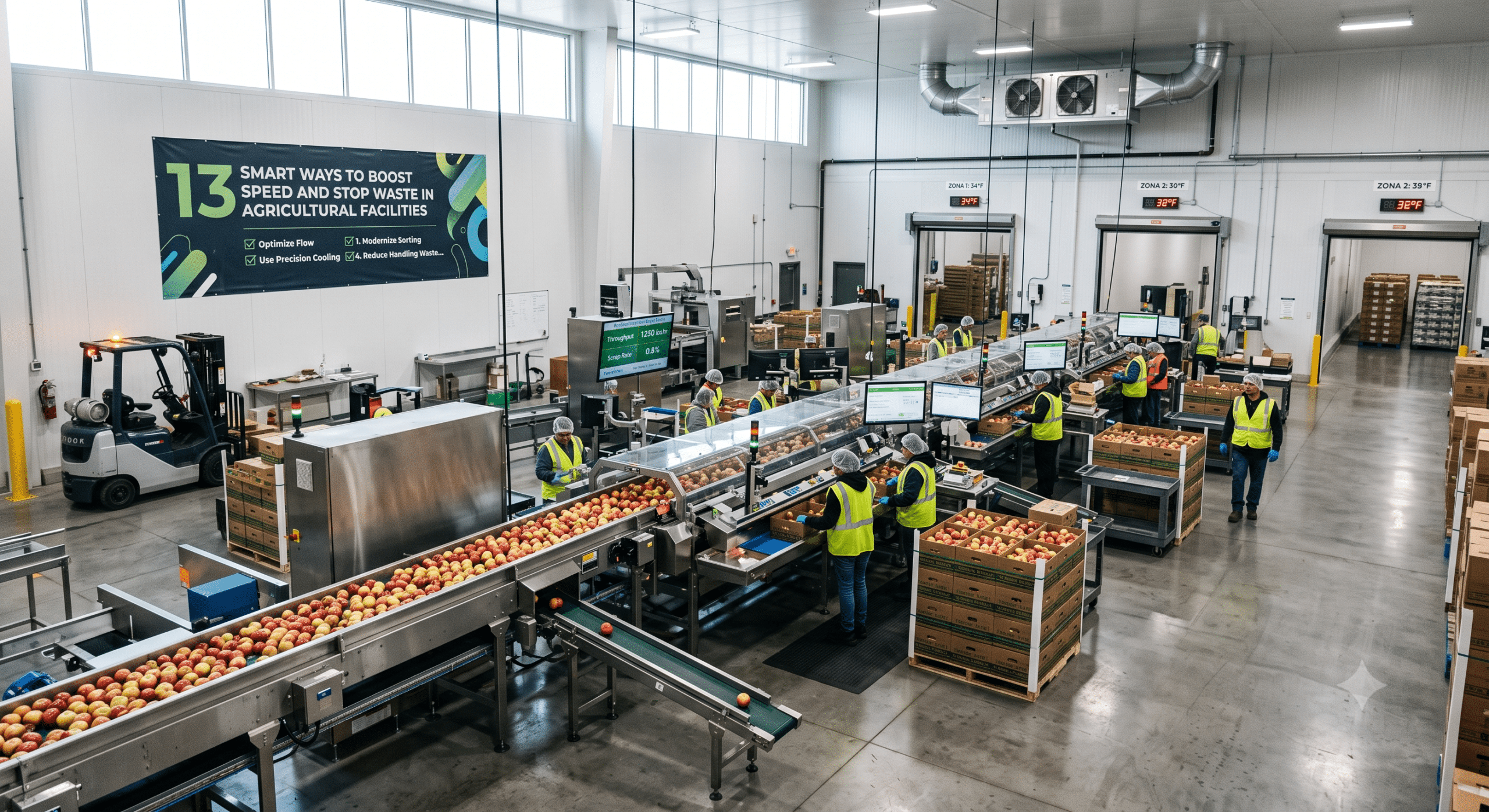
Running a standard factory is one thing, but managing modern agricultural operations is a completely different ballgame. In a typical manufacturing plant, raw materials can sit on a shelf for days without changing. In our world, however, the clock is always ticking. The crops coming through the doors are alive, highly sensitive, and quick to spoil. As a facilities manager, I look at our buildings as active tools. They must keep production moving fast, cut down on delays, and stop good inventory from going to waste.
To run a profitable business, you must focus closely on three big metrics. These are maximizing daily output, shortening batch processing times, and keeping your waste pile near zero. Standard warehouse setups simply are not built for the fast pace of high-volume agricultural operations. For instance, a poor layout forces workers to move goods backward and forward. This backtracking slows things down and damages delicate items. Therefore, by updating the physical workspace and planning paths more intelligently, we can turn slow, frustrating yards into highly efficient hubs.
1. Straighten Out the Floor Plan to Fix Movement Bottlenecks
A confusing layout is often the number one reason why batches take too long to process. Freshly harvested crops need to be cooled and stabilized immediately, otherwise they begin to rot quite rapidly. If your facility forces workers to crisscross paths, you lose time. You also risk serious product damage across your daily agricultural operations.
The best solution, therefore, is to establish a strict, one-way flow. This path should run from the receiving dock all the way to the shipping area. When materials move in a straight line, you eliminate internal traffic jams entirely. Furthermore, this layout keeps the loading docks clear and protects crops from bad weather. As a result, it keeps daily output consistently high.
2. Set Up Precise Climate Zones to Stop Spoilage
Standard air conditioning might keep people comfortable, but it won’t save your inventory. Specifically, intensive agricultural operations require industrial-grade climate control tailored to distinct zones. High waste numbers often happen because humidity spikes or temperatures fluctuate. This variance creates the perfect environment for mold to grow.
[Raw Crop Intake] -> [Rapid Pre-Cooling Zone] -> [Targeted Humidity Processing] -> [Zero-Loss Storage]
By dividing the facility into separate thermal rooms, you can give each crop its exact required environment. In addition, using high-speed automatic doors allows you to keep these rooms isolated. This protection holds true even when forklifts are constantly driving in and out. Consequently, this keeps heat-generating machinery away from your cold storage, preserving your products and boosting total capacity simultaneously.
3. Cool Down Crops Immediately to Keep Things Moving Fast
When fresh crops arrive at the facility, they carry a lot of field heat. If you don’t get rid of that heat right away, the crops degrade quickly. This delay subsequently slows down the entire packing process. Placing warm items directly into a standard cold storage room creates a massive bottleneck. Regular rooms simply take too long to lower the core temperature.
To fix this, install rapid hydro-coolers or blast-chilling tunnels right at the loading dock. These systems pull the field heat out of the crops in minutes rather than hours. Once stabilized, the batch can move into sorting and packaging immediately. This step prevents downstream delays and keeps production lines running smoothly.
4. Bring in Smart Sensors to Speed Up Sorting
Sorting crops by hand is a slow process that frequently causes backups. Moreover, it opens the door to human error. Workers accidentally throw away perfectly good items or let damaged goods slip through. This mistake can ruin a whole batch later on.
Switching to automated sorting machines changes the game entirely. These systems use optical cameras and moisture sensors to inspect crops on the conveyor belt at high speeds. They instantly separate items by size, color, and quality. As a result, automated sorting keeps the line moving rapidly, ensures consistent quality, and frees up your team.
5. Switch to Smart, Predictive Repairs to Avoid Sudden Shutdowns
Waiting for a conveyor belt or a refrigeration motor to break down is a recipe for disaster. In any time-sensitive agricultural operations, an unexpected equipment failure during a major harvest window can stall your entire operation. This emergency causes tons of raw material to spoil right on the floor.
A better approach, therefore, is predictive maintenance. This strategy uses small sensors to monitor machine vibrations and temperatures. These sensors warn you when a part is starting to wear out. This early warning allows you to schedule a quick fix during a planned shift change. By taking care of repairs proactively, you protect your inventory from sudden, costly shutdowns.
6. Use Easy-to-Clean Materials and Better Floor Drains
Sanitation is directly tied to how much product you can move in a day. If your facility has rough walls or hard-to-reach corners, cleaning crews must spend hours scrubbing. This long process creates extensive periods of expensive downtime.
However, you can prevent this by installing smooth stainless steel equipment and seamless resin floors. With rounded wall joints, dirt and bacteria have nowhere to hide. Coupling these surfaces with sloped floors and heavy-duty drainage systems allows your team to spray zones quickly. Ultimately, shorter cleanup times mean you can switch between different product runs faster and boost facility uptime.
7. Install Advanced Air Filtration to Stop Cross-Contamination
Airborne contaminants are a silent threat in agricultural processing. Mold spores, dust, and wild yeasts can easily drift from the raw intake bays. They land on finished products in the packaging lines and shorten their shelf life.
Installing multi-stage air filtration systems helps catch these microscopic particles before they cause trouble. Furthermore, you should keep the packaging rooms under positive air pressure. This setup ensures clean air gently pushes outward whenever a door opens, preventing dirty outside air from rushing in. Consequently, this simple airflow trick keeps your environment clean and drops your waste metrics.
8. Upgrade Your Conveyors for Gentler Product Handling
Moving heavy crates by hand slows down your facility. Using old, jerky conveyor belts also leads to bruised, damaged inventory. Any physical damage to a crop creates an easy entry point for rot, which inevitably drives up waste.
Modern, food-safe conveyor belts with synchronized speed controls ensure that items move smoothly through the process. In addition, using low-drop transfer points and gentle vibratory feeders keeps products moving quickly. It also prevents bouncing and bruising. Optimizing these paths keeps your machinery fed at a steady rate and protects your output.
9. Use Real-Time Tracking to Stop Inventory from Expiring
Even the most advanced building will lose money if your inventory management relies on guesswork. When pallets of crops are misplaced, older batches sit too long. They go bad before they can be shipped out to customers.
Fortunately, using simple barcode scanners or digital tags gives you instant visibility. You can see where every batch is located and how long it has been in the building. Integrating this data with your facility management software ensures a strict first-in, first-out workflow. Consequently, knowing exactly which batch needs to go out next eliminates expiration waste.
10. Build Flexible Processing Lines for Busy Harvest Seasons
Most seasonal agricultural operations face intense periods of high volume. These peaks are followed by much quieter months. A rigid facility with bolted-down machinery struggles to handle harvest surges, creating massive logjams and high product loss.
Instead of rigid lines, design your processing floors with modular, quick-connect utilities for power, water, and air. This design allows you to rearrange equipment on the fly. When harvest hits, you can easily wheel in extra machinery to expand your capacity. This flexibility keeps your processing times short when volumes spike and lets you scale down efficiently later.
11. Invest in Strong Backup Power Systems
A sudden power outage can ruin agricultural operations in a matter of hours. If the electricity goes down, your refrigeration units stop. Temperatures rise quickly, and thousands of dollars of perishable inventory can go bad.
To prevent this, install heavy-duty backup generators with automatic transfer switches. This gear ensures that your cooling and ventilation systems stay on if the main grid fails. Having secondary water pumps and backup air compressors adds another layer of security. Therefore, these redundant systems keep your operations running through external emergencies and protect your profits.
12. Create Safe, Well-Lit Spaces to Keep Workers Efficient
Tired, uncomfortable workers are far more likely to make mistakes. They can slow down production or cause serious accidents. If your team is constantly straining to lift heavy boxes in dark areas, your facility’s overall speed will suffer.
Upgrading to bright LED lighting and introducing adjustable workstations reduces physical strain. It also helps workers spot product defects instantly. In addition, keeping walking paths clear and creating designated lanes for forklifts prevents accidents. As a result, a safe team works faster, makes fewer mistakes, and maintains a steady production pace.
13. Automate Waste Removal to Clear the Floor
Managing byproducts like stems, leaves, and wash water is crucial for keeping a high-speed facility running cleanly. If waste piles up near your main production lines, it clutters the floor. This clutter creates tripping hazards and attracts pests.
Automated under-floor screw conveyors or vacuum lines whisk waste away from the action immediately. Routing these byproducts to an isolated disposal area outside the main building keeps your indoor workspace clean. By keeping your production floors clear, you allow your team to focus entirely on processing the good inventory.
Quick Reference: Top Upgrades and Their Benefits
| Facility Upgrade | Main Target | How It Helps |
| One-Way Floor Plan | Faster Processing | Stops traffic jams and eliminates backward movement. |
| Separate Climate Rooms | Less Waste | Keeps crops at the right temperature to prevent rot. |
| Automated Sorting Cameras | Higher Daily Output | Grades crops instantly and removes human error. |
| Sensor-Based Repairs | Zero Unexpected Downtime | Finds machine wear early so you can fix it before a break. |
| Modular Production Lines | Seasonal Flexibility | Lets you change or expand your setup quickly during harvest. |
Frequently Asked Questions
How does a one-way layout lower our crop waste?
A one-way layout ensures that fresh crops move directly from the delivery trucks into cooling and processing. It cuts out any delays or backtracking. Consequently, this fast movement prevents perishable items from sitting out on warm loading docks where they can quickly degrade.
Why is predictive maintenance better than regular scheduled maintenance?
Regular maintenance follows a fixed calendar, meaning you might service a machine too early. Worse, you might fix it after it has already broken down during a busy day. In contrast, predictive maintenance uses sensors to check actual machine health, so you perform repairs right before a part fails.
Can modular lines really help during busy harvest seasons?
Yes, absolutely. Modular processing lines use quick-connect hooks for power and water. This setup allows you to bring in extra equipment or reconfigure your layout in a few hours. Therefore, it stops bottlenecks from forming when massive amounts of crops arrive all at once.
What does positive air pressure do for the facility?
Positive air pressure keeps the air pressure inside clean packaging rooms slightly higher than the surrounding hallways. As a result, when a worker opens a door, clean air blows outward. This airflow blocks mold spores and dust from drifting into the room and landing on products.
How do automated waste lines speed up daily production?
Automated waste systems continuously pull trimmings and debris away from the production floor. This automation means workers do not have to stop and empty trash bins. Furthermore, this keeps the workspace clear, safe, and fully operational, allowing your main lines to run without interruption.
How does workforce safety impact the output of agricultural operations?
When workers feel safe and comfortable, they work faster and make far fewer grading mistakes. Proper facility design reduces fatigue, which protects the team and directly lowers product scrap rates.