
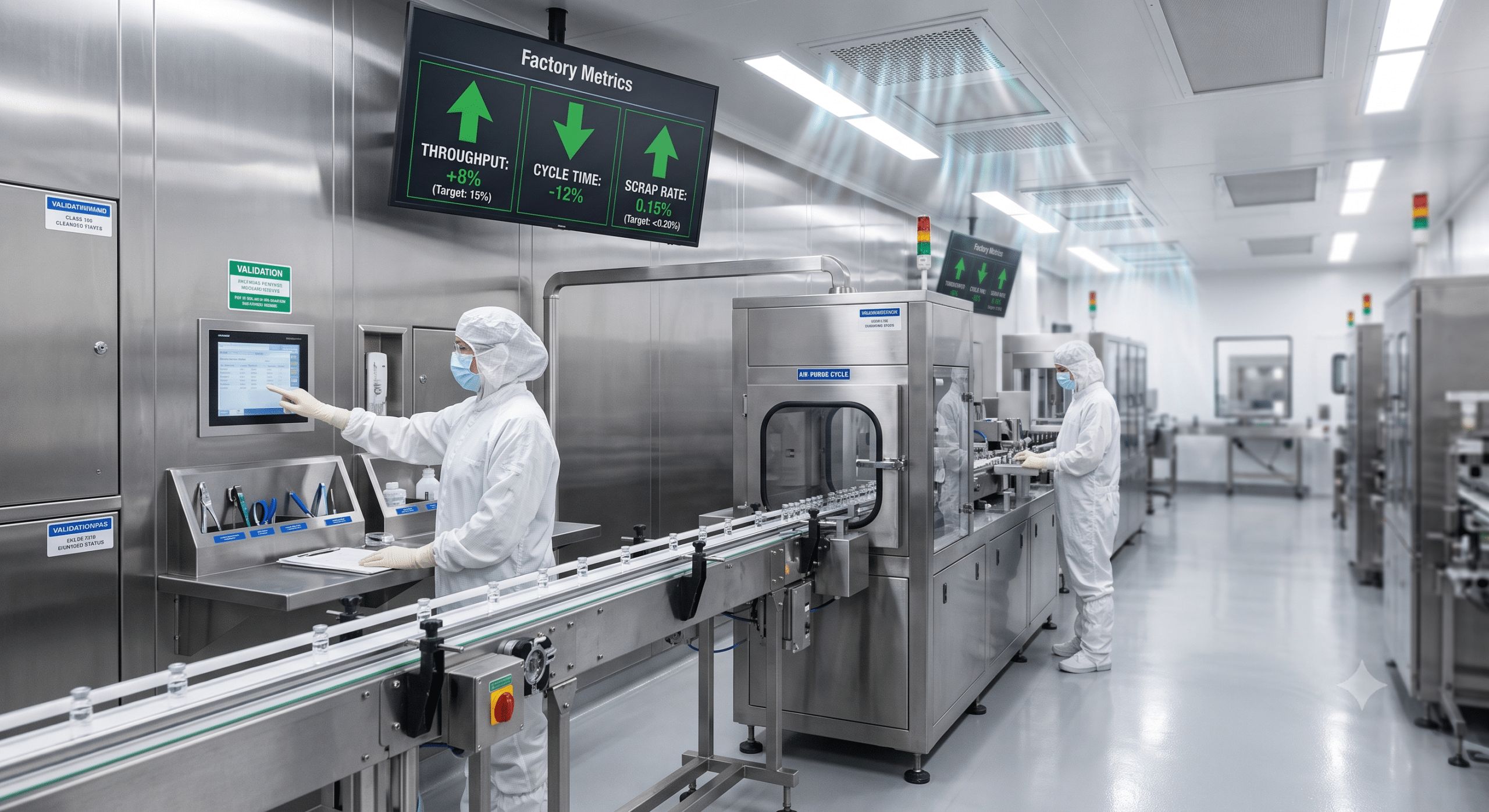
When you run a sterile facility, a single speck of dust can ruin a million-dollar batch of medicine. Consequently, this reality forces you to look at efficiency a little differently. In pharmaceutical & cleanroom facilities, we cannot just turn up machine speeds to get more done. This is because every single move we make is tied to strict safety laws. Therefore, our building itself becomes our biggest operational tool, rather than just a shell where work happens.
Mastering the Efficiency Balance
In order to balance high output, low delays, and minimal waste within pharmaceutical & cleanroom facilities, you need a specialized strategy. Specifically, a great facility manager must sync up air systems, equipment, and room layouts perfectly.
Boosting your output under these tight rules means looking past normal factory metrics. Instead, you must treat the physical building as an active part of the production team. For instance, if an air fan drops its pressure slightly, your daily numbers will drop right away. Similarly, the same thing happens if a worker takes ten extra steps because a room is poorly laid out. Fortunately, by looking at our workspaces through an experienced facilities lens, we can find hidden room to grow. Ultimately, this approach turns strict compliance rules into actual operational wins for pharmaceutical & cleanroom facilities.
Smart Air Hacks to Get More Product Out the Door
In a sterile cleanroom, output depends heavily on your air system. However, many facility managers make a common mistake here. They think heating, ventilation, and air conditioning systems are just utilities meant to pass inspections. In reality, your air setup sets the actual speed limit for your whole production line.
Maximizing Air Recovery Performance
When we look at increasing output, our main challenge is the air recovery rate. To put it simply, this metric is the time it takes for the cleanroom to clear out particles after a busy work shift.
If your facility has poor airflow design, your recovery times will drag out. Furthermore, this issue also happens if you have spots where air sits still. As a result, this delay forces your production teams to wait around longer between jobs. Ultimately, this wait time hurts your total daily output across modern pharmaceutical & cleanroom facilities.
Thankfully, we can fix this by intentionally moving our air vents and return grilles. Eliminating these dead zones quickly speeds up room clearing times. Consequently, this simple fix lets our teams start the next production run much faster. Therefore, it safely increases total output without breaking any cleanliness rules.
Streamlining Core Room Material Entry
Another big bottleneck happens when we move materials into the sterile core room. For example, old-school pass-through boxes with manual locks slow things down significantly. This occurs because workers must wait for the air pressure to level out before opening doors.
To solve this, upgrading to automated, fast-purging dynamic pass-through boxes cuts material transfer times right in half. These smart boxes use high-speed, filtered air showers to clean incoming parts instantly. Thus, this setup keeps the cleanroom safe while keeping a steady flow of materials moving to the filling lines.
How to Cut Down Layout Delays and Dead Time
To cut down on delays inside pharmaceutical & cleanroom facilities, you must watch how your team moves around the room every day. Getting dressed in cleanroom suits takes time naturally, and prepping materials also creates delays. However, bad room layouts make these issues much worse.
Designing Smarter Worker Pathways
For instance, when a technician walks across a cleanroom just to type in data, you lose valuable seconds. Then, those wasted seconds turn into major production delays. Fortunately, we can fix this by optimizing the cleanroom floor layout. Ideally, every tool, part, and computer screen should sit right next to the person using it.
Putting flush-mounted computer screens right into the cleanroom walls helps immensely. Specifically, it lets workers log their data without stepping away from the line. As a result, this keeps technicians focused on their main tasks. Additionally, it stops the air disruption caused by people walking back and forth across the room.
Meanwhile, you should also keep everyday sterilization supplies in small storage spots right at the workstation. This choice means workers do not have to leave and re-enter the main room all day. By cutting down on these trips, you keep the room air highly stable. Furthermore, it shaves hours off the total time it takes to finish a batch.
Shifting to Data-Driven Cleaning Systems
We can save even more time by tweaking our automated cleaning and steaming systems. Traditional cleaning cycles usually run on rigid, old-school timers. Unfortunately, these programs clean the machines far longer than necessary just to be safe.
Instead, by installing real-time water testers, we can check the rinse water continuously. Therefore, the system can stop the cycle the exact second the machines are perfectly clean. Shifting from rigid timers to live data checks cuts down on cleaning time safely. In turn, this change lets us get the machines back to work much faster.
Maintenance Tricks to Cut Down on Wasted Materials
In medicine manufacturing, high scrap rates are rarely caused by complete machine breakdowns. Instead, they usually happen because of tiny changes in the room air. Eventually, these small shifts cause a whole batch to fail quality tests.
Preventing Cross-Contamination Early
For example, a minor shift in air pressure between two rooms can let dirty air leak in. Then, this error instantly turns a costly run into pure trash. To stop this, our facilities teams must stop waiting for things to break. Instead, we need to use smart sensors to spot problems before they occur.
Placing precision pressure sensors and live particle counters in our main work zones is critical. This is because it gives us an instant look at room health. Furthermore, connecting these sensors to a central building computer lets us spot small pressure drops early. We can also see tiny air shakes before they ruin the cleanroom boundary.
Consequently, if a supply fan starts to slip, the system alerts our mechanics right away. Then, they can fix the problem on the fly. Catching these small changes early lets us fix the air before it ruins the product. Thus, this proactive approach keeps our waste levels incredibly low.
Maintaining Filter Integrity Proactively
We also need to focus heavily on checking our main ceiling air filters. This is vital because tiny tears or old rubber seals can let germs ruin our sterile products. Fortunately, using automated testing tools to check these filters regularly helps us find pinhole leaks early. Indeed, we can find them long before they cause a batch to fail.
Therefore, replacing these filters early during planned maintenance breaks protects our cleanrooms from sudden trouble. In conclusion, this careful approach keeps our production lines running smoothly and successfully stops air issues from driving up our waste costs in pharmaceutical & cleanroom facilities.
How Facility Upgrades Directly Fix Factory Metrics
The table below shows how specific upgrades to your building improve your main production numbers. By fixing the root causes of air and layout issues, you unlock clear wins.
| Facility System Focus | Main Goal | Root Cause We Fix | Final Result on the Floor |
| Better Air Recovery Times | More Product Out | Long wait times and trapped air | Faster room cleaning, letting you run more batches |
| Smart Pass-Through Boxes | Cutting Down Delays | Slow downs from moving parts manually | Faster material drops and steady supply lines |
| Point-of-Use Workstations | Cutting Down Delays | Workers walking around and messing up airflow | Better employee focus and steady room air |
| Live Cleaning Sensors | Cutting Down Delays | Cleaning machines too long on old timers | Faster machine turnarounds between jobs |
| Smart Pressure Alerts | Cutting Down Waste | Dirty air leaking in from bad room pressure | Early alerts that stop costly batches from ruining |
| Routine Filter Leak Checks | Cutting Down Waste | Germ risks from old ceiling filter seals | Total elimination of dirt leaks on the line |
Frequently Asked Questions
How does cleanroom air recovery time affect our daily output?
Air recovery time is how long your ventilation system takes to clear out particles. Specifically, it measures the time needed to clean the room after a busy shift or a messy task. If your system takes too long to clean the air, your teams must wait around. Fortunately, speeding up this air clearing time lets you cut the waiting time between batches. Therefore, you get more product out the door every day.
What causes cleanroom pressure drops and why does it cause waste?
Pressure drops happen when the air balance between rooms slips out of line. Usually, this issue is caused by worn fan belts, dirty filters, or doors left open too long. When this pressure drops, dirty air from the outside hallways can leak into your clean zones. Consequently, this problem leaks dust or germs into sterile products. As a result, it causes them to fail quality tests, which forces you to throw away expensive batches.
Can changing a room layout really cut down our production time?
Yes, a smart room layout cuts down on time by keeping your workers from walking around. In many older cleanrooms, workers constantly walk across the room to log data or grab tools. Unfortunately, this movement wastes time and stirs up dust. By contrast, putting computer screens and tool storage spots right at the main workbench keeps your technicians focused. Therefore, this change smoothes out the workflow and saves hours of time.
Why are automated pass-through boxes better than standard manual ones?
Standard manual boxes use basic door locks. Consequently, they force workers to wait around for the air pressure to settle naturally before opening the door. On the other hand, automated boxes use fast, built-in air showers to clean incoming parts instantly. They also hold the air pressure steady. Thus, this automation cuts material drop times in half while keeping outside dirt from leaking into your clean zone.
How do live sensors make machine cleaning faster?
Old-school machine cleaning uses fixed timers. As a result, these tools wash the equipment much longer than necessary just to be safe, which wastes time. Instead, installing live water sensors lets you check the cleanliness of the rinse water continuously. Therefore, the system shuts off the cleaning cycle the exact second the water is perfectly clean. In conclusion, this saves time and gets your machines back to work faster.
References for Further Reading
- Siemens Operational Excellence Insights: Details the role of digital twin environments and predictive cloud analytics in optimizing layout workflows and particle management (High DA).
- G-CON Cleanroom Innovations: Covers the transition to smart, modular facility layouts that utilize autonomous calibration sensors to limit unexpected manufacturing downtime (High DA).
- DesignTek Consulting Post: Explores how early HVAC layout decisions directly affect air balancing accuracy, room zoning stability, and lifecycle operational costs (High DA).